
Repainting a 2,000-square-foot house gives it a new look and freshens up the condition of all the interior surfaces. Naturally, most individuals want to know how much it is going to cost to repaint their house prior to starting the project. Cost depends upon the size of the house, the rooms, the condition of the walls, the quality of paint, labor costs, the average height of the ceiling, and the amount of ceiling and trim work.
How much would it cost to paint a 2000 sq ft house interior? 4,000–12,000: Typical cost to paint the interior of a 2000 sq ft house in the US in 2026. One color of paint on the walls alone will usually be less expensive, but the cost increases when the ceilings, doors, and trim are added.
Table of Contents
ToggleWhen you are aware of everything you are going to need, this can let you map out your job project without any shocks. Here in this resource, SD Custom Painting takes you through the average painting costs, cost factors, what amount of paint you will need, and strategies to budget.
Cost to Paint a 2,000 Sq Ft House Interior on Average
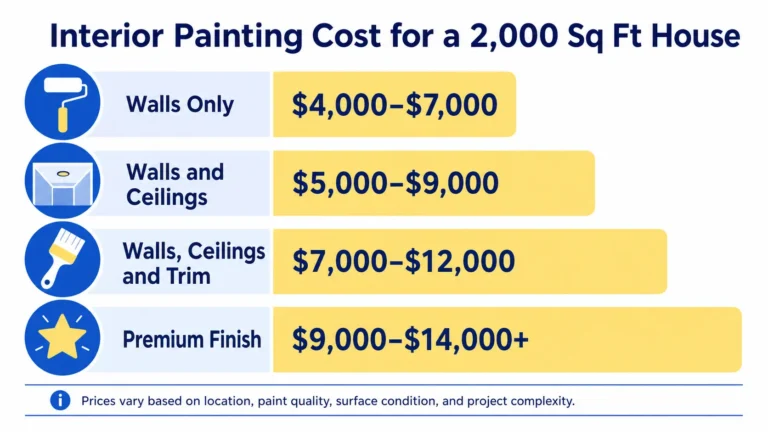
The average 2000 sq ft house interior repaint cost changes depending on whether you include the ceilings, doors, baseboards, decorative trim, hardware, and fixtures. The short version, of course, would be that painting a room takes less time and material when just walls are painted.
The average range of house painting is about 2–6 per square foot of floor space by a professional interior painter. Your cost for a 2,000-square-foot house could be about $4,000 to $12,000 for that range.
Below is an easy breakdown of what you might have to pay:
Painting Project | Estimated Cost |
Walls only | 4,000–7,000 |
Walls and ceilings | 5,000–9,000 |
Walls, ceilings, and trim | 7,000–12,000 |
Premium paint and detailed finishes | 9,000–14,000+ |
Ranges will also tend to vary when different areas have different conditions and pay scales. For example, a home with a single color, clean wall surface, and no repairs will be easier (and cheaper) to paint than a home that requires repairs and has various painted colors.
What Is a Reasonable Budget?
An average price for repainting a house interior: plan to spend somewhere in the range of 6,000–9,000 as a ballpark figure on what it will cost you. This includes painting the walls, basic prep, mid-grade paint, and some additional surfaces.
Cost Breakdown by Painting Scope
Some projects require only the walls. Others require all of the home’s interior to be painted to be uniform.
Knowing what is provided for each alternative will help you choose the specific best painting package for you as well as your spending plan.
1. Walls-Only Painting
Walls-only painting is often the most affordable option. It works well when the ceilings, doors, and trim are still in good shape and do not need fresh paint.
The average homeowner spent between $4,000 and $7,000 to paint most 2,000-square-foot homes. The cost was contingent on the preparatory work that needed to be done, high-quality paint, and how many coats it took.
2. Walls and Ceilings
In certain cases, ceilings could increase the price of your project. It is necessary to prepare additional surfaces, and ceiling work is slower than wall work. Painting ceilings may require access to ladders and telescopic tools.
Expect to pay in the 5,000–9,000 range for a project covering just the walls and ceilings. You could probably save a little if the ceilings are free of texture, water marks, or hard-to-reach spots.
3. Complete Interior Painting
This coverage applies to walls and ceilings as well as other interior surfaces like doors, baseboards, and other trim. This is an effective way to make your home look more cohesive.
Pricing will be anywhere from $7,000 to $12,000+ depending on the number of doors, trim details, surface prep, and your paint choices.
Interior Painting Cost Per Square Foot
Square-foot pricing should be an easy way for a homeowner to “translate” what they have come to as a pre-contractor estimate of their project. Just realize that a painter might price a project by the square footage of a job or by the amount of paintable surface in a given job.
Simple Cost Calculations Example
Suppose a contractor quotes $3 per square foot to complete an interior paint job.
An estimate for a 2,000-sq-foot house would be as follows:
- Size of the home: 2,000 square feet
- Painting rate: $3 per square foot
- Estimated total: $6,000
Adding the ceilings and trim to get the rate up to $5 per sq ft increases the price to $10,000.
This is but an estimate; the actual price would be calculated based on the actual paintable surfaces and work involved.
Factors That Affect Interior Painting Costs
There are many things that go into the calculation of what will be the total cost of a house painting project. Two houses, regardless of being the same size, will be priced differently.
By being conscious of this detail, homeowners can know where the cash is definitely going and which measures can actually have an impact on the grand total.
1. Wall and Ceiling Condition
Because painting is not merely the task of getting your walls painted, it also involves some preparation. The walls are prepared; the holes, craters, and water marks are filled in, and the paint is sanded and smoothed.
In case of minor repairs, you have to sand and fill the drywall. For heavy drywall repair, you may need additional materials and labor. If your home was built before 1978, ask your contractor about lead-safe work practices under the EPA’s Renovation, Repair and Painting rule.
2. Paint Quality and Finish
The price of the material is determined by the quality of the paint in use (some more expensive paints are of better quality—they will adhere better to the painted surface, they will be easier to wash off, they will be more durable, etc.). Budget paints are less expensive.
The selected finish also matters. Common options include:
- Flat: This finish is used on ceilings and for low-sheen applications.
- Eggshell: A harder finish. Adds a gentler aesthetic. Suitable for a living room.
- Satin: A washable coating that is suitable in high-traffic situations.
- Semi-gloss: Usually used for doors, trim, and other moist areas.
Choosing the appropriate finish for every area can improve the balance of appearance, maintenance, and cost.
3. Ceiling Height and Housing Plan
If you are painting eight-foot ceilings, they are generally much easier to paint and take less time. Areas of high ceilings, vaulted ceilings, staircases, and open-plan areas may require special equipment and time.
Similarly, plans with lots of corner work, archways, or decorative work all require more cutting-in and detailing—and that means more time.
4. Labor and Preparation Requirements
Labor is probably going to be the greatest charge you have for the interior painting quote. You can expect professional painters to spend time covering the furniture, floor covering, surface prep, and also outlets and fixtures, priming, and painting in numerous coats.
Additional time to get ready is also needed. A furnished property or one with contents that have to be moved and protected can take more time to ready. Dark paint may also require extra prep and more coats when switching to a lighter color.
5. Location and Local Labor Rates
Where you live matters. The cost can vary from city to city and from state to state depending on transportation, labor costs, and the working cost of doing business.
Construction labor remains one of the largest contributors to your final estimate, which can be thousands of dollars higher in high-cost metro areas as compared to a less-expensive city with lower wages.
Professional Painting vs. DIY Painting
Painting your own home is unquestionably one of the DIY home improvement ideas you may do to your benefit. You’ll be able to save some money on your labor expenses, but you’ll want to devote quite a lot of time to it and also have the suitable painting supplies, substances, and gear.
Painting costs are a little bit higher with professionals because a part of that price is actually labor and materials. Professionals do know surface prep, finish, application, and quality products, though.
Comparison | DIY Painting | Professional Painting |
Labor cost | No hired labor | Included |
Equipment | Purchased or rented | Usually provided |
Time required | Generally longer | Usually faster |
Finish quality | Depends on experience | Experienced application |
Preparation | Homeowner handles it | Included as agreed |
Convenience | More personal effort | Less homeowner involvement |
It also depends on how big your room and the project are, but a few of those you might even be able to do yourself. Painting walls in a house over 2,000 square feet can be downright daunting.
Why Choose SD Custom Painting?
A good painting contractor can make the end result of an interior work of art. Painting is not only painting on the surface of the wall, but it is also pre-planning, prepping, using the right tools, and paying attention to detail to give the most perfect end result.
If you are a homeowner who wants to improve your home, we will bring your vision for the inside of your home to life. Want to brighten up a tired room? Need to pull it together? We can help completely change the appearance and atmosphere of your home!
Whether it’s the color, the quality of paint, the condition of the surfaces, or the price, be sure you are in agreement with the contractor prior to work beginning. Request an itemized estimate, detailing what you will be receiving, what preparation work will be performed, and what products will be utilized.
Honest, open communication and good planning all the way are so important for avoiding misunderstandings and ensuring everything goes according to plan for you from start to finish.
Conclusion
Learn how much it will cost to paint the interior of a 2,000 sq ft house. Your 2026 Price Guide to Interior Painting: How much should you pay for professional interior painting in 2026? The average professional interior house painting costs range from $4,000 to $12,000. The variance in price depends on the room count, paint quality, labor rates, and prep work.
We’ll put your mind at ease by doing the work of figuring out what you need to complete the painting project and complete your next house project. Painting the inside of your house will give it a fresh, clean feel.
Frequently Asked Questions
How long does it take to paint a 2,000-square-foot house?
A typical project of this size would normally take professionals two to three days maximum. The prep, dry time, height, and number of coats will all be factors in how long it’ll take.
Do the ceilings & trim get included in the painting estimate?
Not necessarily. Some contractors will only prepare estimates for interior wall painting, and some will prepare the entire interior painting estimate. Does it include the ceiling, doors, trim, and baseboards?
How many gallons of paint for a 2,000 sq ft house?
For your walls, you can use up to 10 to 15 gallons on a regular-sized house, depending on size and coverage. You may need an additional coat of paint for walls, ceiling, and trim.
Should I pay for expert interior painting?
Here’s a tip: If you want your painting project to be easier, hire professional painting services; they are able to do the preparatory work, application, and finishing services a lot more quickly. This is going to save you time and work that you would have to do yourself to get the painting of your home completed.
What is the cheapest way to paint a 2,000-square-foot house?
Standard colors, room preparation beforehand, paint of intermediate quality, and several estimates from contractors would help you save more money. And yes, do not compromise on the room prep, or you might ruin the finish.