How Much Does It Cost to Paint the Interior of a House in 2026?

Interior painting is excellent if you are planning to give each room in your house a good facelift. The No. 1 question that many homeowners ask themselves when considering the services of a professional painter is “How much does it cost to paint the inside of a house?” Generally speaking, how much money you spend depends on the size of your house, the surface area that needs to be painted, how much work is involved (walls are one thing but a whole wall requires more than trim molding for example, and a well-maintained wall will cost less than one that is damaged), what paint you select, and how much painters in your area charge per hour.
The average cost guide currently available for 2016 shows some extreme differences in cost. According to Homeguide.com, the overall cost for painting the inside of a home is $3,500 to $10,000, whereas according to Angi.com, the cost will range from $2,728 to $11,104. Angi includes ceiling, trim, and services among a more detailed guide than what is available by Homeguide.com. It is interesting that a much lower range of costs comes from Homeguide.com, yet their maximum cost can be more than double Angi’s average cost, and their minimum cost is significantly higher; however, it depends on more than the square footage when the project is evaluated.
Table of Contents
ToggleWhat Is the Average Cost to Paint the Interior of a House?
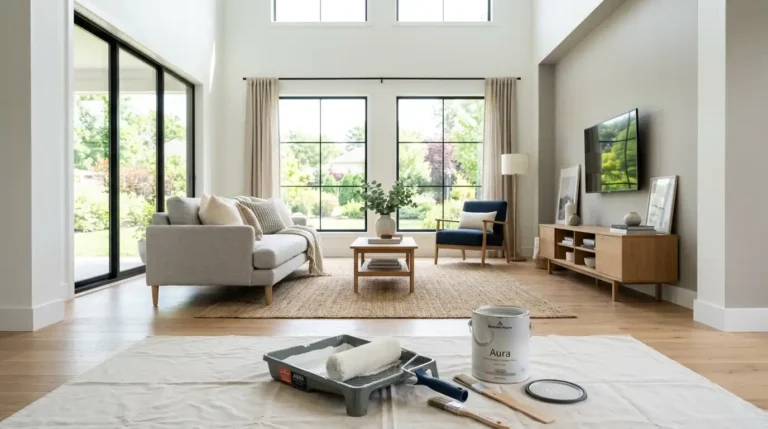
The cost the homeowner may pay for a whole-home project ranges from $3,500 to $10,000, and less to significantly less for small projects to much higher for large & complex projects. Currently, the home guide quote is between $3,500 and $10,000 for the interior whole project.
Project | Typical Cost Range |
Single room | $350–$850 |
1,500 sq. ft. home | $4,500–$6,000 |
2,000 sq. ft. home | $6,000–$8,000 |
2,500 sq. ft. home | $7,500–$10,000 |
3,000 sq. ft. home | $9,000–$12,000 |
Remember, these are estimates, not binding quotes. If painting a house is required, and the house has many patches, requires multiple colors, is tall or difficult to access, has lots of trim, or is in a generally more expensive area (based on region and specific area surfaces to be painted), the cost of painting a house will likely increase.
Interior Painting Cost Per Square Foot
One of the most straightforward means of comparing painting prices is by square foot. Just make sure you’re aware of what the measurement encompasses. When figuring out how they’ll price out your job, some businesses price by paintable surface area (including the walls and ceiling), while others include the floor area of the house as a way of simplifying cost estimation.
For this painting project, HomeGuide lists this figure as $1 to $3 per square foot of the paintable surface area.You’ll find Angi statistics and quotes at an average price of $2.75 per square foot of surface area -$3-$12 per sq. Ft whence trim as well as ceiling painting may very well be included.
Scope of Work | Approximate Cost |
Walls only | $1–$3 per sq. ft. of surface |
Walls + ceilings | Higher than walls alone |
Walls + trim + ceilings | Can approach $4.70 per sq. ft. |
Before you give estimates to anyone, compare the results; be sure to always ask what measurement the contractor has been using.
What Factors Affect the Cost to Paint an Interior?
How much the interior painting costs has a lot more to do with variables other than the actual paint used. These variables are what factor into why two houses with identical square footage would receive vastly different estimates.
- Wall condition: The holes, cracks, stains, peeling paint, or gouges to the drywall all necessitate preparation before the walls can be painted. Drywall repair costs alone can be a big budget add-on, notes Angi.
- Number of coats: If you’re going from a dark color to a light color, you might need an extra coat or primer. More coats equal more materials as well as more labor time.
- Paint quality: From budget to premium prices, different grades and types of paint have varying costs and application characteristics. A more expensive paint may seem less economical to purchase but would apply with less work (using less material) and could wear for a longer duration.
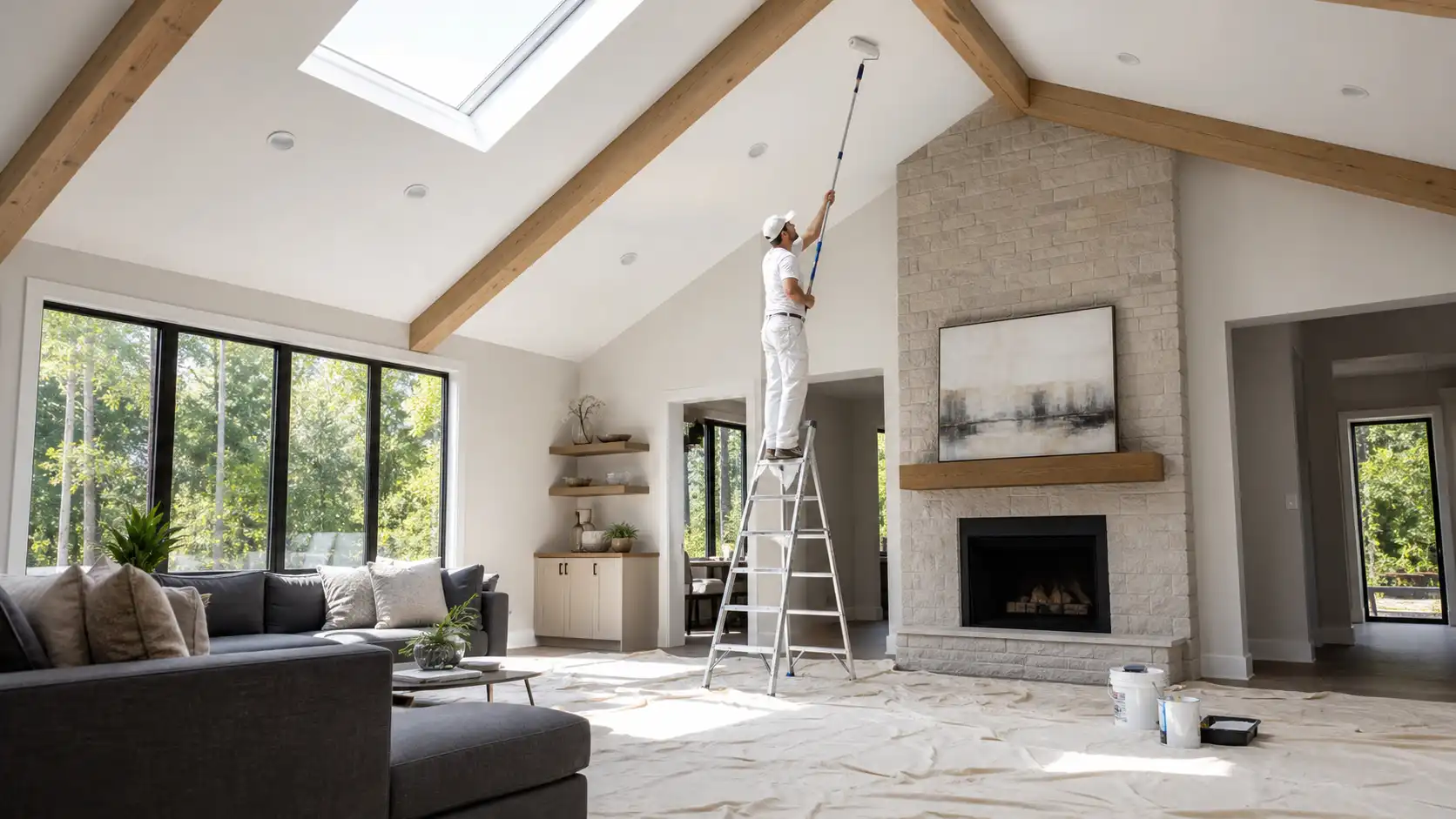
- Height of ceiling:While high or vaulted ceilings can complicate the painting job by needing additional equipment and working time, as do working around staircases and other tricky spaces. Standard ceiling height has fewer difficulties while painting.
- The number of surfaces being painted: A homeowner painting just the walls is far cheaper than if the ceilings, doors, baseboards, window and door casings, and crown molding will all get a coat of paint.
- Number of colors used: Each new color used would add to the workload through cutting in, cleanup after application, use of new materials, and added prep for masking and removal.
Room-by-Room Interior House Painting Cost
The labor and prep required will also vary by room. As of late, HomeGuide posts bedrooms for roughly $350-$850, master bedrooms for $650-$1,400, bathrooms for $150-$400, and living rooms for $600-$2,000.
Room | Typical Cost |
Standard bedroom | $350–$850 |
Primary bedroom | $650–$1,400 |
Bathroom | $150–$400 |
Living room | $600–$2,000 |
Interior door | $75–$150 |
For bathrooms, they may require a specific coating in order to prevent the growth of mold in the area, whereas living room costs may be higher as they are larger or have additional floor-to-ceiling walls.
How to Calculate the Cost to Paint Your Home Interior?
Just to give you a general idea of how much you should expect to pay before actually getting quotes, determine the potential locations you are planning to paint. Measure out your walls, pay attention to whether you want to add ceiling costs, and make a decision on whether you intend to paint doors, trim, closets, and so on. Second step, estimate wall coverage and research typical painting rates from local painters, not just floor area to some given cost without knowing what it means for a painted surface.
Be sure quotes account for prep time, material, clean up, and labour – your DIY can probably take care of cleanup.
Interior painters should make sure you budget for wall repair, priming, and specialty paints too, not to mention hard-to-reach spaces. Always get your final bid in writing.
How to Read a Professional Painting Estimate
A detailed estimate makes it easier to compare contractors fairly. Look for these items:
- Areas and surfaces included
- Number of coats
- Paint brand and finish
- Preparation and minor repairs
- Labor and materials
- Trim, doors, and ceiling work
- Cleanup
- Project timeline
- Payment terms
A quote with only one total price can be difficult to evaluate.
Professional vs. DIY Interior Painting Costs
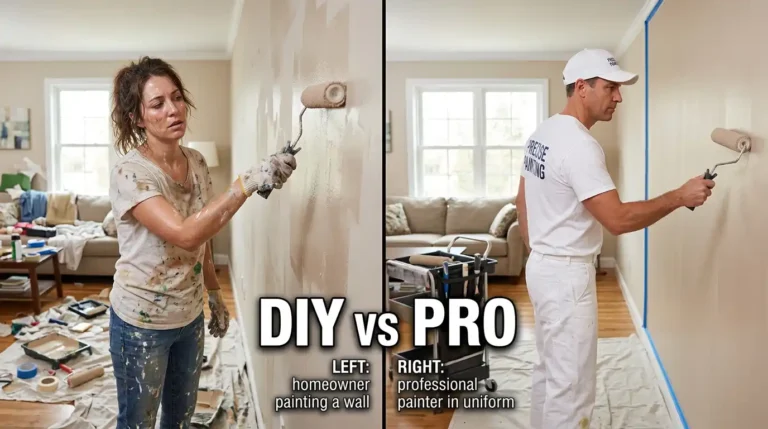
Choosing the DIY approach saves you in terms of professional time and labor costs but takes time. A painting contractor requires many tools, including paint, rollers, brushes, trays, ladders, painter’s tape, drop cloths, etc and a systematic approach that ensures professional painting in the end. For a single bedroom, a DIY may justify its labor, but painting an entire house needs professional help due to repetitive tasks.
How to Save Money on Interior Painting
It doesn’t make much sense to have to pay the lowest of the paint options or the lowest price to the contractor in order to control your budget. You do need to lower unnecessary labour, and you can set your job up correctly at the planning stage.
- Move furniture and wall decorations before painters arrive.
- Keep the number of paint colors manageable.
- Complete minor repairs before the painting crew starts.
- Ask whether whole-home pricing is available.
- Compare at least two or three detailed estimates.
- Choose a durable mid-range paint when premium products are unnecessary.
Conclusion
So how much does an interior house painting cost? Most homeowners will be looking at $3,500-$10,000 for a complete interior job, and more or less dependent upon the size of the home and the state of the surfaces, the quality of the paint used, the local labor rates, the height of the ceiling, and level of detail. The most accurate way to come up with a reasonable budget is to determine precisely what you plan on painting and then secure detailed bids from several licensed professional painters in your community. Compare their estimates based on scope of work rather than final price-that will guarantee you get a good value.
FAQs
Is it cheaper to paint the house yourself?
You could do it yourself if you’re looking to save a little bit of money, as you won’t need to pay for tradesmen’s labor, but you do need to consider your own time and any tools/ready to go equipment you may need to buy. You also need to consider the prep work, brushes, and new equipment needed to do the job.
Does painting the ceiling increase the price?
Of course. Also this sums up these labor and material requirements increase if there is a high ceiling or a vaulted ceiling, due to the requirement of using ladders, extension poles, or scaffolding.
How many coats of paint does an interior usually need?
In many applications, it may take about 2 coats; it just depends on what color is coming from, what color it is going to, what type of paint, what the condition of the surface is, and if primer needs to be applied, etc.
How can I tell whether a painting quote is reasonable?
At times, 2 or 3 written quotations should be received and the scope of works considered in detail. Thorough quotations must specify areas and surfaces to be painted, pre-painting requirements, number of coats, paint brands and types, disposal area and methods, and any possible additional costs.

Emily Escalante
Emily Escalante has spent 27 years working in the residential and commercial painting industry across San Diego. Her background in color, finishes, and surface preparation shapes the practical advice she shares on the San Diego Custom Painting blog, drawn from real jobs and real client questions.
Related Article
- All Posts
- Cabinet Painting
- Home Painting
- Home Remodeling