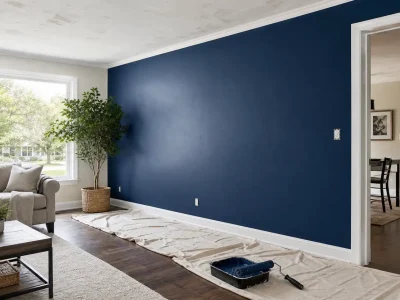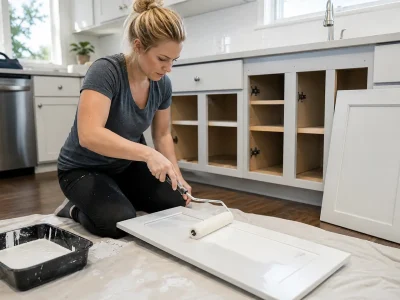

That sharp, chemical smell hanging in a freshly painted room isn’t just annoying, it’s VOCs off-gassing, and if you’re wondering how to get rid of paint smell fast, the fix starts within the first 48 hours, not after the fact. The good news: with the right setup, most rooms go from overpowering to livable in a day or two instead of a full week.
Here’s what we’ll cover: how to get rid of paint smell, why the smell happens, how long it really lasts, what actually works versus what just masks it, and what to do if you’re pregnant, have kids, or have pets at home.
Table of Contents
Toggle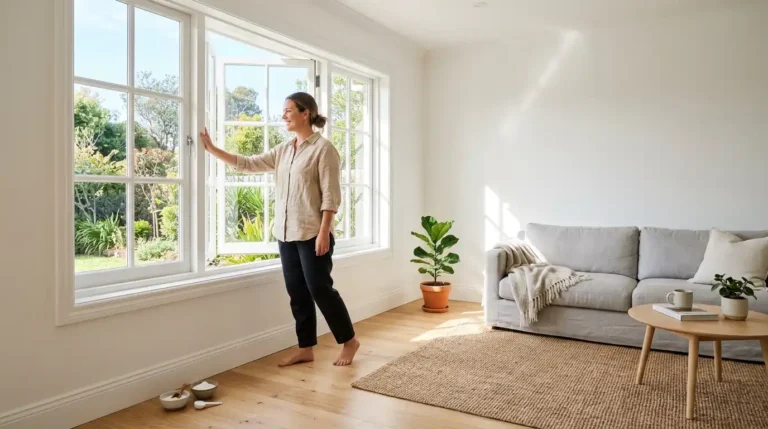
Why Paint Smells in the First Place
Paint smell comes from off-gassing the process of volatile organic compounds evaporating out of wet paint as it dries and cures. In water-based paints, that’s typically a lower-VOC blend of glycol ethers and other solvents; in oil-based paints, alkyd resins and stronger solvents like xylene and ethylbenzene are doing most of the smelling. Either way, the paint isn’t finished releasing compounds just because it’s “dry to the touch” touch-dry and fully cured are two different things.
- Dry to the touch: usually 1–4 hours for latex paint
- Recoat-ready: usually 4–6 hours
- Fully cured (VOC release has mostly stopped): typically 2–4 weeks for latex, longer for oil-based
That gap between “dry” and “cured” is exactly why a room can look finished and still smell strong three days later.
How Long Does Paint Smell Actually Last?
For a standard water-based interior paint in a well-ventilated room, expect the sharp smell to fade noticeably within 2–3 days and be largely gone within a week. Oil-based paint, high-VOC paint, or a poorly ventilated room can stretch that out to 2–3 weeks. Humid weather slows drying and extends the smell; cold weather does too, since off-gassing speeds up with warmth and airflow, not against it.
If it’s been longer than three weeks and the smell hasn’t faded at all, something other than normal off-gassing is usually going on a second coat applied too soon, trapped moisture behind the paint, or an unusually low-quality product.
What Actually Gets Rid of Paint Smell

Ventilation (the one that matters most)
Cross-ventilation air moving in one side of the room and out the other clears VOCs far faster than a single open window. Set up:
- One window open on each side of the room (or a window plus the hallway door)
- A box fan in one window blowing outward, not inward, to actively pull fumes out rather than just stirring them
- The door to the rest of the house cracked, so air has somewhere to flow from
Run this for at least 48–72 hours after the final coat, not just while the paint smell is at its worst.
Air purifiers with activated carbon
A HEPA filter alone won’t touch VOCs HEPA is built for particles, not gas-phase chemicals. You specifically need a purifier with an activated carbon stage, since carbon adsorbs VOC molecules the way it adsorbs odors in a fridge. Run it continuously in the painted room for the first week.
Baking soda and activated charcoal (bowls, not sprinkling)
Spreading baking soda or activated charcoal on plates around the room genuinely does absorb some airborne VOCs. It’s a real mechanism, not folklore but it’s slow and works best as a supplement to ventilation, not a replacement for it. Swap it out every 24 hours for the first two or three days.
Low-VOC or zero-VOC paint (prevention, not a cure)
If you’re painting again soon, choosing a low-VOC or zero-VOC product cuts the whole problem down at the source less to off-gas means less smell and a shorter timeline, though “zero-VOC” bases still pick up some VOCs once tinted.
Ventilation Method Comparison
Method | Speed | Effort | Best For |
Cross-ventilation + fan | Fast (24–72 hrs) | Low | Any freshly painted room |
Carbon-filter air purifier | Fast, ongoing | Low | Rooms that can’t be well-ventilated |
Baking soda / charcoal bowls | Slow (days) | Medium | Supplementing ventilation |
Low-VOC paint | Prevents, doesn’t remove | None after purchase | Before you start the project |
Candles / air fresheners | Doesn’t remove smell | Low | Never as a primary fix |
Is Paint Smell Dangerous?
Short-term exposure to typical household paint fumes commonly causes headaches, dizziness, nausea, and eye or throat irritation unpleasant, but usually not medically serious for a healthy adult with reasonable ventilation.
The exposure that matters more is prolonged, poorly ventilated exposure, which is where the real risk sits. If you or someone in the house has asthma, is pregnant, or is caring for an infant, treat “well-ventilated” as non-negotiable rather than optional, and consider staying elsewhere for the first 24–48 hours if ventilation isn’t possible.
Myth vs. Fact
Myth: Onions absorb paint smell.
Fact: Cut onions release sulfur compounds that can partially mask or chemically interact with some odor molecules, but they’re not removing VOCs from the air, they’re adding a competing smell. Minor effect at best, and you’re left with onion smell.
Myth: Scented candles get rid of the paint smell.
Fact: Candles cover the smell, they don’t remove the VOCs causing it. The air quality issue is exactly the same; you just can’t smell it as clearly anymore.
Myth: If you can’t smell it anymore, the fumes are gone.
Fact: Your nose adapts to a smell within minutes of steady exposure (olfactory fatigue), so “I don’t smell it anymore” often just means you’ve stopped noticing it, not that VOC levels have dropped to zero.
A Painter's Take (Real-World Experience)
After decades of interior repaints, the mistake I see homeowners make most isn’t the paint choice, it’s turning the fan on too early or closing the room up the same night to “keep the smell in one place.” That traps VOCs right where you’re breathing them.
The rooms that clear fastest are the ones where cross-ventilation runs continuously for the first two full days, not just during the hours the smell is at its strongest. The other pattern worth knowing: bathrooms and small bedrooms with one window take noticeably longer to clear than open living areas, simply because there’s nowhere for the air to exchange; that’s the case where a carbon-filter purifier earns its keep.
Conclusion
Paint smell is VOC off-gassing, not a mystery and it responds predictably to airflow, activated carbon, and time, while candles and masking scents only hide the problem. Cross-ventilation is still the single most effective fix, activated charcoal and baking soda are useful supplements rather than solutions, and low-VOC paint is the move if you’re planning ahead rather than cleaning up after the fact. As more households shift toward low- and zero-VOC formulations, this whole problem is quietly getting smaller with each repaint but until it’s zero, ventilation is still the job.
Next step: if you’re deciding what to paint with next time, start with a low-VOC product built for the room you’re doing — it’s the one change that shrinks this whole issue before it starts.
Frequently Asked Questions
How long does paint smell last in a room?
Most water-based paints fade to a faint smell within 2–3 days and clear within a week with good ventilation. Oil-based paint or poorly ventilated rooms can take 2–3 weeks.
Is it safe to sleep in a freshly painted room?
It’s best to wait at least 24–48 hours with the windows open and good airflow before sleeping in a freshly painted room, especially for children, pregnant women, or anyone with respiratory sensitivity.
Does baking soda really remove the paint smell?
Yes, to a real but limited degree it adsorbs some airborne VOCs, but it works far slower than ventilation and should be used alongside it, not instead of it.
Why does paint smell get worse at night?
Cooler night air and closed windows reduce airflow, which lets VOC concentration build back up in the room even though the paint itself isn’t releasing more than during the day.
Can paint fumes cause headaches?
Yes, headache, dizziness, and throat irritation are common short-term reactions to VOC exposure and usually resolve once you leave the room or ventilation improves.
What’s the fastest way to get rid of paint smell?
Cross-ventilation with a fan blowing fumes out of the room, run continuously for 48–72 hours, is the fastest method to pair it with a carbon-filter air purifier if the room can’t be well-ventilated.