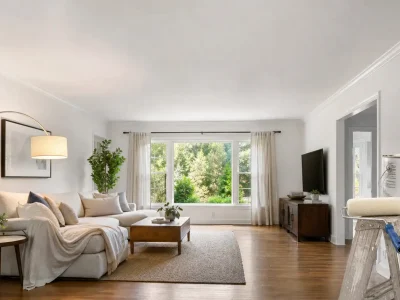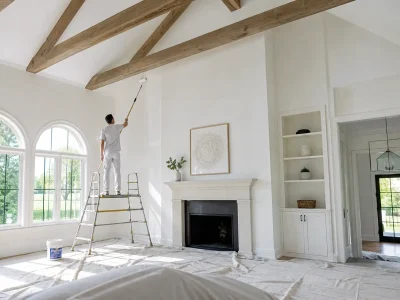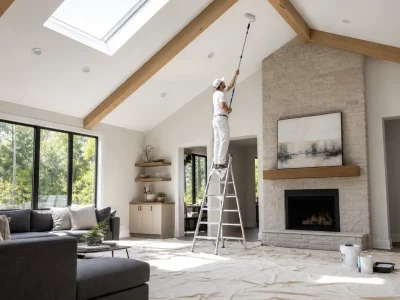

Choosing between enamel vs latex paint depends on the specific surface you are painting and how much wear and tear it will face. Enamel paint dries much slower but creates a hard, glass-like finish that resists heavy scrubbing and impact, making it ideal for cabinets, doors, and trim. Latex paint uses water as its base, dries within a few hours, stays flexible to resist cracking, and serves as the standard choice for large interior walls and ceilings.
The primary difference lies in their base materials and how they cure. Traditional enamel relies on an oil or alkyd base that cures through chemical oxidation, leaving a solid, rigid shell. Latex paint relies on synthetic acrylic polymers suspended in water that dry as the water evaporates. This guide breaks down the performance metrics, drying times, application steps, and material compatibility to ensure your next painting project finishes with professional results.
Table of Contents
ToggleQuick Comparison: Enamel vs Latex Paint
This direct data comparison highlights the operational performance metrics of both coating types.
Performance Metric | Enamel Paint (Traditional Oil/Alkyd) | Latex Paint (Water-Based Acrylic) |
Primary Base | Oil, solvent, or alkyd resin | Water and synthetic polymers |
Surface Finish | Smooth, high-gloss to satin shell | Flat, eggshell, satin, to semi-gloss |
Drying Time | 6 to 12 hours to touch | 1 to 2 hours to touch |
Full Curing Time | 7 to 14 days | 21 to 30 days |
Elasticity | Low (Rigid, can crack under expansion) | High (Flexible, moves with wood/siding) |
Best Wood Surface | Kitchen cabinets, entry doors, interior trim | Drywall, ceilings, brick, exterior siding |
Cleanup Agent | Mineral spirits or paint thinner | Warm soap and water |
VOC Emissions | High (Requires active ventilation) | Low to Zero VOC options available |
What are Enamel Paints?
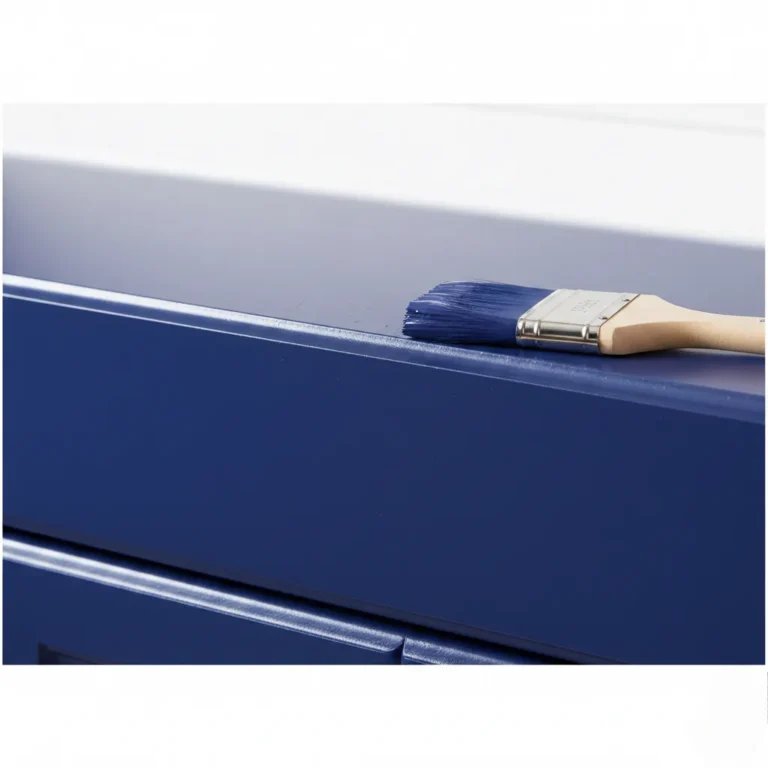
The term enamel refers to the hard, durable quality of the final finish rather than the raw ingredients inside the can. Historically, enamel paints were strictly solvent-based products that utilized oil or alkyd resins to build a thick coating. When applied to a surface, the solvent evaporates, and the resins undergo a chemical cross-linking process as they cure.
Modern paint manufacturing now produces high-performance water based enamel options. These hybrid formulas use alkyd resins suspended in a water vehicle. This engineering gives you the leveling attributes and toughness of oil paint while keeping cleanup simple with water. Enamel coatings naturally level themselves out on flat surfaces. This self-leveling process causes brush strokes and roller texture to disappear before the film sets, creating a glass-smooth surface.
What are Latex Paints?
Latex paint contains no actual natural rubber latex. Instead, it utilizes synthetic binders made from polyvinyl acetate (PVA) or 100% acrylic polymers. These microscopic plastic particles stay suspended in water until you apply the paint to a surface. As the water content evaporates into the room, the polymer particles crowd together and fuse into a continuous, continuous film.
Because the final film retains a degree of plastic flexibility, latex paint acts like a breathable skin over building materials. It stretches and contracts safely when humidity changes cause wood or masonry to shift. It sticks well to raw drywall, plaster, and masonry blocks without becoming brittle over time.
The Main Differences Between Enamel Paint vs Latex Paint
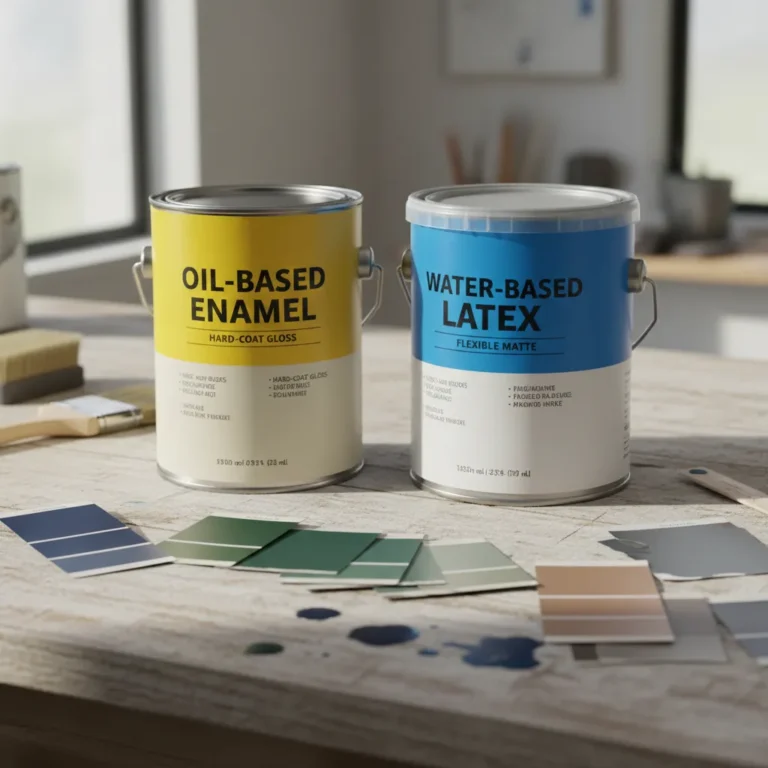
Understanding the mechanical differences helps prevent premature coating failure on your home surfaces.
1. Curing Chemistry vs Drying Speed
A common mistake is confusing drying time with curing time. Latex paint dries to the touch within two hours, allowing you to apply a second coat quickly. However, it requires up to 30 days to reach maximum hardness. If you place heavy objects on a latex-painted shelf too soon, the paint will stick and peel.
Enamel paint stays wet much longer, remaining open to manipulation for several hours. This extended open time allows the liquid to settle flat. Once it dries to the touch, it cures into its final hardened state much faster than latex, usually within a week.
2. Film Hardness and Block Resistance
Enamel paint provides exceptional block resistance. In professional terms, block resistance is the ability of a dry paint film to resist sticking to another painted surface under pressure. This characteristic makes enamel necessary for windowsills, door jambs, and cabinet doors. Latex paint can remain slightly soft, causing sticking when doors press tight against a painted frame.
Pros & Cons Of Enamel Paint
Pros:
- Wipeable Finish: Resists harsh household cleaners and regular scrubbing without wearing thin.
- No Brush Marks: Liquid holds an open edge long enough to lay completely flat.
- Impact Strength: Resists chips and deep scratches from shoes, vacuum cleaners, and pets.
Cons:
- Strong Odor: Emits noticeable solvent fumes during the drying process.
- Slower Recoil: Requires waiting up to 24 hours before applying another coat safely.
- Yellowing Risk: Oil-based formulas fade or turn amber in dark spaces lacking sunlight.
Pros & Cons Of Latex Paint
Pros:
- Fast Turnaround: Allows you to prime and apply two coats to a room in a single day.
- Safe Application: Mild scent makes it easy to work around children or indoor spaces.
- Color Retention: Resists UV damage and yellowing, keeping whites bright for years.
Cons:
- Visible Texture: Holds onto roller stipple and brush marks if worked too long.
- Softer Coating: Can tear or scuff when subjected to heavy mechanical friction.
Spray Painting: Enamel vs Latex
Applying coatings with spray equipment requires adjusting your technique to match the thickness of the paint.
High-Volume Low-Pressure (HVLP) Sprayers
HVLP spray systems work best with enamel and hybrid coatings on furniture and cabinetry. The low-pressure air stream atomizes the thin liquid cleanly, producing a fine mist that settles into a factory-smooth finish. Avoid using heavy latex paint in an HVLP gun unless you thin it significantly with water, as the thick material will clog the fluid tip.
Airless Spray Equipment
Airless sprayers pump paint at extreme pressure through a tiny orifice to achieve atomization. This system handles thick latex paint perfectly without any thinning required. It pumps paint directly from a five-gallon bucket to coat entire exterior walls or vaulted ceilings rapidly.
Durability and Longevity
The life span of your project depends on matching the coating to the environmental demands of the surface. On large interior wall spaces, high-quality latex paint can easily last 10 to 15 years because the substrate remains static.
For high-touch wood surfaces like baseboards, stair railings, and cabinets, traditional or hybrid enamel delivers superior longevity. It forms a non-porous shield that blocks hand oils, grease, and food stains from penetrating into the raw wood underneath.
Environmental and Health Considerations
When working indoors, pay close attention to the Volatile Organic Compounds listed on the paint label. High solvent contents release strong chemical emissions during application.
Modern water-borne enamels and acrylic latex formulas now meet strict environmental standards across the USA. Choosing a product labeled low-VOC or zero-VOC minimizes indoor air contamination, allowing you to use the room safely shortly after the paint dries.
Professional Prep: Switching Paint Types Safely
Critical Application Rule: Never apply enamel paint directly over a soft latex layer. The hard enamel will crack like eggshell as the flexible latex shifts underneath.
If your home surfaces currently have oil-based paint, you cannot apply latex directly over it without explicit prep steps. Our team at San Diego Custom Painting follows a strict multi-step protocol to bridge these layers securely:
The Conversion Method
- De-Glossing: Sand the existing shiny enamel surface thoroughly with 150-grit sandpaper to create a mechanical profile.
- Cleaning: Wipe down all dust using a damp microfiber cloth to ensure clean contact.
- Priming: Apply a dedicated bonding primer designed to grip glossy surfaces.
- Topcoating: Finish with two coats of premium acrylic or hybrid enamel paint.
For complex architectural details or whole-home transitions, hiring a skilled team ensures your finishes do not peel or blister down the road. If you need professional assistance with your next project, you can request a consultation from San Diego Custom Painting to achieve a lasting, pristine finish.
Final Verdict
Choose latex paint for large drywall areas, ceilings, and exterior wood siding where flexibility and fast drying speeds are necessary. Opt for enamel paint when coating kitchen cabinets, interior trim, shelving, or metal fixtures that require a wash-resistant finish.
FAQs About Enamel vs Latex
Can you buy enamel aerosol paint for small projects?
Yes. Enamel aerosol paint is widely available in spray cans for small metal hardware, outdoor furniture, and plastic trim restoration.
What is the term for enamel in Spanish?
In the painting industry, enamel in Spanish is translated as esmalte. Oil-based enamel is typically labeled esmalte alquídico or esmalte a base de aceite.
How do you clean up after using water based enamel?
Unlike old-school solvent options, modern water based enamel cleans up using warm water and liquid dish soap before the paint cures.
Do you need to sand between coats of enamel paint?
Yes. Lightly scuffing with 220-grit sandpaper between coats creates a smooth surface and ensures proper adhesion for the final layer.