
Can you paint siding on a house? Yes, in almost every case you can. Most vinyl, wood, aluminum, metal, and fiber cement siding will take a fresh coat of paint if you use the right product and prep the surface first. The real question isn’t “can I,” it’s “how do I do it so it actually lasts.”
This guide walks through every siding type, the paint and primer each one needs, the real cost to expect, and the steps that keep your paint job from peeling in year two.
Table of Contents
ToggleCan You Paint Siding on a House?
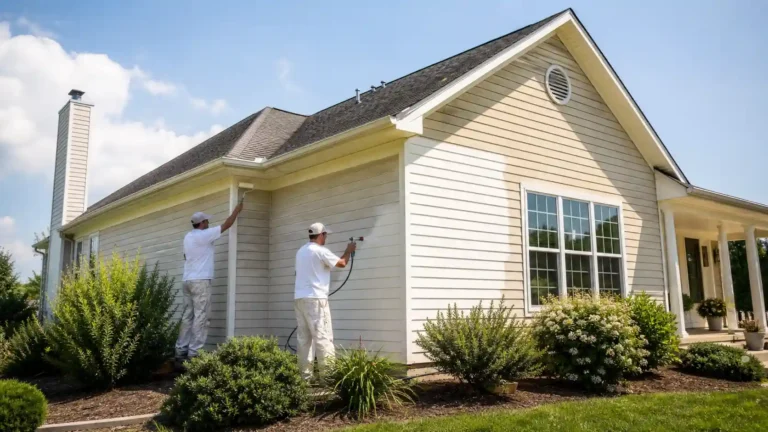
Yes, most common siding materials can be painted when the surface is sound and properly prepared. The paint must bond to the existing surface without trapping moisture or creating other problems.
Before starting, identify the siding material and check its condition. Look for cracks, warping, rot, loose panels, chalking, oxidation, mildew, and peeling coatings. These problems may need repair before painting.
Your paint choice also matters. Exterior paint needs enough flexibility to handle normal movement from temperature changes. The prep method also changes by material.
For example, vinyl siding has different needs than aluminum or wood siding. Sherwin-Williams recommends thorough cleaning for vinyl and warns that darker colors can cause standard vinyl siding to warp.
Also check the siding manufacturer’s warranty before you start. Painting may affect warranty coverage on some products.
Which Types of House Siding Can Be Painted?
Vinyl Siding
Yes, you can paint vinyl siding on a house when the panels are in good condition.
Vinyl needs a clean surface and a flexible exterior coating. A 100% acrylic exterior paint is a common choice. Do not assume that any exterior paint is safe for every vinyl product.
Color deserves extra care. Dark paint absorbs more solar heat. That heat can cause vinyl panels to expand, buckle, or warp. Sherwin-Williams now offers VinylSafe colors designed for sound, stable vinyl siding, including some darker shades.
If the vinyl is badly warped or cracked, painting will not fix the problem. Replace damaged panels first.
For more Explanation Then Visit to This Post:
Aluminum Siding
Can you paint aluminum siding? Yes, you can paint aluminum siding.
The main issue is oxidation. Older aluminum siding often develops a chalky film as its finish ages. Paint applied over that residue can have poor adhesion.
Clean the surface well and remove loose oxidation before painting. Sherwin-Williams recommends removing corrosion from aluminum and galvanized steel before coating.
A quality exterior acrylic or acrylic latex coating can work well. Bare areas may need the correct metal primer.
Metal and Steel Siding
Can you paint metal siding? Yes, you can paint metal siding, including many steel siding systems.
The first concern is rust or corrosion. Remove rust and loose material before applying a coating. Bare steel should be primed promptly after cleaning to help prevent new rust.
Galvanized steel can also need a compatible primer. Always follow the paint manufacturer’s instructions for the exact metal surface.
Wood Siding
Wood siding is one of the most paintable exterior surfaces.
The challenge is moisture. Wood that is wet, rotten, or badly deteriorated should not simply be covered with paint.
Remove loose paint, repair damaged wood, and prime exposed areas where required. A quality exterior acrylic paint can provide good protection when the wood is sound and properly prepared.
Fiber Cement Siding
Fiber cement siding can usually be painted successfully.
The exact approach depends on whether the siding has a factory finish, is bare, or has already been painted. Check the product instructions before coating it.
The surface must be clean and sound. Areas with exposed or repaired material may need primer before the finish coat.
Engineered Wood Siding
Engineered wood siding can usually be repainted if the boards are sound.
Pay close attention to moisture damage around seams, edges, windows, and other areas where water can enter. Repair damaged areas before painting.
Use a coating approved for the product and follow the manufacturer’s instructions.
Hardboard Siding
Older hardboard siding needs more inspection before painting.
Look for swelling, soft spots, delamination, rot, and damaged edges. If water has caused the board to break down, paint will only hide the problem for a short time.
Repair or replace damaged sections before applying a new coating.
Plastic or Polymer Siding
If you are wondering, can you paint plastic siding, the answer depends on the exact product.
Plastic siding can include different polymer materials, so do not treat every product like standard vinyl. Check the manufacturer’s coating guidance first.
The surface must be clean and stable. Use a compatible exterior coating that can bond to the plastic without becoming brittle as the siding moves.
House Siding You Should Not Paint
Not every siding surface is a good candidate for repainting.
Do not paint siding that has:
- Severe rot
- Major water damage
- Extensive warping
- Loose or failing panels
- Deep cracks
- Severe corrosion
- Structural problems
- Widespread coating failure
You should also stop if the surface cannot be cleaned or made stable enough for good paint adhesion.
Painting is a finish, not a repair for failed siding.
How Do You Know If Your Siding Is Ready to Paint?
Start with a close siding inspection.
Run through this simple check:
- Look for cracks and holes. Small defects may be repairable.
- Check for warping. Bent or buckled panels may need replacement.
- Look for rot. Pay close attention to wood siding and exposed edges.
- Check for moisture. Damp areas can lead to peeling and hidden damage.
- Check for chalking. Rub the surface with your hand. Heavy residue needs proper cleaning.
- Look for oxidation. This is common on older aluminum siding.
- Check for peeling paint. Loose coatings must be removed.
- Look for mildew. Clean biological growth before painting.
- Check damaged panels. Replace panels that cannot support a coating.
This inspection saves money because it catches problems before you spend money on paint.
If the home was built before 1978 and old paint will be disturbed by sanding or scraping, lead paint can also be a concern. The EPA recommends lead-safe practices and recommends certified contractors for applicable work on older homes.
Paint, Repair, or Replace? How to Decide
Condition | Best choice | Why |
Faded but sound siding | Paint | Mostly a cosmetic problem |
Minor cracks or small damage | Repair, then paint | Fix the substrate first |
Chalking or oxidation | Clean and prepare | Paint needs a sound surface |
A few damaged panels | Replace panels, then paint | Keeps the finish uniform |
Severe rot | Replace | Paint cannot restore rotten material |
Major warping | Replace affected siding | Warped material can cause coating failure |
Widespread moisture damage | Repair or replace | Moisture must be solved first |
Structurally sound but outdated color | Paint | A good candidate for repainting |
Painting often makes sense when the siding is structurally sound but looks faded or dated.
Replacement makes more sense when the siding itself is failing.
What Is the Best Paint for House Siding?
There is no single paint that is best for every siding material.
For many exterior siding projects, quality 100% acrylic paint or acrylic latex paint is a strong choice. These coatings offer good flexibility and weather resistance.
Look for features such as:
- UV resistance
- Fade resistance
- Mildew resistance
- Good adhesion
- Exterior durability
- Flexibility
- Compatibility with the siding material
Vinyl needs a coating designed for vinyl conditions. Metal may need a metal primer. Wood may need primer on exposed areas.
Do not choose paint only because the label says “exterior.” Match the paint system to the surface.
Do You Need a Primer Before Painting Siding?
Not always.
Primer depends on the siding, existing coating, surface condition, and paint system.
- Vinyl: Sound vinyl may not need primer when the chosen paint system allows direct application. Sherwin-Williams states that its specified acrylic topcoats can be applied to sound vinyl without primer.
- Aluminum: Oxidized or bare areas may need appropriate primer after cleaning.
- Metal: Bare steel and other exposed metal often need a compatible metal primer to control corrosion and improve adhesion.
- Wood: Exposed or repaired wood commonly needs exterior primer before the finish coat.
- Previously painted siding: A sound existing coating may reduce the need for full priming. Failed or unstable coatings need more preparation.
The goal is not to use primer everywhere. The goal is to use the right primer where the surface needs it.
What Color Can You Paint Siding?
You can change the color of many siding types, but color choice matters most with vinyl.
Dark colors absorb more heat than light colors. On standard vinyl siding, that extra heat can increase expansion and create warping or buckling. Sherwin-Williams recommends following product-specific color rules and offers VinylSafe colors for darker choices.
For vinyl, do not pick a dark color simply because it looks good on a paint card. Confirm that the color and paint system are approved for vinyl.
For other siding types, also consider:
- UV exposure
- Color fading
- Surface temperature
- Existing color
- Local weather
- Architectural style
Light and mid-tone colors can also help reduce the visual impact of fading and surface flaws.
How to Paint Siding on a House Step by Step
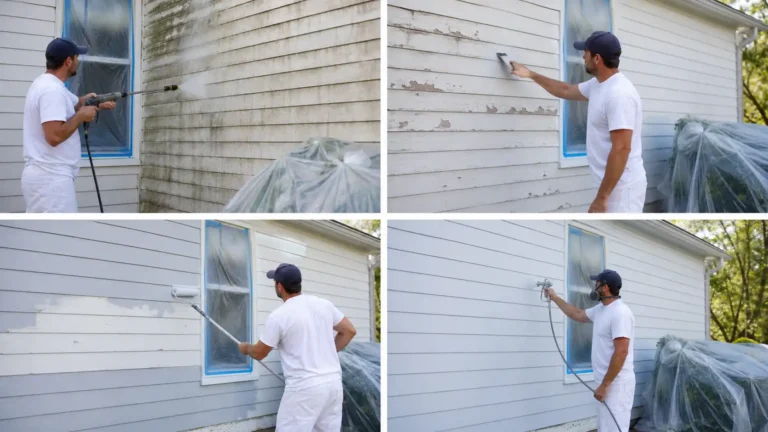
1. Inspect and Repair
Find cracks, rot, loose panels, rust, holes, and moisture damage. Make repairs before painting.
2. Clean
Remove dirt, dust, pollen, mildew, and other surface grime. Use the cleaning method recommended for the siding.
A clean surface is essential for paint adhesion. Sherwin-Williams also recommends thorough cleaning before painting vinyl siding.
3. Remove Chalking and Peeling Paint
Scrape loose paint and remove chalky residue. Do not paint over a powdery surface.
4. Sand Where Necessary
Sand only where the material and existing coating call for it. Avoid aggressive sanding on delicate siding.
If old paint may contain lead, follow EPA lead-safe procedures instead of treating sanding as a normal prep step.
5. Prime
Prime bare wood, exposed metal, repaired areas, or other surfaces that require primer.
6. Protect Windows and Landscaping
Use painter’s tape, plastic sheeting, and drop cloths around windows, doors, plants, fixtures, and other nearby surfaces.
7. Apply Paint
Use the correct exterior paint for the siding. Apply even coats without leaving heavy buildup.
8. Apply the Second Coat
Follow the product’s recoat time. Do not rush the second coat because the surface feels dry.
9. Inspect and Clean Up
Check for missed areas, runs, thin spots, and overspray. Remove masking carefully and clean your tools.
Avoid painting during rain, extreme heat, high humidity, or other conditions outside the product’s application range.
Should You Spray, Roll, or Brush House Siding?
A paint sprayer is often the fastest option for large siding surfaces. It gives good coverage across broad areas and textured profiles.
A roller works well on larger, flatter sections. It gives more control than spraying and creates less overspray.
A paintbrush is useful around trim, corners, edges, fixtures, and detailed areas.
A strong approach can combine methods:
Spray for broad areas, then back-roll or back-brush where the coating system and surface call for it.
Spraying is not automatically better. It requires masking, control, and the right technique. Wind can also carry overspray onto windows, cars, roofs, and landscaping.
What Causes Paint to Peel From Siding?
Peeling usually points to a problem below the final coat.
Common causes include:
- Poor surface cleaning
- Chalking
- Oxidation
- Moisture
- Poor paint adhesion
- Wrong primer
- Wrong paint
- Painting damaged siding
- Poor preparation
- Painting in unsuitable temperature or humidity
- Applying a coating outside its recommended conditions
The fix is not always another coat of paint.
If the underlying problem remains, the new coating can fail again.
How Long Does Paint Last on House Siding?
There is no reliable single number for every siding material.
As a practical planning range, painted siding often needs attention within about 5 to 10 years, but material, climate, sun exposure, paint quality, preparation, and maintenance can move that range.
HomeGuide currently estimates about 5 to 10 years for painted vinyl and aluminum siding.
Vinyl exposed to strong sun may fade faster. Wood can need earlier maintenance when moisture reaches the surface. Good preparation and quality paint can improve service life.
Think of paint lifespan as a range, not a promise.
How Much Does It Cost to Paint Siding?
Current national cost guides put siding painting at roughly $1 to $4 per square foot, depending on the material and preparation. HomeGuide lists about $1 to $3 per square foot for vinyl and $1 to $4 for aluminum or metal siding.
For a typical project, that can mean several thousand dollars.
HomeGuide reports an average range of about $1,500 to $5,000 for painting vinyl siding, while aluminum projects average about $1,500 to $7,000.
Angi’s 2026 data puts whole-house exterior painting at about $1.50 to $4 per square foot, with an average project cost of about $3,177.
Your actual price can change because of:
- Paintable square footage
- Siding material
- Surface repairs
- Cleaning
- Number of coats
- Paint quality
- Number of stories
- Ladder or lift access
- Trim and detail work
- Existing paint condition
Painting can cost much less than replacing sound siding. HomeGuide estimates siding replacement at roughly $4 to $13 per square foot installed across common materials.
For a local estimate, exterior painting services in San Diego can help you compare the cost of repainting against replacement. San Diego Custom Painting can inspect the siding, identify preparation needs, and recommend a coating system based on the material and condition. Contact the team to schedule an exterior painting estimate before committing to a full siding replacement.
Can You Paint Siding Yourself or Should You Hire a Professional?
DIY painting can work for a small, single-story home with sound siding and manageable access.
A professional is often the better choice when the project involves:
- Multiple stories
- Extensive surface prep
- Heavy oxidation
- Rust
- Peeling coatings
- Lead paint concerns
- Large spray areas
- Difficult access
- Major repairs
- Extensive masking
Safety also matters. Ladders, paint sprayers, scaffolding, and exterior surfaces can create real risks.
For pre-1978 homes where paid work will disturb old paint, EPA rules can require certified lead-safe practices.
How to Maintain Painted Siding
Good maintenance starts with regular inspection.
Wash exterior siding when dirt builds up. Look for mildew, peeling, cracks, damaged panels, and new moisture problems.
Do not wait until large areas fail.
For vinyl, gentle cleaning with soapy water and a soft brush is commonly recommended. Avoid aggressive pressure that can damage panels.
Keep gutters and downspouts working properly. Water should drain away from the siding.
Touch up small coating failures early. Early repairs are usually easier than repainting an entire wall.
Key Takeaways
- Most common siding materials can be painted.
- The siding material determines the right paint and prep.
- Sound vinyl can be painted with a compatible acrylic coating.
- Dark colors require extra care on vinyl siding.
- Aluminum needs careful cleaning when oxidation is present.
- Metal siding may need rust removal and metal primer.
- Wood must be dry and free from rot before painting.
- Fiber cement and engineered wood can usually be repainted when sound.
- Plastic siding needs product-specific coating guidance.
- Damaged siding should be repaired or replaced before painting.
- Primer is needed for some surfaces, but not every siding project.
- National painting costs commonly fall around $1 to $4 per square foot.
- Good preparation is one of the biggest factors in paint durability.
FAQs About Painting House Siding
Will paint peel off siding?
It can if the surface is dirty, chalky, damp, poorly prepared, or incompatible with the coating. Good prep and proper paint selection greatly reduce the risk.
Is it cheaper to paint or replace siding?
Painting is usually cheaper when the existing siding is structurally sound. Replacement makes more sense when the siding has widespread damage or is near the end of its useful life.
Can u paint siding on a house that’s over 20 years old?
Yes, as long as it’s still structurally sound. Older siding often needs extra cleaning and priming to remove years of chalking and buildup before paint will stick well.
Can you paint vinyl siding on a house a darker color?
It’s not recommended unless the paint is specifically labeled vinyl-safe. Dark colors absorb more heat and can cause vinyl panels to warp.
How often should painted siding be repainted?
A common planning range is around 5 to 10 years for many painted siding surfaces, but sun, weather, material, preparation, and paint quality can change that timeline.
How do I know if my home has lead paint before repainting?
Homes built before 1978 are more likely to have lead-based paint. Check the EPA’s Renovation, Repair, and Painting Program guidance before scraping or sanding an older home’s siding.
What’s the best paint brand for vinyl siding?
Look for a paint line with vinyl-safe technology, such as Sherwin-Williams’ VinylSafe colors, which are formulated to resist warping even in darker shades.