
You can paint aluminum siding, and done right, it can look great for over a decade. The catch is that most peeling jobs fail for the same two or three reasons, every time.
This guide walks through how to paint aluminum siding the way a professional actually does it — prep, primer, paint, and the mistakes that cause callbacks.
Table of Contents
ToggleCan You Paint Aluminum Siding? Yes Here's Why It Works
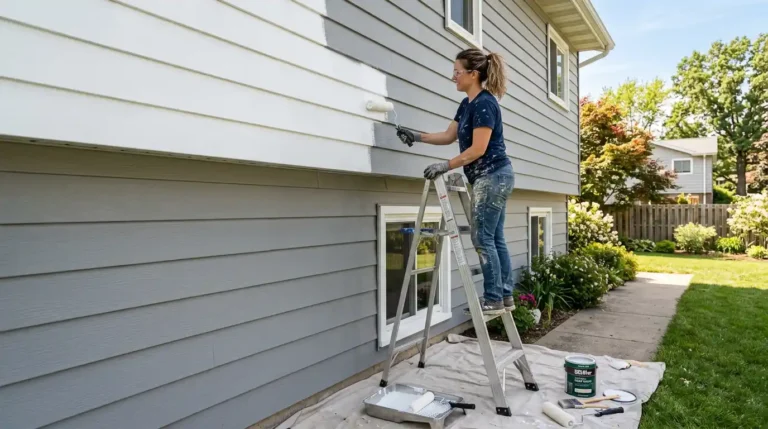
Aluminum siding takes paint well once you understand what you’re working with. It’s a metal surface, not a porous one like wood, so paint doesn’t soak in. It has to grip. That’s the whole ballgame.
Over time, aluminum siding develops a chalky, powdery film on the surface. That’s oxidation. Run your hand across an older panel and if it comes away covered in white or gray dust, that’s the chalk test, and it tells you the surface needs extra cleaning before anything else happens. Skip that step and your new paint bonds to the chalk layer instead of the metal and the chalk layer lets go.
Quick reality check on painting exterior aluminum siding:
- It typically costs 50-70% less than tearing off and replacing siding.
- A properly painted job holds up 10-15 years before it needs another coat.
- It won’t fix dents, corrosion holes, or structural damage paint hides color problems, not physical ones.
- It’s a legitimate move if the panels are still straight and solid, just faded or chalky.
Before You Touch a Brush: Check for Lead Paint
If your home was built before 1978, stop and test for lead before you sand, scrape, or power wash anything. Aluminum siding installed on older homes was frequently coated at the factory with lead-based paint, and disturbing its sanding especially can release lead dust into your yard and your lungs.
A $10 lead test swab from the hardware store gives you a same-day answer. If it comes back positive, this becomes an EPA RRP (Renovation, Repair, and Painting) job, and you want a certified contractor handling it, not a weekend DIY project. This step gets skipped in almost every guide on this topic, and it’s the one that actually protects your family.
How to Prep Aluminum Siding for Paint
Prep is 80% of the job. Painters who’ve been doing this for years will tell you the paint itself rarely fails, bad prep is what fails.
Step 1: Inspect the Siding
Walk the full perimeter and check every panel for:
- Dents or bent sections (fill with an epoxy filler rated for metal)
- Corrosion spots or pitting (treat with a rust-converting product before priming)
- Loose or popped panels (re-secure before painting, not after)
- Caulking gaps around windows, doors, and trim (reseal with a paintable exterior-grade caulk)
Step 2: Wash It — Properly
A pressure washer alone won’t cut it if there’s chalking or mildew. The standard approach:
- Mix a solution of water and TSP (trisodium phosphate), or a phosphate-free substitute if you’re near plants or a storm drain.
- Wash top to bottom, then rinse spraying downward never straight into the panel seams, or you’ll force water behind the siding where it won’t dry.
- Let the siding dry a full 24-48 hours before moving on. Painting over damp aluminum is one of the fastest ways to trap moisture and cause blistering.
Step 3: Sand the Chalky Areas
Light sanding with 80-120 grit sandpaper knocks down the remaining chalk and gives the primer something to grip. You’re not trying to strip the surface, just dull it and clear the powder.
Step 4: Prime With the Right Product
This is where a lot of DIY jobs go wrong. Aluminum needs a bonding or self-etching primer made for metal a standard wall primer won’t hold. The self-etching type contains a mild acid that micro-etches the metal surface so the paint has something to lock onto.
Best Paint for Painting Aluminum Siding
Skip oil-based paint entirely. Aluminum expands and contracts more than wood or vinyl as temperatures swing, and oil-based paint is too rigid; it cracks over a season or two.
What actually works:
- 100% acrylic latex paint — flexes with the metal instead of fighting it, resists UV fading, and breathes enough to let trapped moisture escape.
- Satin or eggshell finish — hides minor surface imperfections better than gloss and doesn’t highlight every seam.
- Light to mid-tone colors — dark colors absorb more heat, which accelerates expansion and can stress the paint film over time. Not a dealbreaker, just something to weigh.
Sherwin-Williams Duration and Benjamin Moore Aura Exterior are two products painting crews reach for regularly on aluminum jobs, specifically because both are built to stay flexible.
The Best Way to Paint Aluminum Siding: Application
- Spray vs. brush/roller: An airless sprayer gives the most even, professional finish and is faster on a full house but it takes practice to avoid drips and overspray on windows, plants, and cars. A roller with a brush for cutting in around trim is the realistic DIY option and still produces a solid result if you take your time.
- Two thin coats beat one thick coat: A heavy single coat looks fine on day one and sags, cracks, or peels within a year or two. Two thin coats cure properly and hold up.
- Watch the weather window: Paint between 50°F and 85°F, with humidity under 70%, and avoid direct afternoon sun on the panel. You’re working the paint skins over too fast and won’t level out. Early morning or late afternoon works best in warmer climates.
- Let each coat cure fully: Before the next check the product label, but 4-6 hours minimum is typical for acrylic latex in good drying conditions.
You may also want to read these posts:
Painting vs. Replacing Aluminum Siding
Factor | Painting Aluminum Siding | Replacing Aluminum Siding |
Average cost | $1.50-$3.50 per sq. ft. | $6.00-$12.00 per sq. ft. |
Typical lifespan | 10-15 years with proper prep | 30-50 years |
Timeline | 3-7 days (average home) | Several weeks |
Fixes dents/corrosion | No — cosmetic only | Yes — full replacement |
Best for | Solid panels, faded/chalky finish | Damaged, warped, or corroded panels |
If the siding is still straight and sound, painting is the smarter move financially. If you’re looking at widespread corrosion or panels that have pulled away from the frame, no amount of paint fixes that.
Myth vs. Fact
Myth: You can paint over chalky aluminum siding without washing it first, as long as you use a thick coat.
Fact: Paint applied over chalk residue bonds to the powder, not the metal. It’ll peel in sheets within a season, no matter how thick the coat is.
Myth: Any exterior paint works on aluminum, since it’s outdoor paint either way.
Fact: Oil-based and non-flexible paints crack under aluminum’s expansion and contraction. It has to be 100% acrylic latex with a bonding primer underneath.
What 26+ Years of Painting Aluminum Siding Has Taught Us
Almost every peeling job we get called out to repair traces back to one of two things: paint applied straight over chalk, or the wrong primer used to save a few dollars. Neither shows up as a problem for the first six months that’s exactly why homeowners get blindsided by it in year two.
The other pattern worth mentioning: houses that get painted in direct, high-heat sun almost always show more brush marks and uneven sheen than ones painted in the shade or during cooler morning hours. Timing the work around the weather isn’t a minor detail; it’s often the difference between a finish that looks professional and one that doesn’t.
Conclusion
Painting aluminum siding comes down to a short list of non-negotiables: wash off the chalk, check for lead on older homes, prime with a bonding product made for metal, and finish with two thin coats of 100% acrylic latex. Skip any one of those and you’re looking at peeling paint within a couple of years instead of a decade-plus.
Paint technology keeps getting better at flexing with metal through temperature swings, so a well-prepped job today should outlast what was possible a decade ago. If you’d rather have it handled by people who’ve prepped and painted hundreds of these panels, SD Custom Painting offers exterior painting services in San Diego and can walk your property with you before any work starts.
Have a coastal home where salt air adds another layer to the equation? That’s worth a conversation before you pick up a brush.
Frequently Asked Questions
How long does paint last on aluminum siding?
A properly prepped and painted job typically lasts 10-15 years. The lifespan depends almost entirely on prep quality washing, sanding, and primer rather than the paint brand alone.
Do you need to sand aluminum siding before painting?
Yes. Light sanding with 80-120 grit paper removes chalking and gives the primer a surface to grip. Skipping this step is one of the top causes of early peeling.
Can you paint aluminum siding without a primer?
Technically you can, but it’s not recommended. Without a bonding or self-etching primer, paint adheres poorly to bare metal and tends to peel or flake within a year or two.
Is it better to paint or replace aluminum siding?
If the panels are structurally sound and just faded or chalky, painting is the more cost-effective choice. If there’s significant corrosion, dents, or warping, replacement solves problems paint can’t.
What’s the best paint for painting aluminum siding?
100% acrylic latex paint in a satin or eggshell finish. It flexes with the metal’s expansion and contraction, unlike oil-based paint, which tends to crack over time.
How do I know if my aluminum siding has lead paint?
If your home was built before 1978, test before sanding or scraping. A hardware-store lead test swab gives a fast answer, and a positive result means the job should follow EPA RRP guidelines.