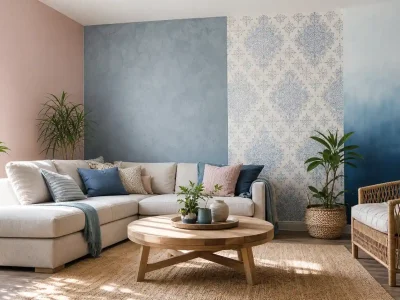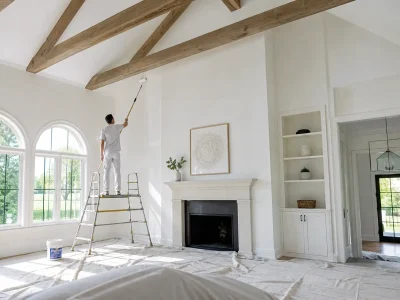

How do you use paint in a room? Have you ever noticed how nice a wall can make your apartment or commercial building? Not only do they create defined space, but they also add charm and convenience—from a fabulous wall finish that makes your space feel bigger if it’s small to creating a cozy corner. But it’s not just about adding a pretty color! What’s your favorite room?
Understanding your wall painting styles can aid homeowners in discovering a style that fits their decorating preferences, everyday maintenance levels, and also spending plan. Several of the styles can develop a traditional flat appearance, while others can include a textured or attractive surface to the wall. With just a little bit of information about the various styles, you will have the ability to discover a pretty surface for your wall that will stay in place.
Table of Contents
ToggleIf you’re decorating your bedroom, designing a commercial interior, or even working on an outside project for your house, our blog will show you the leading wall painting techniques and benefits, and discuss some of the factors to consider.
1. Traditional Wall Painting
This is the most common form of wall paint in use. It is ready-made paint from the paint industry. It is used on wallboards, primed wallboards, and wood, in addition to other surfaces. Painting walls can be achieved with a paint roller, paint brush, or spray paint.
For this method, the rooms you can do it in are bedrooms, master bedrooms, hallways, studies, and any other space in the home that has a very flat and smooth surface. Owners who do not want their room to be overdecorated can select from neutral colors, bold colors, or pastel colors.
Traditional painting benefits
- Available in many colors: Colors are intended to complement current décor, furniture, and flooring.
- Affordable results: Standard painting is often less costly than elaborate decorative textures.
- Maintenance is easy: Contrary to popular belief, most painted walls can be washed using an appropriate cloth along with a mild cleaning agent depending on the paint finish.
- Fresh coat of paint: ideal when all you need is to give a room a facelift or update its color scheme.
If you are more interested in having a nice, appealing finish on your walls without the need for complete decorations, then our traditional painting services are perfect for you.
2. Textured Wall Painting
Introduce Textured Paint in Your Home. It isn’t just monotonous walls anymore when you use textured painting in a room. This method is being adapted for use on feature walls to add texture and interest to bedrooms, living rooms, reception rooms, and commercial buildings. These can be applied to walls in rooms that do not have much in the way of furnishings or decoration.
Advantages of Textured Painting
- Some details and upgrades: Texture provides detail to empty walls.
- Design: The designs allow homeowners to set their homes apart.
- Camouflages small surface imperfections: The surface imperfections are camouflaged by using certain textures, but they still have to be repaired properly.
- Available in different materials: Textured finishes can work well in a contemporary setting, with the heavier types better in a rustic or traditional setting.
A textured finish is sometimes more time-consuming to apply than a basic coat of paint, and it will also require more work to keep dust off, as dust particles can get trapped in the various contours of a textured surface. Consider the function of the room when choosing a textured finish.
3. Decorative Wall Painting
Just one of those times when you think it would be nice to put some pizzazz on the walls? This is what is called a multi-layer wall finish, and it is much more than paint in a single color. You can create interesting patterns and finishes with the use of a sponge or rag, brush, or even a stencil or a special glazing product. Look, here’s the thing: faux finishes are meant to resemble an actual material or product.
Advantages of Decorative Painting
Have you pondered the effects of decorative paint? Firstly, it provides an opportunity to make your room unique with decorative features and reflects your preference as well as matches the overall atmosphere of your property.
What’s more, it introduces distinctive features that become the eye-catchers on select walls or architectural components.
You also have a huge amount of flexibility too—patterns can be something to look out for, or they can be works of art.
The fact is, on some projects, you’ll be able to spend a little less by applying painted finishes as opposed to other types of materials, based on what the design is and how much labor is involved.
Therefore, shall we go for an ornate pattern on a feature wall? It adds many layers without making the space feel too congested.
4. Stencil Wall Painting
Want to get a little more playful with your walls? Stencil painting uses a stencil, either disposable or reusable, with a shape, pattern, letter, or design that can be painted onto a wall by a roller, paintbrush, or some other type of applicator. Hold the stencil flat while you paint. Stencil painting is perfect for recurring shapes like floral or repeated ones. It is also just a great way to add a lot of detail without paying somebody to do a whole mural.
Advantages of Stencil Painting
The fun part about stencils is you can create nice, repeated designs with templates for a stunning wall. You don’t have to be an artist to do this; even simple stencils can make you look like a pro for a very reasonable price. So, are you feeling a little modern, traditional, or quirky? Well, here’s the great thing: matching stencil colors to your home décor can be very easy.
All you need to do is make sure you push down your stencil firmly onto your wall surface and use the lightest coat of paint possible. Let your base coat dry. If it’s not dry, wait until it is.
5. Sponge and Rag-Roll Painting
To sponge-roll paint onto a wall, take a sponge and dab it in the color, or use a rolled-up or twisted-up piece of fabric. They leave a little surface texture as well; that’s a little bit different than a lot of the specialty coatings, so I think that’s a good thing to know about. So where would you put them? Living Room? Dining Room? Even your bedroom? Anywhere that you’d want a little bit softer decorative finish!
Advantages of Sponge and Rag-Roll Painting
- Adds depth: layered shades usually make wall colours look lush rather than flat.
- Offers creative flexibility: different tools and application methods work differently.
- Updated design: This finish can give your room a fresh new look without changing furniture or layout.
Keep it even. Don’t overwork the roller, lay on excess paint, or push the roller too hard, as this can cause uneven coverage of the pattern. Practice your roller technique on a test board before tackling the entire room to see if you like the outcome.
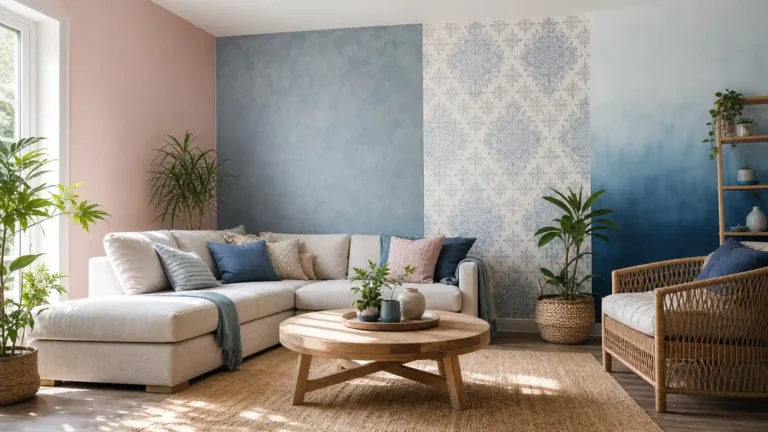
6. Ombre Wall Painting
Ombre is a style of painting that requires the artist to blend two or more colors together, typically a gradient from a light to a darker hue or a pair of complementary hues. The colors are blended seamlessly.
This is a very popular technique to use in your kids’ and baby’s room, artist workroom, and modern and minimalist lounge rooms. A well-done ombré wall can be very beautiful and add a feature to your room without the clutter.
Advantages of Ombre Painting
- Has a modern style: Use a gradual change of color for a modern design.
- Imparts a sense of elevation or extent: Judiciously interlaced dark and light colors can simulate the sensation of extent in a room.
- The combinations can be customized to match the décor of a property.
- Fewer walls to decorate: Maybe just one standout wall is all you need.
7. Outdoor Wall Painting Techniques
There are various benefits that exterior painting can serve, not only to protect the outside of a property but also to enhance the appearance of a property. The outside walls of the property are different from the indoors, as they get exposed to humidity, rain, dirt, the sun, and temperature fluctuations.
Exterior wall finishing involves using a roller for a smooth surface, spraying paint onto large wall areas, and using a paintbrush around structural features or corners of your house. Think about all your choices before deciding on the type of wall finish.
Advantages of Exterior Wall Painting
Before any visitor steps inside, your home’s exterior is the first thing they see, and fresh paint is one of the easiest ways to beautify it.
A fresh coat of paint is the best way to improve your home’s appeal. Your home will look clean and fresh and really shine.
But there’s more to it than just the aesthetic value. New exterior paint is a great way to safeguard your home from surface deterioration as well as weather damage.
But then what do you want to do to get long-term results? You want to sand down any peeling paint and surface damage as soon as possible so that they don’t turn into larger problems. You want to power wash or scrape and sand away loose paint, repair areas of damage, and select primer and weatherproofing paint based on the type of material you have on your house.
If your home was built before 1978, peeling paint may contain lead, so follow the EPA’s lead-safe renovation and painting guidelines before scraping or sanding. And avoid painting if the weather is “iffy,” or the forecast calls for rain.
How to Choose the Right Wall Painting Method
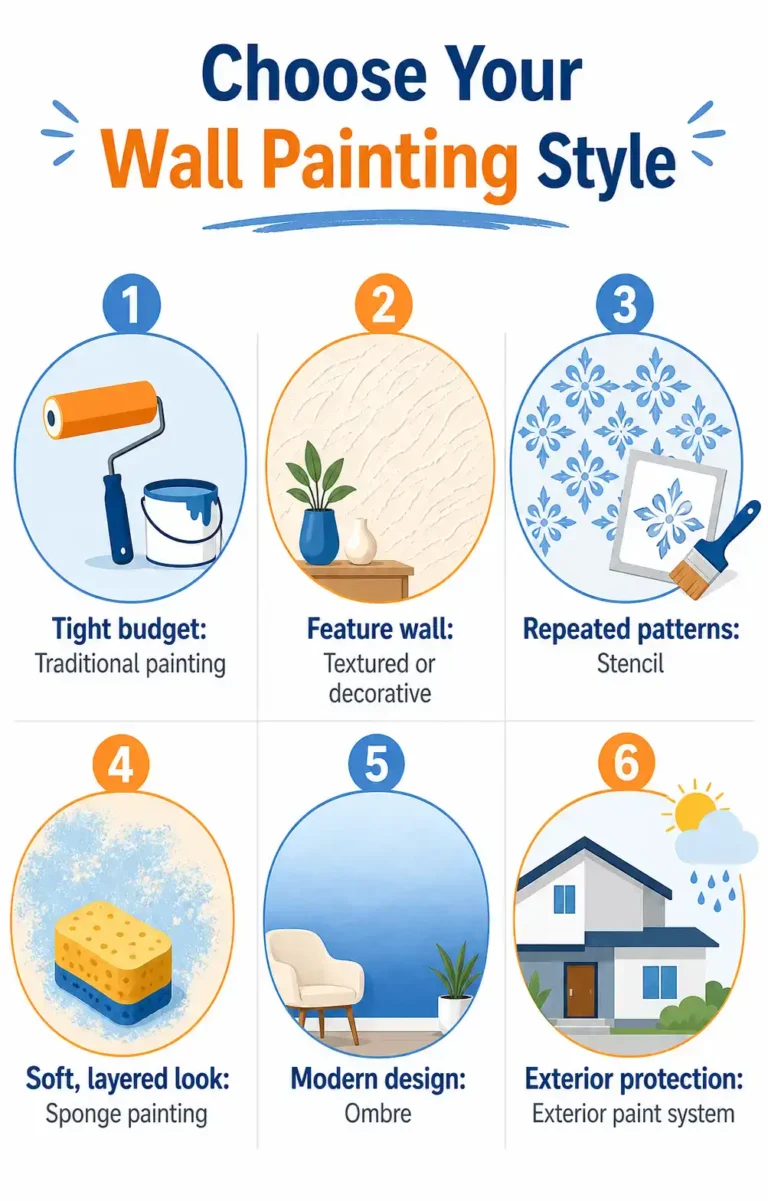
Use these factors to narrow down your options:
Consideration | Recommended approach |
Tight budget | Traditional wall painting |
Feature wall | Textured or decorative painting |
Repeated patterns | Stencil painting |
Soft, layered appearance | Sponge painting or color washing |
Contemporary design | Ombre painting |
Custom artwork | Mural painting |
Exterior protection | Suitable exterior painting system |
Have you ever stood scrubbing a wall and asking yourself, “What am I actually trying to scrub off of here?” If you have heavy foot traffic in your hallways and stairs, you’ll need a scrubbable wall finish.
Essential Wall Painting Tips for Better Results
Here’s a tip: don’t brush on any paint until you’ve filled and caulked all cracks and dents, removed grime, scraped off peeling paint, sanded everything, and primed the surface. Making those walls pop? That’s 100% prep.
Here’s a hint: always do a test patch. That way, you can see how the color looks in bright light and low light. And make sure you always check the directions on the drying time, the washing, and the ventilation, since paint fumes can affect indoor air quality. Following these tips on how to paint will help you prevent many of the most common and annoying problems, including blotching, flaking, roller stipple, and uneven color.
Conclusion
Want a little taste of the good life without spending a fortune? Well, here’s the lowdown! Is your room in need of a makeover? Painting is an inexpensive way to keep your room feeling brand new, and for all those exciting wall finishes or washes, you get stunning effects from your paint in different colors and textures, even with a roller or brush. Be sure to top it all off with some awesome exterior coating.
So, before you get to the painting stage, imagine what your finished product will be, how often you’ll want to refresh it, and the shape of the surface. A good prep and primer are just as important as the roller. Are you ready to roll?
FAQs
What’s the best way to paint your wall for a contemporary home?
Want to modernize your home? Go for the good old painted wall, with matching colors, shapes, stencil work, and even the use of the ombré effect! Thinking about a feature wall? This could be a great solution to add some extra room to your room!
How can you make exterior paint last longer?
Looking to keep your outside paint lasting long? It’s all about the prepping, fixing all damage, and using the right primer and quality exterior coating for the wall type you have and the season it is. Do you think you have what it takes to make it last?
Is it worth hiring a professional to paint the walls?
Thinking DIY? Think again! Big areas, high-traffic walls, challenging surfaces, exterior walls, murals, and decorative finishes—a professional can help with prep, product selection, and really even out the finish. Want that assurance?