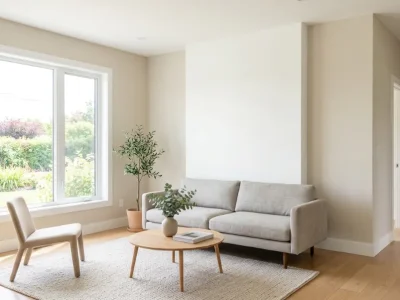

Most homeowners spend hours picking the perfect wall color. Then they look up and panic. What do you do with the ceiling?
If you have been wondering should the ceiling and walls be the same color, you are not alone. The quick answer: Yes, it can work great, but it depends on how big your space is, how much natural light it gets, and how high the ceiling is. This guide breaks down exactly when to match them, when not to, and how to get the best results without wasting money.
Table of Contents
ToggleKey Takeaways
- Matching ceiling and wall colors creates a cohesive, enveloping look that works best in rooms with good ceiling height and adequate natural light.
- Light colors on both surfaces make small rooms feel larger.
- Dark colors add intimacy but need proper lighting to avoid a closed-in feeling.
- Using different paint finishes on walls versus ceilings adds depth even when the color stays the same.
Should You Paint the Ceiling the Same Color as Walls?
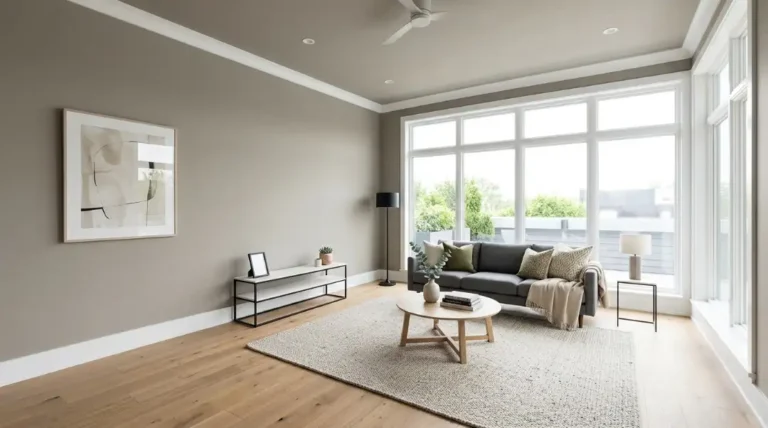
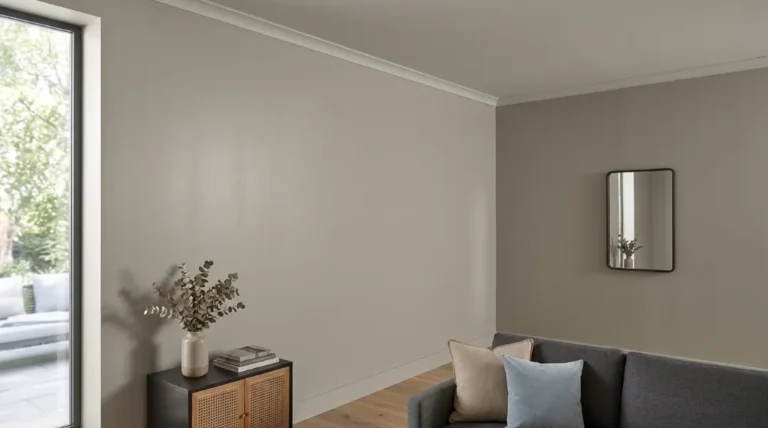
Yes, painting the ceiling the same color as the walls creates a unified, visually expanded space. This approach works especially well in rooms with 9-foot or higher ceilings and good natural light. Rooms with 8-foot ceilings and limited windows need careful color selection to avoid a closed-in feeling.
For good reason, interior designers call the ceiling the “fifth wall.” It covers as much space as your biggest wall. Ignoring it with plain white might actually make your space look worse, especially if your wall color has warm undertones that clash with a brilliant white ceiling.
Room-by-Room Decision Guide
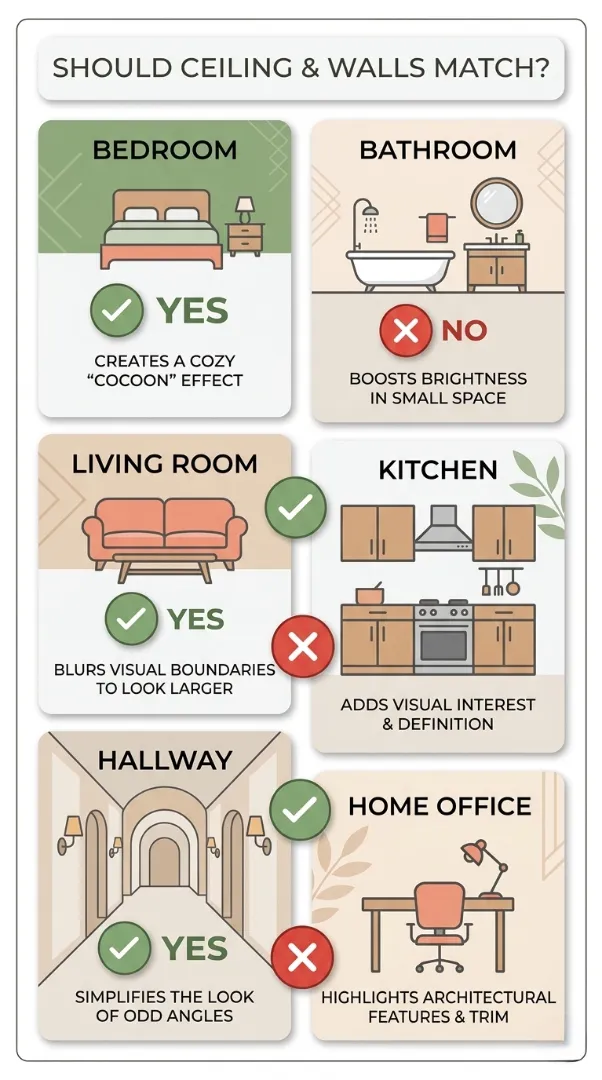
Before choosing any color, know your room first. This is what most guides skip entirely.
Bedroom: Yes. Matching colors create a cozy, cocoon-like atmosphere. Dark shades like deep navy or forest green work well here.
Powder Room or Small Bathroom: Yes. Dark, saturated colors on all surfaces create a dramatic, modern look. Small rooms are about impact, not space.
Living Room: Depends. Large rooms with high ceilings handle matched colors well. Standard 8-foot rooms look better with a lighter ceiling shade.
Kitchen: Mostly no. Kitchens benefit from a white or light ceiling for brightness and light reflection.
Hallway: Use caution. Narrow hallways with dark matched surfaces can feel tunnel-like. Light or neutral colors work better.
Home Office or Den: Yes. Deep greens and blues create focus and intimacy in workspaces.
Pros and Cons of Painting Ceiling Same Color as Walls
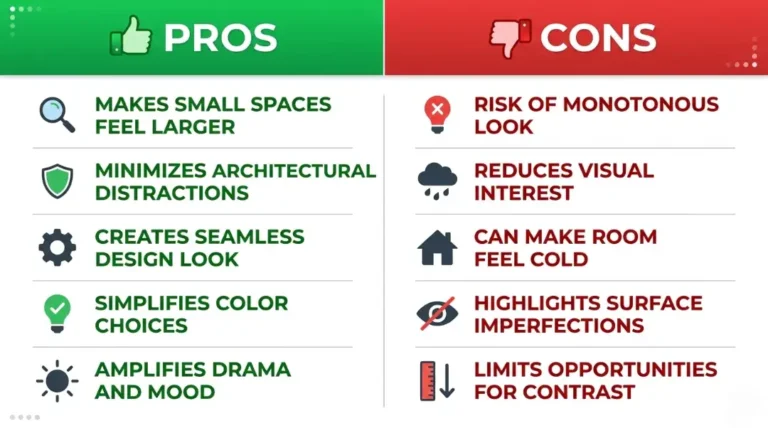
Every design decision has trade-offs. Understanding the pros and cons of painting ceiling same color as walls helps you avoid a look that feels flat or overwhelming.
The Benefits
Creates a cohesive look. When walls and ceiling share the same hue, there are no harsh lines interrupting your eye. The room feels intentional and complete.
Makes rooms feel larger. Without the strong contrast between a white ceiling and colored walls, the room’s boundaries blur. Light colors amplify this by reflecting light across every surface.
Hides awkward architecture. Rooms with angled ceilings, exposed beams, or sloped walls benefit most from color continuity. The consistent color can hide an uneven transition line at the slope while making the space feel unified.
Simplifies your color scheme. One color means no second-guessing undertone matches. No risk of a warm wall clashing with a cool white above.
Saves money. Buying one color in bulk costs less than two separate colors. A standard bedroom project runs $105 to $195 in paint versus $90 to $165 for separate wall and ceiling colors.
Amplifies drama. If you want a moody vibe, a white ceiling works against you. Using the same dark color on walls and ceiling locks in that atmosphere. A flat paint finish on both is very popular right now for exactly this reason.
The Drawbacks
Lack of contrast. Without a visual break at the ceiling line, some rooms feel flat and less interesting. This matters most in large, open rooms.
Highlights imperfections. Consistent color across walls and ceiling makes every crack and rough patch more visible. Smooth your surfaces before painting.
Can feel overwhelming. Bold or very dark colors covering every surface can feel intense if not balanced with lighter furniture and decor.
Requires more paint. A standard 12×12 bedroom ceiling adds roughly 144 square feet to your project.
Important Considerations Before Deciding
Before you start painting ceilings the same color as the walls, evaluate these three environmental factors.
Room Size and Ceiling Height
In a small powder room, using colors that match makes it feel like a jewel box, which is very nice. The same method may make a huge living room with 20-foot ceilings feel overly weighty. If your ceilings are low (8 feet or less), it’s usually safer to stay with bright colors or a white ceiling to keep the room feeling open.
Natural Light and Exposure
The amount of sun a room gets changes how a paint color behaves. A south-facing room with huge windows can handle dark colors on all surfaces. A north-facing room with limited light might make a medium-gray look muddy or depressing if it covers the entire space.
Architectural Features and Trim
If your home has beautiful white crown molding, it acts as a perfect frame between matching walls and ceilings. However, if you have no trim, the transition needs to be flawless. This technique is excellent for hiding “bulkheads” or HVAC soffits that usually stick out when painted white.
What Paint Finish Is Best for Ceilings and Walls?
This detail separates a good paint job from a great one.
- Ceiling finish: Flat or matte is the standard choice. It absorbs light and hides surface imperfections. Most ceilings are not perfectly smooth, so flat paint is forgiving.
- Wall finish: Eggshell or satin handles daily cleaning better and adds a slight warmth to the color. Satin has a subtle sheen that enriches the look without being glossy.
- The smart move: Use the same color but different finishes. Flat on the ceiling, satin on the walls. You get the visual continuity of matched color with subtle texture variation that adds real depth.
Flat works best for ceilings and hides imperfections. Eggshell suits most walls with a slight sheen and easy cleaning. Satin gives a richer look for high-traffic walls. Semi-gloss is best for trim, bathrooms, and high-moisture areas.
Tips for Successfully Matching Colors
Test with large sample boards. Paint a 2×2 foot board and hold it against both surfaces at different times of day. Watch how natural light changes the color from morning to evening. This $10 to $15 investment prevents a $300 mistake.
Go one shade lighter on the ceiling. If you are not ready for a full match, go one shade lighter on the ceiling. A medium blue wall with a pale blue ceiling still feels unified and cohesive.
Use white or cream trim. Adding white trim against matched walls and ceiling creates clean definition without breaking the color story.
Balance dark rooms with lighter decor. Matched dark colors need contrast from somewhere. Lighter furniture, bright rugs, or metallic accents add the visual interest the room needs.
Prime bare surfaces first. Skipping primer on bare drywall leads to uneven coverage and wasted paint. Always seal the surface before applying your chosen color.
Use the right roller nap. Smooth ceilings need a 3/8-inch nap. Textured ceilings need a 1/2-inch nap. The wrong roller creates streaks and uneven coverage.
Color Ideas for Matched Ceilings and Walls
- White rooms remain a classic choice. Clean, bright, and universally adaptable to any furniture style. Interior designers often start here when clients want the matched look without committing to color.
- Blue tones are among the most versatile. Deep navy creates drama in bedrooms. Pale blue-gray gives calm, airiness to living spaces. Blue pairs well with wood, white, and warm metallics.
- Green shades have become the most popular matched color in recent years. Sage, forest green, and olive feel grounded and natural. Great for dens, offices, and bedrooms.
- Warm neutrals like camel, greige, or warm taupe create an enveloping feel without going dark. These work well in living rooms and dining areas where you want intimacy without drama.
Choose SD Custom Painting for Interior Painting in San Diego, CA
Getting the proper color is simply one aspect of the job. The difference between a professional job and a DIY job that needs to be redone is how well the walls and ceiling are done.
San Diego Custom Painting has helped hundreds of homeowners across the area make confident color decisions and achieve clean, long-lasting finishes. Whether you are color-drenching a bedroom, refreshing a living room, or tackling a full home repaint, our team handles surface preparation, primer, and application with real attention to detail.
If you are ready for professional interior painting services in San Diego, we offer free quotes and guide you through color selection based on your specific room, lighting, and goals.
Conclusion
The question of whether the ceiling and walls should be the same color does not have one universal answer. High ceilings, good natural light, and a clear design vision make matched colors a strong choice. Standard ceilings with limited windows often look better with a lighter ceiling that reflects brightness.
First, figure out what kind of room you have and what you want to do in it. Before you buy, try out your color on big boards. For depth in the same hue, use a flat finish on the ceiling and a satin finish on the walls. One of the cheapest ways to change how a space feels is to paint the walls and ceiling at the same time.
Frequently Asked Questions
Does painting the ceiling the same color as the walls make a room look bigger?
Yes, particularly with light colors. Removing the contrast between surfaces blurs visual boundaries and creates a more open feel. Dark matched colors create intimacy rather than perceived size.
Should I paint ceilings the same color as walls in a small room?
Yes, if you use light or medium tones. Light matched colors on all surfaces make a small room feel more open and less cluttered than a stark white ceiling with colored walls.
What is the best paint finish for ceilings?
Flat or matte finish is best for most ceilings. It hides surface imperfections and reduces glare. Use eggshell in bathrooms or high-moisture areas.
Should I paint the ceiling or walls first?
Always paint the ceiling first. Drips land on unpainted walls, which you cover afterward. This reduces touch-up work significantly.
What colors work best for matched ceilings and walls?
Soft neutrals, white, sage green, navy blue, and warm gray are among the most successful choices. Bold colors can work in smaller rooms with good lighting and intention.