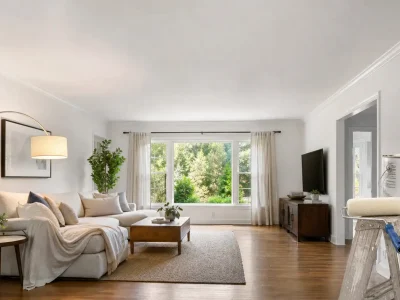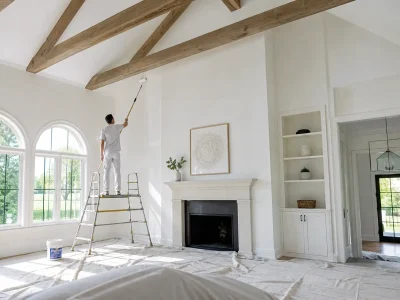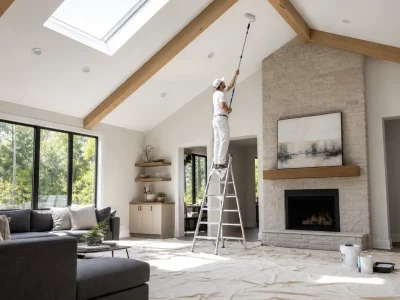

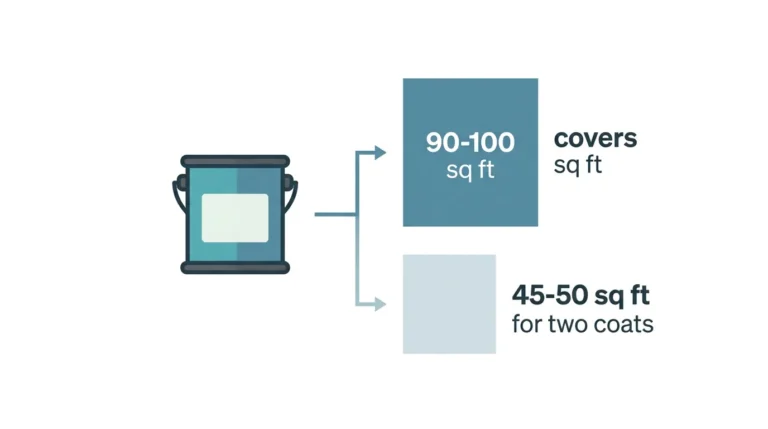
A ‘quart’ (approximately one liter) of paint covers an area of about 90 to 100 square feet with a single coat on a smooth, primed wall. Most paint containers list this coverage rate, although rough or porous surfaces may require more paint. Applying two coats cuts this coverage area in half to 45–50 square feet because you are painting the same surface twice.
This guide details actual paint coverage, explains how to calculate the amount needed for your walls, and clarifies when a quart will suffice versus when you will need a full gallon.
Table of Contents
Toggle
How Many Square Feet Does a Quart of Paint Cover?
A quart of paint commonly covers about 100 square feet with one coat. Sherwin-Williams uses 100 square feet as its quart coverage figure and notes that actual product needs can change with the application method, surface type, and surface condition.
For planning, this simple chart is useful:
Painting plan | Approx. area from 1 quart |
One coat | 90 to 100 sq. ft. |
Two coats | 45 to 50 sq. ft. |
Think of this as a planning range, not a promise printed for every paint product. The quart of paint coverage on the can may be different from another brand or formula.
The label on your paint can is the final source for its stated coverage rate. A gallon contains four quarts, so a simple quart estimate is roughly one-fourth of the gallon coverage when the same product and application conditions are used.
For example, a paint listed at 400 square feet per gallon works out to about 100 square feet per quart. Sherwin-Williams lists many paint products at roughly 350 to 400 square feet per gallon, while its calculator gives 100 square feet for a quart.
Is 1 Quart of Paint Enough for One Wall?
Yes, one quart can be enough for a small wall, especially when you need one coat and the wall is smooth.
The easiest way to check is to measure the wall width and wall height.
An 8-foot by 10-foot wall has:
8 × 10 = 80 square feet
That leaves some room under a 100-square-foot coverage estimate for one coat.
A 10-foot by 10-foot wall has:
10 × 10 = 100 square feet
That is right at the common one-quart benchmark. It may work for one coat on a smooth surface, but there is little room for waste or extra paint use.
The answer changes when you need two coats. An 8 × 10 wall still has 80 square feet of surface, but two coats require 160 square feet of paint coverage. One quarter may not be enough for that job.
Also subtract large areas that you are not painting, such as doors and windows, when you are measuring a larger room. That gives you a better estimate of the true paintable area. Architectural Digest uses this same approach when estimating paint needs for walls.
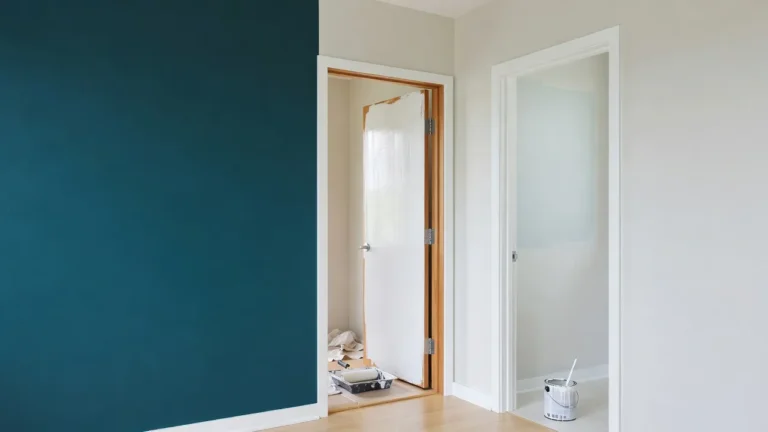
For a small accent wall, one quart is often a practical choice. Sherwin-Williams also lists an accent wall as a suitable quart-size project.
How Much Area Does a Quart of Paint Cover With Two Coats?
Two coats change the math because the same surface must be covered twice.
Use this basic formula:
Paintable area × number of coats ÷ coverage rate = paint needed
Take an 8 × 10 wall:
80 sq. ft. × 2 coats = 160 sq. ft.
If your paint covers about 100 square feet per quart, then:
160 ÷ 100 = 1.6 quarts
That means you should plan for more than one quart.
This is why how many square feet will 1 quart of paint cover cannot be answered with one fixed number for every project. A quart may cover 100 square feet with one coat, but the same quart does not magically cover 100 square feet after you apply a second coat.
Buying a little extra can also help with roller loading, brush work, small spills, and paint left inside the can. Real-world painters often treat the label coverage number as an estimate instead of a hard limit. A Reddit discussion on quart coverage also shows that actual usage can vary widely between jobs and painters.
What Affects Quart of Paint Coverage?
The 90 to 100 square foot number is a starting point, not a fixed rule. A few things push it up or down.
Surface Texture and Porosity
Smooth drywall lets paint glide on evenly, which is why it hits the high end of the coverage range. Textured walls, stucco, and porous surfaces like raw wood soak up more paint, so your quart of paint coverage drops noticeably on those surfaces.
Existing Color
Painting a light color over a dark one, or the other way around, often needs an extra coat to look even. That cuts your effective coverage per quart, since you’re applying more paint to the same square footage.
Surface Preparation
A primed, clean wall lets paint sit on top instead of soaking in. Skipping primer on new drywall or bare wood means the first coat acts more like a sealer than a finish coat, which lowers your usable coverage.
Application Method
Rollers spread paint at a fairly consistent thickness, which is what most label coverage numbers assume. Brushes tend to lay down a thicker coat in tight spots, and a paint sprayer can use more product overall due to overspray. Your tool choice changes how far a quart actually stretches.
Paint Formula
Not all paint is built the same. Pigment level, binder quality, and the overall paint formulation all affect how far a quart goes. A higher-quality paint with more solids often covers better than a cheaper one, even at the same price per quart.
How to Calculate How Much Paint You Need
Figuring out how much a quart of paint cover for your specific project comes down to one formula you can do in your head.
You do not need complex math.
For one wall:
Width × height = wall area
For example:
10 ft × 8 ft = 80 sq. ft.
For several walls, calculate each wall and add them together.
Then subtract the area of major openings such as windows and doors if you are estimating a full room.
For multiple coats:
Wall area × number of coats = total coverage needed
Then compare that total against the coverage rate on the paint can.
For example, if your net wall area is 180 square feet and the product covers 100 square feet per quart:
180 ÷ 100 = 1.8 quarts for one coat
For two coats:
180 × 2 = 360 sq. ft.
Then:
360 ÷ 100 = 3.6 quarts
A paint calculator can speed this process up. Sherwin-Williams provides quick and custom calculation options and advises checking product requirements because surface and application conditions vary.
How Much Can 1 Quart of Paint Cover? Examples by Project
The best use for a quart depends on the size and number of coats.
Project | Is 1 quart usually a good fit? |
Small accent wall | Yes |
Interior door | Yes |
Small furniture piece | Yes |
Small trim project | Yes |
Small bathroom wall area | Maybe |
Full bedroom | Usually no |
Full living room | Usually no |
A quart can work very well for a small project where you want to avoid buying a full gallon.
For an interior door, small piece of furniture, or trim job, the total surface area can stay low enough for a quart.
For a full bedroom or living room, the wall area can quickly pass 100 square feet. Two coats increase the requirement again.
The project name is not what decides the amount. The real factors are surface area, coats, coverage rate, and surface condition.
Quart vs. Gallon: Which Should You Buy?
A quart makes sense when the job is small.
Choose a quart when you are:
- Painting one accent wall
- Touching up a limited area
- Painting an interior door
- Painting small furniture
- Testing a color on a real surface
A gallon usually makes more sense when you are:
- Painting several walls
- Applying two coats across a larger area
- Painting an entire interior room
Cost also matters. Current Home Depot listings show selected BEHR Premium Plus quart products around $21 to $24, while selected gallon products in the same broader product line are around $41 to $52, depending on formula, finish, color, and type. That means four quarts can cost more than one gallon before you even account for the convenience of buying one larger container.
Do not assume those prices apply to every paint brand. Check the exact product and size before buying.
If you want to know more about gallon coverage then read this article: How much does a gallon of paint cover?
If your project has grown past a weekend job, or you’re covering multiple rooms inside and out, it may be worth calling in a pro instead of guessing at paint math. San Diego Custom Painting offers interior and exterior painting services in San Diego, and we can give you an exact paint estimate before a single can gets opened. Get a free quote from San Diego Custom Painting today.
What to Check on the Paint Can Before Buying
Before you buy paint based on a general rule of thumb, check the actual can. Look for:
- Coverage per gallon or quart, listed in square feet
- Recommended number of coats for your color
- Whether it’s rated for interior or exterior use
- Surface compatibility, such as drywall, wood, or masonry
- Application instructions for roller, brush, or sprayer
- Dry time and recoat window before applying a second coat
Manufacturer coverage information for your exact product should always override a generic online estimate. As Sherwin-Williams notes on its paint calculator page, actual product requirements vary by application method and surface type or condition. The same holds true across brands, so read the label before you commit to a number. The Old Farmer’s Almanac offers a similar breakdown for full-room paint planning if you’re tackling more than one wall.
Final Answer
For a smooth, properly prepared surface, plan on about 90 to 100 square feet from one quart for one coat. For two coats, plan around 45 to 50 square feet.
That makes a quart a smart size for many small jobs. It can be enough for an accent wall, door, furniture piece, or small trim project. Larger spaces usually need more paint.
If the wall is textured, porous, unprimed, or changing from a very dark color to a light one, use the product label and your measured area instead of relying only on the general benchmark.
Frequently Asked Questions
How many square feet will 1 quart of paint cover?
A useful planning figure is around 100 square feet for one coat. Rough, porous, or difficult surfaces can reduce actual coverage.
Does a quart of paint cover less on textured walls?
Yes. Texture and porosity can increase paint use because the surface has more area and may absorb more material.
Should I buy a quart or a gallon?
Buy a quart for small jobs such as an accent wall, door, furniture, or touch-up work. A gallon is usually better for several walls or a full room.