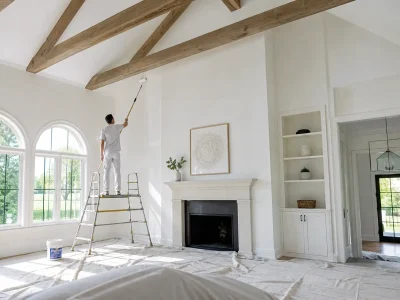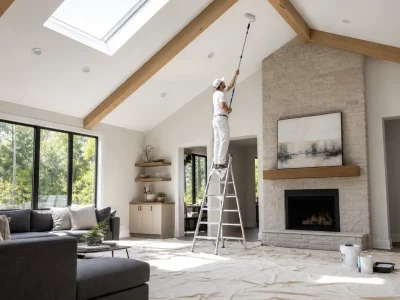

Most exterior acrylic or latex paint feels dry to the touch in about 1 to 4 hours in good conditions. It often needs 4 to 6 hours or more before another coat, while full curing can take several weeks. The exact dry time for exterior paint depends on the product, temperature, humidity, surface temperature, sunlight, wind, coat thickness, and surface moisture.
One important point gets missed in many painting guides: touch-dry, recoat-ready, rain-safe, and fully cured are different stages. The paint label and Technical Data Sheet (TDS) should always control the final timing for the product you use.
Table of Contents
Toggle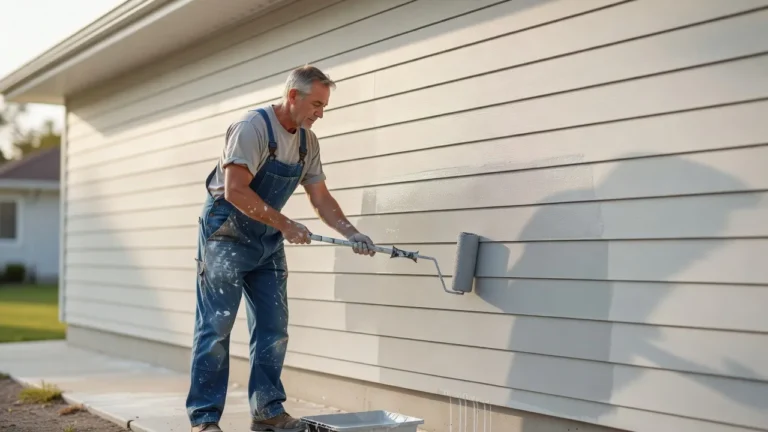
How Long Does Exterior Paint Take to Dry?
There is no single drying time for every exterior coating. Water-based acrylic and latex paints usually dry faster than oil-based products, but weather and the surface can change the result.
Typical exterior paint drying times at a glance
Exterior coating | Typical touch dry | Typical recoat time | Typical full cure |
Acrylic / latex | 1 to 4 hours | 4 to 6+ hours | Several weeks |
Oil-based | 6 to 8+ hours | Around 24 hours | About 5 to 14 days |
Masonry / stucco paint | 2 to 4 hours | Product-specific | Often several weeks |
Elastomeric coating | Product-specific | Product-specific | Product-specific |
These are useful planning ranges, not promises. For example, Benjamin Moore notes that each product has its own drying requirements, while Sherwin-Williams also tells users to follow the product label.
If you are searching for how long it takes for exterior paint to dry, the safest answer is to check the paint can, TDS, weather, and surface before deciding when to continue.
Drying vs. Recoating vs. Curing: What's the Difference?
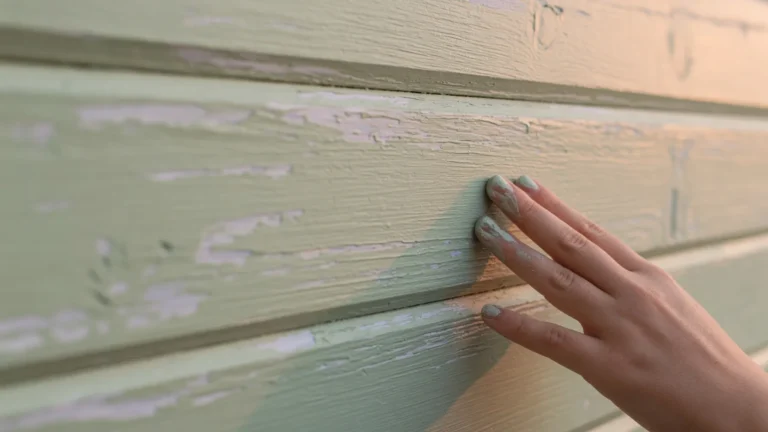
This is one of the most important parts of understanding exterior paint.
What does “dry to the touch” mean?
Touch-dry means the surface no longer feels wet or sticky when lightly touched. It does not mean the paint has reached full strength.
A surface can feel dry while the paint film underneath is still developing.
When is exterior paint ready for a second coat?
Recoat time is the period the manufacturer recommends before applying another coat. It is usually longer than touch-dry time.
Applying the second coat too soon can trap moisture and affect adhesion, leveling, and the final finish. Always use the stated recoat window rather than relying only on your finger.
When is exterior paint safe from rain?
Rain resistance is different from being touch-dry. Fresh paint can be damaged by rain before the film has formed enough to resist moisture.
Sherwin-Williams says many products need at least four hours of dry time before moisture can settle on the surface, while some products require different conditions.
When is exterior paint fully cured?
Curing is the longer process through which the coating develops its intended hardness and performance. Benjamin Moore says latex-based paints commonly take 2 to 3 weeks to cure, although the actual time varies by product.
What Factors Affect Exterior Paint Drying Time?
Temperature
Temperature affects how quickly moisture or solvents leave the coating and how the paint film forms.
Cold weather can extend drying time. Excessive heat can create a different problem by making the surface dry too quickly.
Do not judge conditions from air temperature alone. The wall itself can be much hotter or colder.
According to Sherwin-Williams product guidance, daytime temperatures above 50°F and nighttime lows above 35°F are needed for proper coalescing, since the film can stop forming if it gets too cold after application (Sherwin-Williams exterior FAQ). Heat above 90°F can cause the surface to dry too fast, trapping solvent underneath.
Humidity
High relative humidity slows evaporation. This is why paint can stay tacky longer on damp days.
Low humidity usually supports faster drying, but very dry conditions are not automatically ideal. Excessive heat and dry air can cause the surface to set before the coating flows properly.
Dew point and overnight condensation
The dew point is the temperature at which moisture begins to condense from the air.
This matters after sunset. A wall can look dry in the afternoon but develop dew overnight while the paint is still curing.
Benjamin Moore recommends (Benjamin Moore temperature guide) keeping the surface more than 5°F above the dew point during exterior painting.
Direct sunlight
Direct sunlight can heat the surface far beyond the surrounding air temperature.
This is especially important on dark siding and south- or west-facing walls. Very hot surfaces can cause poor flow, uneven sheen, wrinkling, blistering, or premature surface drying.
Wind and airflow
Moderate airflow can help moisture leave a coating. Strong winds can create problems.
It may dry the surface too quickly, blow dust into wet paint, or create overspray when using a sprayer. Benjamin Moore also warns that strong gusts can cause overspray during exterior spraying.
Paint thickness
A heavy coat takes longer to dry than a thin, even coat.
Applying more paint does not always improve coverage. It can leave moisture trapped inside the film and delay the second coat.
Surface condition and moisture
The substrate must be clean and dry before painting.
Wood, masonry, stucco, and concrete can hold moisture after rain. Vinyl and metal siding generally absorb much less water.
Benjamin Moore notes that wood should be dry before painting and gives a moisture-content target for wood substrates.
Does Paint Color Affect Drying Time?
Paint color can affect how hot an exterior surface becomes. Dark colors absorb more solar heat than light colors, so a dark wall in direct sunlight may become much hotter than the surrounding air.
That does not mean dark paint always dries faster. A very hot surface can cause the top of the paint film to dry too quickly. This can reduce flow and leveling and may contribute to lap marks or other finish problems.
Pigment, sunlight, surface temperature, and thermal expansion all matter. Benjamin Moore recommends checking the actual surface temperature because it can differ greatly from the air temperature.
Does Sheen Affect Drying Time?
Sheen can also influence how a coating behaves while drying, although the product formula matters more than sheen alone.
Flat paint has less visible shine, while eggshell, satin, semi-gloss, and gloss finishes contain different levels of resin and produce different surface appearances. A higher-sheen coating may show lap marks, brush marks, or uneven application more clearly.
Do not choose a paint based on sheen to get a faster dry time. Use the manufacturer’s stated dry and recoat times for that exact product.
How Long Does Exterior Paint Take to Dry on Different Surfaces?
Wood siding and trim
Wood is porous and can retain moisture after rain or washing. Allow it to dry fully before applying primer or paint.
Stucco and masonry
Stucco, brick, and concrete can absorb water deeply. A surface may feel dry while moisture remains inside the material.
Vinyl siding
Vinyl is non-porous, so surface moisture usually behaves differently from wood or masonry. However, the siding can become very hot in direct sunlight.
Aluminum and metal siding
Metal can heat up quickly in direct sun. Surface temperature can therefore matter more than the air temperature.
Fiber cement siding
Fiber cement is commonly painted with acrylic or latex coatings. Follow the coating manufacturer’s dry time and make sure the surface is clean and dry.
How Long Should You Wait Between Coats of Exterior Paint?
The answer depends on the paint type and conditions.
Acrylic and latex products often have shorter recoat times than oil-based coatings. Oil-based paint generally needs longer because its drying process is different.
Primer also has its own recoat window. A primer may feel dry before it is ready for the finish coat.
Cool weather, high humidity, thick coats, and damp surfaces can extend the wait.
Never use a generic “four-hour rule” when the product label gives a different instruction. The manufacturer’s TDS is the best source for the exact coating.
How Long Does Exterior Paint Need to Dry Before Rain?
Rain is one of the biggest risks to fresh exterior paint.
If rain is expected within the first few hours, postponing the job is usually the better choice. Fresh paint can streak, spot, run, or lose its proper film formation when exposed to water too soon.
Sherwin-Williams advises against painting immediately after rain, during fog, or when rain is predicted. It also notes that surfaces need to be dry before painting.
If rain hits fresh paint, do not scrub or repaint it immediately. Let the surface dry first. Then inspect it for streaking, bubbling, water spots, loss of sheen, or adhesion problems.
After heavy rain, the wait depends on the substrate. Sherwin-Williams recommends at least one day as a starting point, but says wood and masonry may need more time because they absorb more moisture.
What Is the Best Weather for Exterior Paint to Dry?
Condition | What to watch for |
Temperature | Stay within the product’s stated range |
Humidity | Lower humidity generally helps drying |
Surface temperature | Check the wall, not only the air |
Dew point | Keep the surface safely above the dew point |
Rain | Avoid rain during the early drying period |
Wind | Avoid strong gusts and dust |
Sunlight | Avoid very hot direct sun |
Overnight temperature | Allow enough time before dew forms |
There is no universal perfect weather number for every paint. Benjamin Moore says 77°F is an ideal target but gives product-specific temperature requirements, while Sherwin-Williams offers some exterior products designed for temperatures as low as 35°F.
Can You Paint Exterior Walls in Direct Sunlight?
It’s best to avoid it. The issue isn’t sunlight by itself. It’s the surface temperature that sunlight creates. Benjamin Moore’s own painting guidance advises avoiding direct sun because the surface can run far hotter than the air, and painters are encouraged to check surface temperature with an infrared thermometer rather than trust the forecast alone (Benjamin Moore temperature guide).
South- and west-facing walls take the most direct sun in the afternoon. Follow the shade around the house instead. Paint the east side in the morning and the west side later in the day once the sun has moved off it.
Why Is My Exterior Paint Taking So Long to Dry?
If your paint feels tacky hours after it should be dry, one of these is usually the cause:
- High humidity slowing evaporation
- Temperatures below 50°F
- A damp substrate underneath the paint
- Coats applied too thick
- Poor airflow around the area
- Dew settling on paint applied too late in the day
- Using the wrong product for the surface or climate
- Old paint that wasn’t stored properly
If the paint remains tacky far beyond the manufacturer’s stated time, stop applying another coat. Check the temperature, humidity, surface moisture, coat thickness, and product instructions first.
Why Is Exterior Paint Drying Too Fast?
Fast drying is not always good.
Extreme heat, direct sun, low humidity, strong wind, and a hot surface can cause the paint to set too quickly.
That can lead to poor flow, lap marks, uneven sheen, weak adhesion, and premature cracking or peeling.
The goal is not to make paint dry as fast as possible. The goal is to let the coating form a strong, even film under the right conditions.
How to Make Exterior Paint Dry Properly
Use these steps before and during the job:
- Check the weather forecast before starting.
- Follow the paint’s temperature range.
- Check the surface temperature when conditions are hot.
- Make sure the substrate is fully dry.
- Apply thin, even coats.
- Avoid harsh direct sunlight on hot surfaces.
- Avoid painting during high humidity or fog.
- Give each coat its full recoat time.
- Protect fresh paint from rain, dew, dust, and debris.
- Follow the manufacturer’s TDS instead of a generic drying rule.
Do not use heaters, heat guns, or other extreme methods to force outdoor paint to dry. Controlled weather and correct application are safer and produce a better film.
How Long Does Exterior Paint Take to Fully Cure?
Think of curing as a timeline rather than a single moment.
- First few hours: The surface begins to dry.
- 4 to 24 hours: Many products reach their recoat or early service stage, depending on the product and weather.
- Days 2 to 7: The coating continues to gain strength.
- Weeks 2 to 4: Many water-based coatings continue developing hardness and durability.
Benjamin Moore notes that typical latex paint can take 2 to 3 weeks to cure, but product formulas vary.
How San Diego Weather Affects Exterior Paint Drying Time
San Diego has several conditions that can change the drying process across the same day.
Coastal areas can have marine layer moisture and higher humidity in the morning. Inland areas can become much hotter and drier. Strong afternoon sun can raise surface temperatures, while Santa Ana winds can increase airflow and carry dust.
Stucco and masonry also need special care because they can hold moisture after rain or washing.
That is why choosing the painting window matters as much as choosing the paint. At San Diego Custom Painting, we consider the surface, weather, paint system, and timing before starting an exterior project.
If you need professional help choosing the right painting window, preparation method, and coating for your home, explore our exterior painting services in San Diego. Contact San Diego Custom Painting to discuss your project and get a plan based on your home’s surface and local conditions.
What to Do If Exterior Paint Gets Wet Before It Dries
If unexpected rain hits fresh paint, do not panic.
Step 1: Stop painting.
Step 2: Do not scrub or wipe the wet coating.
Step 3: Let the surface dry naturally.
Step 4: Inspect it after the moisture is gone.
Step 5: Look for streaks, bubbling, spotting, wrinkling, or changes in sheen.
Step 6: Repair or recoat only after the coating is fully dry and the manufacturer allows it.
A rushed repair can create more damage than the original rain.
You may also want to read these post:
Final Takeaway
The answer to how long does exterior paint take to dry is usually a range, not one fixed number. Acrylic and latex coatings may feel dry within a few hours, while recoating and full curing take longer.
The best results come from controlling the conditions. Use a dry surface, suitable temperature, manageable humidity, proper coat thickness, and enough time before rain or dew. Most importantly, use the product’s own TDS for the final dry and recoat times.
Frequently Asked Questions
Can exterior paint dry in 2 hours?
Yes, some acrylic and latex products can become touch-dry within two hours under good conditions. That does not mean they are fully cured or ready for every type of exposure.
Can I apply a second coat of exterior paint the same day?
Often yes, but only after the stated recoat time has passed. Cool, humid, damp, or cloudy conditions can make the wait longer.
Does humidity make exterior paint dry slower?
Yes. Higher humidity generally slows drying because moisture leaves the coating more slowly.
Does wind make exterior paint dry faster?
Wind can increase evaporation, but strong wind can also cause overspray, dust contamination, and overly fast surface drying.
Why is my exterior paint still tacky after 24 hours?
Check humidity, temperature, surface moisture, coat thickness, and the product’s stated dry time. Do not apply another coat until you find the cause.
What temperature is too cold to paint outside?
It depends on the product. Some exterior paints require warmer conditions, while certain modern products can be applied at temperatures as low as 35°F. Always follow the product label.
What temperature is too hot to paint outside?
There is no single number for every product. Very high surface temperatures can cause poor flow, wrinkling, blistering, or peeling. Check both the air and surface temperature.
Can dew ruin exterior paint?
Yes. Dew can add moisture to an uncured paint film and interfere with proper film formation. Plan to stop painting early enough for the coating to dry before nighttime moisture develops.
Does the surface temperature matter when painting outside?
Yes. A wall in direct sunlight can be much hotter than the surrounding air. Surface temperature can affect drying, flow, adhesion, and the final finish.