

Stucco homes have a timeless appeal, but over time, the color fades and the surface can look worn. You’re probably wondering if painting is even possible without damaging this unique material. Yes, you can paint stucco, and it’s one of the most effective ways to boost your home’s curb appeal and protect the exterior from weather damage.
This guide walks you through everything you need to know about painting stucco walls. You’ll learn what type of paint works best, how much it costs, and whether you should tackle this project yourself or hire a professional. By the end, you’ll have a clear plan to transform your home’s exterior.
Table of Contents
ToggleQuick Answer for Homeowners
Yes, you can paint stucco surfaces. You must wait for the new stucco to cure for at least 30 days. Always use a breathable acrylic latex or elastomeric paint. Proper cleaning and crack repair are the most important steps for success.
What is Stucco?
Stucco is a cement-based exterior coating made from Portland cement, sand, lime, and water. When applied over a wire mesh base, it creates a hard, durable surface that can last 50 years or more with proper care.
There are two main types you’ll encounter:
Traditional Stucco (hard coat) is the classic version. It’s made from cement, limestone, sand, and water applied over metal mesh. This type is extremely durable but prone to cracking as it’s rigid and doesn’t flex with temperature changes. When you knock on it, it sounds solid.
Synthetic Stucco (EIFS) stands for Exterior Insulation Finishing System. It’s softer, more flexible, and maintains its color longer than traditional stucco. It’s applied over foam insulation boards, so it sounds hollow when you tap on it. This type offers better insulation but can trap moisture if not installed correctly.
Both types can be painted, but the preparation and products you use may vary slightly.
Can You Paint Over Stucco?
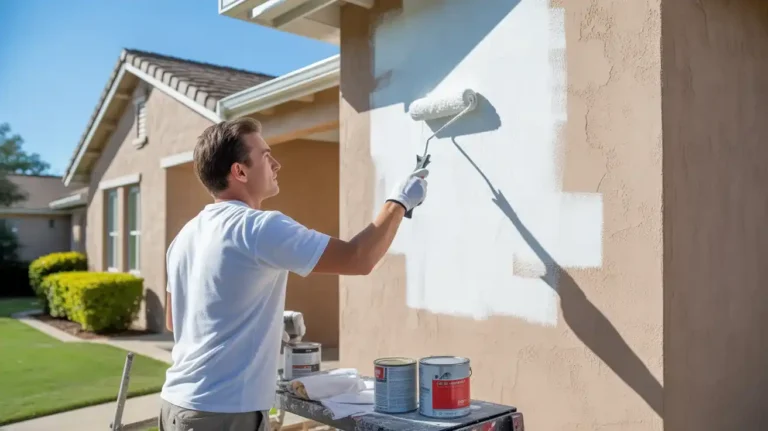
Absolutely. Painting stucco is not only possible but recommended every 5 to 10 years to maintain protection and appearance. Fresh paint seals the porous surface, prevents water intrusion, and covers up minor imperfections.
However, timing matters. New stucco needs time to cure before you can paint it. Traditional stucco requires at least 60 days of curing time. This allows moisture to escape and the material to fully harden. Painting too early traps moisture, leading to bubbling, peeling, and potential mold growth.
For older stucco that’s already painted, you can repaint whenever the color fades or the surface shows wear. Most homeowners repaint every 5 to 7 years in harsh climates and every 8 to 10 years in milder conditions.
Do I Need Special Paint When Painting Stucco?
Yes, stucco requires specific paint formulated for masonry surfaces. Standard interior paint won’t hold up to the texture and weather exposure.
Best Paint for Stucco:
100% acrylic latex paint is your top choice. It’s flexible enough to expand and contract with temperature changes, which prevents cracking. This type also resists moisture and allows the stucco to breathe, letting trapped water vapor escape.
Elastomeric paint is another excellent option, especially for older stucco with hairline cracks. It’s thicker than standard acrylic and can bridge small gaps up to 1/16 inch. The drawback is it costs more and requires careful application.
What About Sheen?
Most professionals recommend a flat or matte finish for stucco. The rough texture of stucco amplifies imperfections, and a flat sheen helps hide these better than satin or semi-gloss. Flat paint also absorbs less heat, which is beneficial in hot climates.
Primer Matters Too:
Always use a masonry primer or sealer. Products like acrylic masonry sealer prepare the surface and improve paint adhesion. This step is critical because stucco is extremely porous and will soak up paint like a sponge without proper priming.
How Much Paint Do You Need?
Because stucco is rough, you’ll need 25% to 50% more paint than on smooth surfaces. On normal walls, a gallon of paint covers about 250 to 400 square feet. That drops to 150 to 250 square feet per gallon for stucco.
Plan on 12 to 16 gallons of paint for two coats on the outside of a 2,000-square-foot house. Good outdoor paint for stucco costs $40 to $70 per gallon, which means the materials alone cost between $480 and $1,120.
You may also want read: How Much Does a Gallon of Paint Cover?
Cost to Paint Stucco: DIY vs. Professional
DIY Costs:
If you handle the project yourself, expect to spend $0.50 to $1.50 per square foot for materials only. This includes paint, primer, caulk, cleaning supplies, and basic tools.
For a 2,000-square-foot exterior:
- Materials: $1,000 to $3,000
- Tool rental (pressure washer, sprayer): $100 to $300
- Total DIY cost: $1,100 to $3,300
Professional Painting Costs:
Hiring a contractor costs $2.00 to $5.50 per square foot, depending on your location, stucco condition, and home height.
For a 2,000-square-foot exterior:
- Low end (good condition, one story): $4,000 to $6,000
- Average (moderate repairs needed): $6,000 to $9,000
- High end (extensive repairs, two stories): $9,000 to $11,000
The higher price includes labor, materials, repairs, and warranties. Professionals typically complete the job in 3 to 5 days versus 2 to 3 weeks for DIY.
How to Paint Stucco In 5 Easy Steps
Painting outdoor stucco isn’t complicated, but it requires patience and attention to surface preparation. Skipping steps leads to paint failure.
Step 1: Clean the Stucco Surface
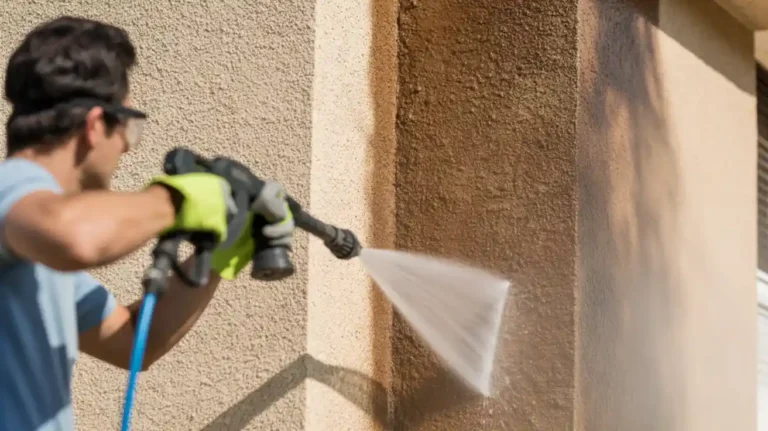
Start with a thorough cleaning using a pressure washer. Rent one if you don’t own it (around $50 to $100 per day). Use 1,500 to 2,000 PSI to avoid damaging the stucco.
Before pressure washing, brush the surface with a soft-bristle brush to loosen dirt and debris. This makes cleaning more effective.
If you spot mildew or mold, treat it with a solution of one part bleach to three parts water. Spray it on, let it sit for 10 minutes, then rinse thoroughly. Never paint over mildew as it will bleed through.
Allow the stucco to dry completely. This takes 24 to 48 hours depending on weather. Painting damp stucco causes adhesion problems.
Step 2: Repair Cracks and Damage
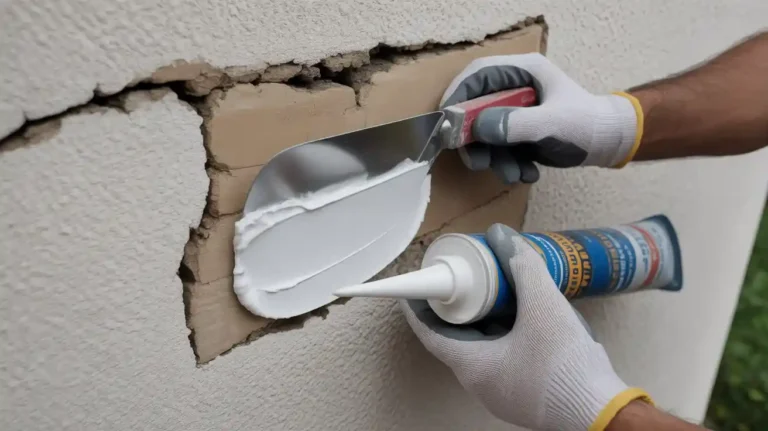
Inspect every inch of your stucco for cracks. Even small hairline cracks can widen over time and ruin your paint job.
For Minor Cracks (less than 1/8 inch):
Use clear acrylic caulk designed for exterior use. Apply it directly into the crack, smooth it with your finger, and let it cure for 24 hours.
For Larger Cracks (1/8 inch or wider):
You need a stucco patching compound that matches your texture. Clean out loose material from the crack first. Apply the patch in layers if the crack is deep. Let each layer dry before adding the next.
Use a damp sponge to blend the patch with the surrounding texture. This takes practice, so test on a hidden area first.
Wait 7 to 10 days after patching before painting. The patch needs time to cure properly.
Step 3: Prime the Stucco
Tape off windows, doors, and trim with painter’s tape. Cover plants and walkways with drop cloths.
Apply a masonry primer or sealer to the entire surface. This seals the pores and creates a uniform base for paint. Without primer, you’ll need three or more coats of paint to achieve even coverage.
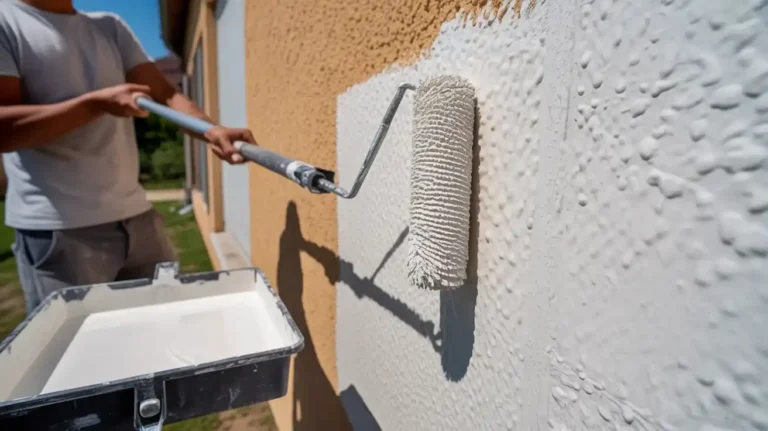
Use a paint roller with a thick nap (3/4 inch to 1 inch) that matches your stucco texture. Rough stucco needs a thicker nap. Cut in edges and corners with a brush first, then roll the main areas.
Apply primer generously, working it into all the crevices. Let it dry for at least 24 hours before painting.
Step 4: Apply the First Coat
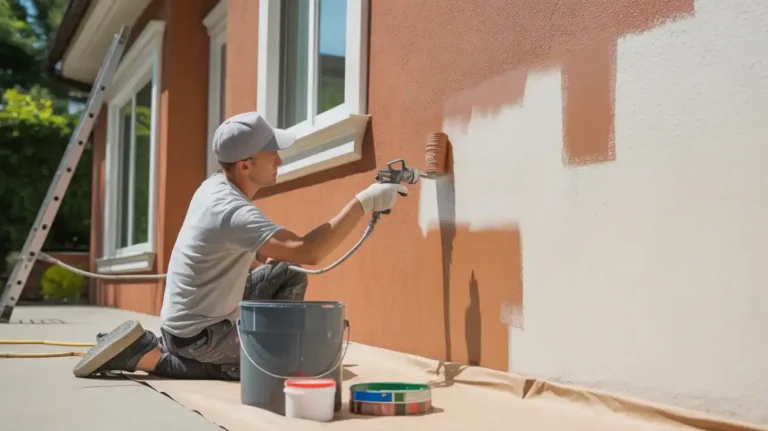
Choose a dry day with temperatures between 50°F and 85°F. Avoid painting in direct sunlight as it causes the paint to dry too fast.
You have three application methods:
- Spraying is fastest but requires skill. Rent an airless paint sprayer ($75 to $150 per day). After spraying, back-roll or back-brush the surface to work paint into the texture. This ensures proper coverage.
- Rolling works well for most DIYers. Use the same thick-nap roller as you did for primer. Apply paint in sections, maintaining a wet edge to avoid lap marks.
- Brushing is the slowest method but gives you the most control around trim and details.
Start at the top and work down. Apply paint liberally to fill all the nooks in the texture. Don’t spread it too thin or you’ll need extra coats.
Step 5: Apply the Second Coat
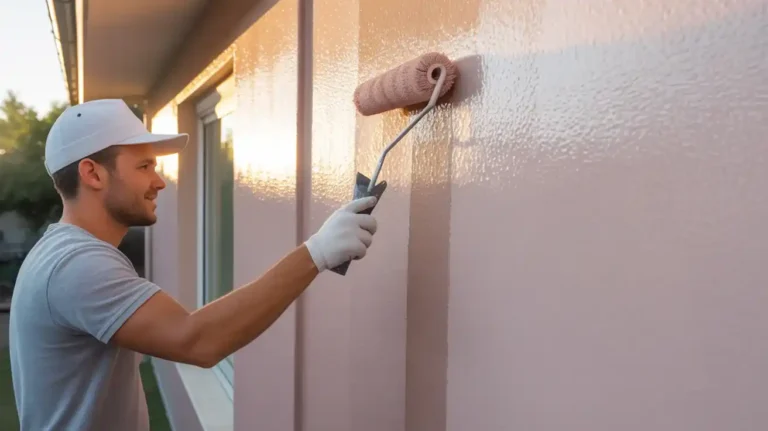
Wait 24 hours minimum before applying the second coat. Check that the first coat is completely dry by touching an inconspicuous area.
Apply the second coat the same way as the first. This coat should go on smoother since the surface is already sealed.
After painting, let the stucco cure for at least 7 days before returning furniture or decorations to their place. Full cure takes 30 days in optimal conditions.
Common Mistakes to Avoid
- Painting in Wrong Weather: Don’t paint when rain is forecasted within 24 hours or when temperatures drop below 50°F at night. Cold and moisture ruin paint adhesion.
- Using Cheap Paint: Budget paint won’t last on stucco. It fades faster and requires repainting sooner. Invest in quality acrylic latex designed for masonry.
- Skipping Primer: This is the biggest mistake DIYers make. Unprimed stucco absorbs paint unevenly, creating blotchy results.
- Not Matching Roller Nap to Texture: A thin nap won’t reach into deep crevices. Match your roller to your surface texture for complete coverage.
Painting Stucco Pros and Cons
Pros:
- Increases home value by improving curb appeal
- Protects stucco from weather damage and UV rays
- Covers minor cracks and discoloration
- Costs less than re-stuccoing ($8 to $15 per square foot)
- Allows you to change colors and update your home’s look
Cons:
- Requires repainting every 5 to 10 years
- Labor-intensive surface preparation
- Uses more paint than smooth surfaces
- Mistakes are hard to hide due to texture
- Professional costs can be high for two-story homes
How Long Does Stucco Paint Last?
Quality paint on well-prepared stucco lasts 7 to 10 years in most climates. Harsh conditions reduce this to 5 to 7 years. Factors that affect longevity include:
- Sun exposure (south-facing walls fade faster)
- Temperature extremes
- Rain and humidity levels
- Paint quality
- Surface preparation quality
Signs you need to repaint include chalking (white powder on your hand when you touch the wall), fading, cracking paint, or peeling.
Maintenance to Keep Stucco Looking Great
Proper maintenance extends the life of your paint job and prevents costly repairs.
- Annual Inspection: Walk around your home each spring and fall. Look for new cracks, water stains, or areas where paint is failing. Address small problems before they become big ones.
- Gentle Cleaning: Wash stucco once a year with a garden hose and soft brush. Use a mild detergent if needed. Pressure washing every 2 to 3 years removes built-up dirt and mildew.
- Trim Vegetation: Keep bushes and trees at least 12 inches away from stucco walls. Plants trap moisture against the surface, leading to mold and paint damage.
- Check Caulking: Inspect caulk around windows and doors annually. Replace any cracked or missing caulk to prevent water intrusion behind the stucco.
- Address Water Issues: Make sure gutters and downspouts direct water away from stucco walls. Standing water accelerates deterioration.
Utilize SD Custom Painting to Properly Seal and Waterproof Freshly-Painted Stucco Homes
While DIY painting saves money, professional results require experience and specialized equipment. San Diego Custom Painting offers comprehensive exterior painting services in San Diego, with expertise in stucco preparation and application.
Professional painters complete thorough surface inspections, identifying hidden damage that DIYers often miss. They use commercial-grade products and equipment that deliver superior coverage and durability. Most importantly, they apply proper waterproofing and sealants that protect your investment for years.
If your stucco has extensive cracking, water damage, or if your home is two stories or higher, professional services provide peace of mind and better long-term value.
Can You Paint Stucco: Conclusion
Painting stucco changes the way your property looks and protects the outside from the weather. It takes more planning and materials than painting smooth surfaces, but the results are worth it.
The secret to success is to prepare the surface correctly, use good masonry paint, and paint it when the weather is right. This advice will help you get a beautiful, long-lasting finish, whether you do it yourself or employ pros.
Take your time with each task, especially when you clean and fix things. If you rush your work, the paint won’t stick, and you’ll waste money. If you do it right, your newly painted stucco will look fantastic and keep your home safe for years.
FAQs About Stucco Painting
How long for stucco to cure before painting?
New traditional stucco needs 60 days minimum. Synthetic stucco (EIFS) requires 30 days. Painting too early traps moisture and causes paint failure.
Can you paint stucco in cold weather?
Avoid painting when temperatures drop below 50°F. Cold weather prevents proper paint curing and adhesion. The ideal temperature range is 50°F to 85°F.
Does stucco need to be painted?
Not necessarily, but painting protects the surface and extends its life. Unpainted stucco eventually cracks and deteriorates faster from UV exposure and weather.
What’s the best time of year to paint stucco?
Late spring and early fall offer ideal conditions. You want moderate temperatures, low humidity, and no rain in the forecast for at least 48 hours.
Can you change stucco color dramatically?
Yes, but dark-to-light color changes may require a third coat for complete coverage. Light-to-dark changes are easier and typically need only two coats.
How do you paint textured stucco?
Use a thick-nap roller (3/4 to 1 inch) and apply paint generously. Work it into all crevices. A paint sprayer followed by back-rolling gives the best results.
Will painting stucco stop cracks?
Paint covers minor hairline cracks but won’t stop structural cracking. You must repair cracks properly before painting, or they’ll reappear through the paint.
Can you paint over painted stucco?
Yes, as long as the existing paint is in good condition. If it’s peeling or flaking, you must remove the loose paint first and prime those areas.