
Ceiling tiles can become discolored or stained after a few years, which can make a new building look old or an old building look beyond repair. Painting them might be the solution, but this may not be an inexpensive fix, and it depends on what the tiles are made of, how old they are, and whether they have fire-resistant or soundproofing properties.
So, can you paint ceiling tiles without damaging them or ruining the other properties? You can paint most ceiling tiles, but not all of them. There are four types of tile that can be painted: wood, metal, fiberglass, and mineral fiber, so if you’re not sure which type you have, it pays to identify it before you start. This guide will tell you everything you need to know about painting ceiling tiles, including the best product to use, how to paint them, and when to get professional help.
Can You Paint Ceiling Tiles?
Yes. Many ceiling tiles are paintable, including some mineral fiber, metal, wood, and fiberglass options. Check the manufacturer’s recommendations first, though.
Some acoustic tiles have a surface that is engineered to allow sound to pass through small perforations. Too much paint applied to those surfaces can cover the perforations and diminish sound absorption capabilities.
For instance, Armstrong states that it allows some of its acoustic ceiling tiles to be repainted with the products and techniques recommended by the manufacturer but emphasizes that doing so may adversely impact the ceiling’s acoustic properties, fire rating, and the manufacturer’s warranty.
Its TECTUM panels are the exception, as they can be field painted up to six times without affecting fire resistance or acoustic performance. Rockfon recommends not painting its stone wool ceiling panels’ visible surfaces.
Which Ceiling Tiles Can Be Painted?
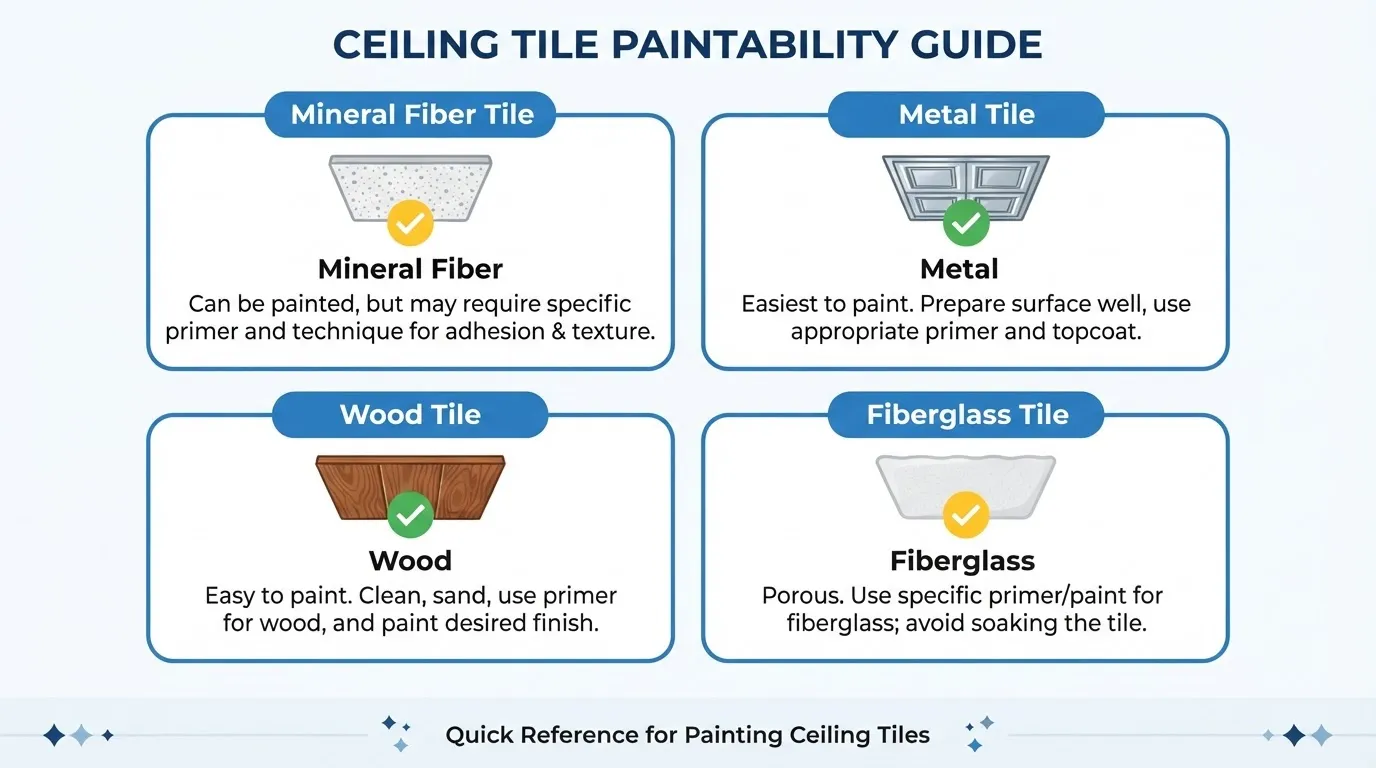
Not all ceiling tiles have the same surface or composition. Some can be painted relatively simply, while others will need special coatings, or the tiles should be replaced.
1. Mineral Fiber Ceiling Tiles
Mineral fiber tiles are used in school and office buildings, basements, and commercial spaces. They are typically made from mineral wool, perlite, and starch binders. They typically offer some level of soundproofing and can have a wide range of textures and designs.
While some mineral fiber tiles can be painted, applying a thick coat of paint with a roller can suffocate the porous surface of the tiles. They require a specialized coating, as supplied by the manufacturer. You should follow application recommendations to preserve the tiles’ original acoustics.
2. Metal Ceiling Tiles
Metal ceiling tiles are typically made from steel, aluminum, or tin. Most are suitable for painting, but they usually need to be cleaned and stripped of the existing coat of paint first. They are commonly found in kitchens, other rooms, and the ceilings of older properties.
Apply a metal primer prior to a coat of paint and then finish with an acrylic paint made for metal surfaces. Treat any rust stains before painting, then sand lightly if necessary when repainting a previously finished metal ceiling tile.
3. Wood Ceiling Tiles
Wood tiles can also be painted, as long as they are prepared properly and the bare wood will not absorb excess paint. Sand down lightly first if they are already painted, but ensure a primer and coating suitable for painted wood are used.
Choose paint that suits the type of wood and the finish of the ceiling.
4. Fiberglass Ceiling Tiles
Fiberglass ceiling tiles are made from glass fibers bonded with resin. The lightweight material is commonly seen in commercial properties, and although some can be painted, there are additional requirements for the surface coating and special needs for the acoustic performance of the material.
Armstrong lists fiberglass as the one exception to its approval of latex paint, so check the manufacturer’s painting instructions first.
What Is the Best Paint for Drop Ceiling Tiles?
Choosing the right paint is important to a good finish. The best product may depend on the kind of tile, its surface, and your individual circumstances.
In general, a water-based, manufacturer-approved coating will be recommended for mineral fiber and other porous ceiling tiles. Flat or matte finishes are common choices because they have low reflectance and a sharp appearance.
Don’t buy cheap products when looking for the best paint for drop ceiling tiles. Applying a cheap coating that looks decent but closes acoustic openings or rots the face of the tile can lead to even larger issues down the road.
Be aware that a ceiling paint manufacturer’s blanket recommendation for a ceiling surface does not necessarily mean a particular product is suitable for all acoustic ceiling tiles.
How to Paint Tile Ceiling Surfaces Properly
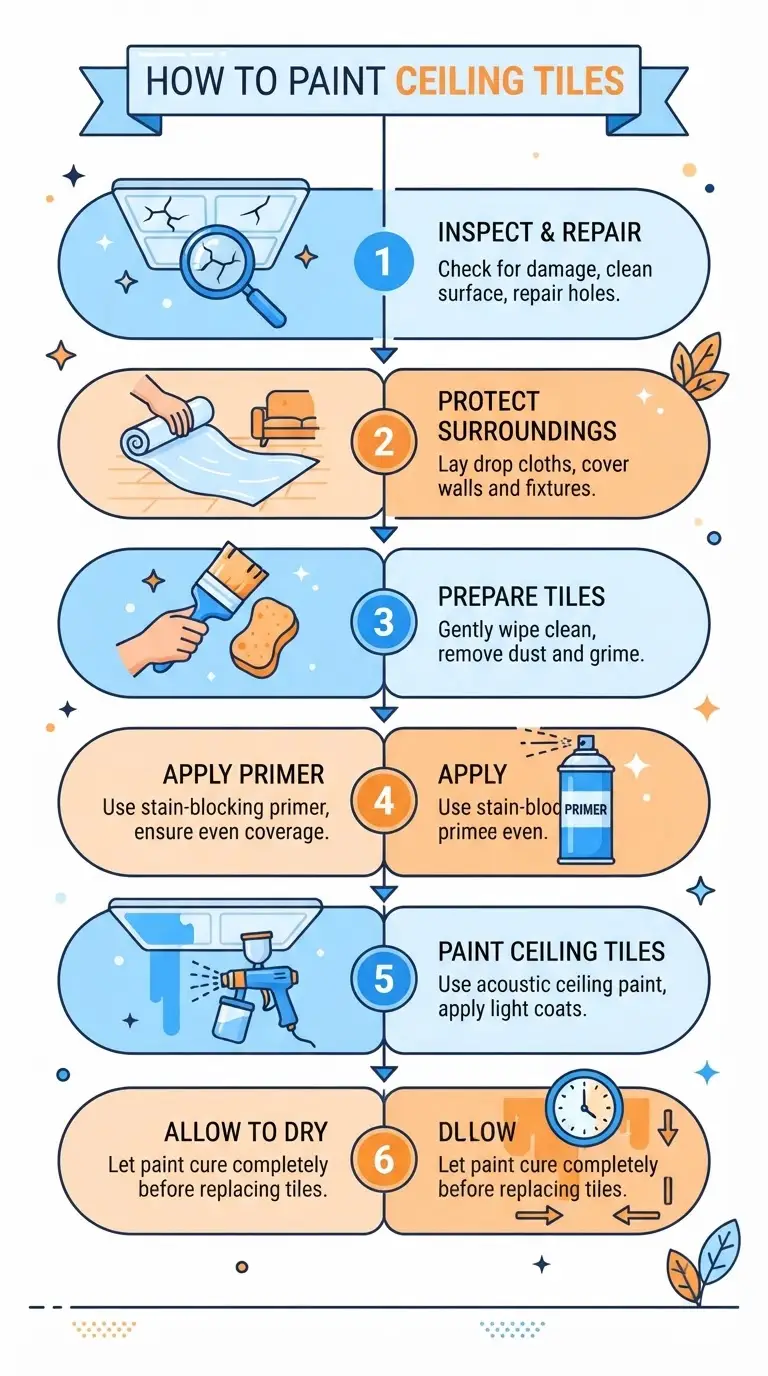
The method you use will differ based on whether tiles are installed in a suspended grid or adhered directly to the ceiling. Nevertheless, a little time spent on preparing the area and finishing will ensure a nice uniform result.
Step 1: Identify the Tile Material
First, identify what kind of material the tiles are made from (wood, metal, mineral fiber, fiberglass, or other). Consult the product label, installation instructions, or manufacturer’s website.
Knowing what the material is will help you choose the right primer, paint, or method of application. It will also prevent you from using a primer, sealer, or paint that can harm delicate materials.
You’ll also want to identify if the tile provides acoustics and whether the tile company recommends against painting the face in the room.
Step 2: Protect the Room
Clear out furniture or move it to the other side of the room if possible, or cover it with plastic or painter’s dropcloths. Use painter’s tape to secure fixture covers, register covers, and vent covers. Turn off the power when working near fixtures, and give yourself some room to move around.
With suspended grid tiles, you might want to remove panels to make things easier.
Step 3: Clean and Prepare the Tiles
Dirt and dust can affect how the paint adheres. Sweep off loose dirt with a soft brush or vacuum with a brush attachment. If it is safe to wash the tile, rinse with a mild cleaning product and let it dry.
Do not saturate acoustical panels because this can cause warping and loosen the material. Replace or repair damaged panels, or at least repair plumbing or leak issues that are staining the panels.
Step 4: Apply the Appropriate Primer
Many ceiling tiles require no primer, but this step may be necessary with metal or wood panels with no finish. Prime with a compatible base if required. Determine if the surface that has already been painted is solid and compatible with the new top coat.
Avoid excessive sanding, which can release harmful dust. In older buildings, the tiles may contain asbestos, and the EPA advises that the only way to be sure is to have a sample tested by a qualified laboratory, so do this before sanding or scraping.
Check with the tile manufacturer about whether primer or bonding coats are required, or whether you can go straight to the paint. Too much primer can negatively impact acoustics.
Step 5: Apply the Paint Carefully
Use the application method that best suits the surface. For textured surfaces, a brush or roller works well. For smooth surfaces, a sprayer yields the best results. Armstrong recommends using a sprayer when working with acoustics to evenly apply the paint, while avoiding the risk of clogging or blocking the open cells of the panels. Let each coat dry thoroughly before applying subsequent coats.
Step 6: Let Them Dry Properly
When you are finished, allow the paint to fully dry and cure before replacing tile panels, assuming you have removed them. Place them back in the suspended ceiling grid, if appropriate, and look for missed spots and unsatisfactory coverage.
Should You Paint Drop Ceiling Tiles in Place or Remove Them?
It’s possible to do both, but what is best will depend on your ceiling system and on the manufacturer’s advice. Painting tiles in situ is generally more straightforward, as you don’t have to handle each one as much—but it may be more work around them and the unpainted grid that runs around each tile.
You may find it necessary to undertake a lot of masking around the grid, any light fittings, and your walls and furniture, and getting to the edges of each tile can be tricky. Removing the tiles will give you better visibility of each tile, and it will be easier to inspect for issues that need attention; some manufacturer guidelines include removing the acoustic panels before painting them.
You could then paint and set the panels aside to dry and replace them. For a suspended ceiling, also consider whether you need to give the grid a facelift, as freshly painted tiles will make the unpainted grid appear discolored and odd.
Is It Better to Paint or Replace Ceiling Tiles?
If your tiles are in good condition, and your manufacturer allows you to paint them, then painting is a cheaper alternative; a quick refreshment is sometimes less costly and takes less time than replacing the entire ceiling.
If your tiles are cracked, sagged, water-stained, covered with mold, or have other damage, then it’s best to replace them instead of painting; similarly, if your manufacturer states that the tiles shouldn’t be painted, then it’s best to replace them. It’s also wise to replace some tiles in a suspended ceiling, rather than the whole lot, and any new tiles with matching ratings will preserve the ceiling’s fire and acoustic rating.
Consider the state of your existing ceiling, whether materials are affordable, and the level of prep work needed before you go ahead, because cheaper isn’t always better in the long run.
Conclusion
There are many advantages to repainting ceiling tiles, but you can get the best results by knowing what type of paint to use and how to prepare the tiles before painting. Metal and wood tiles are the simplest to paint, but mineral fiber and fiberglass acoustic tiles are more challenging to work with. Some products should never be painted.
Following these basic guidelines will help you keep your ceiling safe but also ensure a clean, professional look. If you’d prefer to hire a professional to do your next ceiling painting project, give SD Custom Painting a call to discuss your interior painting options. Working with experienced interior painters will help keep your paint from streaking or running, leaving you with a beautifully finished ceiling.
Frequently Asked Questions
Can I paint old acoustic ceiling tiles?
Some older acoustic tiles are suitable for re-coating if the paint does not fill their sound-absorbing holes. Nonetheless, thick coats of paint tend to fill the sound holes and diminish their acoustic function; check the manufacturer’s guidance.
What roller do I use for ceiling tiles?
The best roller varies depending on tile material and surface treatment. A short-nap roller suits some types of smooth, paintable surfaces; other acoustic tile makers recommend a paint spray application method.
How many coats of paint on ceiling tiles?
The recommended number of coats varies depending on current paint color, tile kind, coating coverage, and manufacturer’s instructions. Several recommended acoustic tile systems need only one coat; others entail additional coats, while thin coats tend to be better than one heavy coat.
Can you paint water-stained ceiling tiles?
It’s sometimes possible to paint over water-stained tiles after the water source has been found and corrected, but replace water-damaged tiles that are warped, swollen, or moldy, or physically weakened. Use a stain-blocking primer on sufficiently dry, unaffected tiles.
Does painting ceiling tiles affect sound?
Just like with other acoustic products, coating a ceiling tile minimizes its capacity to absorb sound by filling the tiny holes; yet, the effect is variable depending on tile material, construction, and application. Follow manufacturer instructions for best effect.
Is spray painting better than rolling ceiling tiles?
Spray painting may offer more even coverage on some textured and approved acoustic tiles. Rolling may be a better fit on other paintable substances, such as some woods or metals.