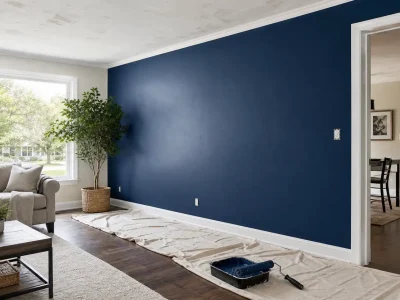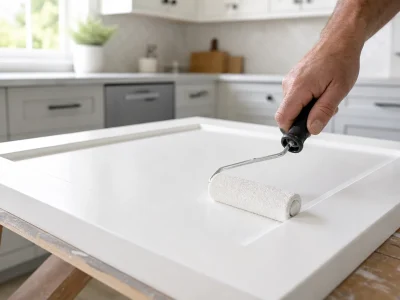

Not in every instance. If the ceiling is clean and smooth and there are no spots or stains, if the color of your ceiling and your wall colors still coordinate, you can leave it. However, you’ll soon find an older ceiling will look uninspiring even on top of new walls.
The answer is yes to some extent but depends on the present state of the ceiling, color of the new walls and the look desired. It’s good to know you can plan to paint the ceiling while repainting walls; this allows you to be ready to deal with the extra task when it needs to be carried out so no time or effort is wasted while achieving a coherent finish.
Table of Contents
ToggleShould You Repaint the Ceiling When Repainting Walls?
While there’s no set rule that dictates whether or not you have to do this, in a lot of situations you can probably forgo the ceiling repaint. Unless the ceiling is visibly damaged in one way or another, or you don’t like the color against the walls that you plan to paint, this should significantly reduce the time and cost associated with a job like this. If your ceiling has a lot of yellowing, stains or discoloration, or just simply doesn’t match your walls after painting, this is when repainting may be worth your while.
Consider not repainting the ceiling when:
- the current ceiling paint isn’t stained, or cracking, peeling etc.
- there isn’t any discoloration or water marks on the ceiling.
- you plan on using wall colors that will blend into whatever color your ceiling currently is.
- you aren’t changing the color of your walls much (i.e., going from a light color to a slightly different light color)
- the ceiling still looks brand new or almost brand new.
When Should You Repaint the Ceiling?
There are occasions where it just makes sense to add the ceiling to the room as well when you’re updating the walls.
The Ceiling Has Stains
Water stains, smoke-damaged areas, grease or other marks may be much more prominent next to freshly painted walls.
When this occurs, just using regular ceiling paint might not be enough. In situations like these, a stain blocking primer is likely required to cover the stained areas so that the color does not bleed through the new coat.
The Ceiling Has Yellowed
Older ceilings can become yellowed or dull over time. Even if the walls receive a beautiful new color, an aged ceiling may make the room look less refreshed.
A new ceiling coat can create a cleaner transition between the ceiling and walls.
You’re Changing the Wall Color Dramatically
Making the change over to completely different shades when repainting your walls may call for a paint job on your ceiling as well.
When moving from a pale beige wall to a new deep color scheme such as a deep blue, green or charcoal gray, this might automatically cause you to see the overall condition of your ceiling more readily.
The Ceiling Has Visible Damage
Cracks, peeling paint, repaired patches and even out-of-level ceiling portions will need an application of paint when the room is already having fresh paint on its walls, and that reason alone might be enough for the ceiling to be properly addressed.
Structural damage must always be fixed appropriately before it’s time to paint, and not masked.
Can You Repaint Walls Without Repainting the Ceiling?
Yes, you may paint only the walls without repainting the ceiling. This is a prudent choice to make if the ceiling is in very good condition already.
However, a clean line must be formed between the ceiling and the walls.
A good cutting-in practice, coupled with painter’s tape, is used to develop a clear transition between these two surfaces. Your painters must also apply extra care in the event the ceiling remains untouched not to drip new wall paint upon the ceiling finish.
Should You Paint the Ceiling or Walls First?
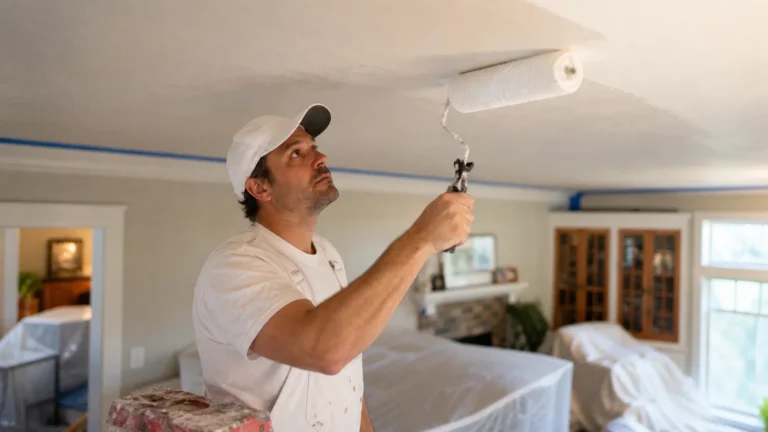
In the event both surfaces will be painted, then practice dictates painting the ceiling prior to walls.
Ceiling paint often drips or splatters, so painting the ceiling first protects the walls below from needing to be repainted afterward.
This procedure is recommended by both Sherwin Williams and Benjamin Moore.
The usual sequence is:
- repair and prep ceiling;
- paint ceiling;
- dry ceiling thoroughly;
- prep walls;
- prime walls if needed;
- paint walls;
- and finish walls with a touch up and paint application around fixtures as well as trim elements.
How to Decide Whether Your Ceiling Needs Paint
Before starting the project, stand in different parts of the room and inspect the ceiling in natural and artificial light.
Ask yourself:
- Does the ceiling look yellow or gray?
- Are there visible stains?
- Are there cracks or peeling areas?
- Is there an uneven finish to the paintwork?
- Will the ceiling go with the color you have planned for your walls?
- Will the color you have planned for your walls highlight how old the ceiling is?
- Does it need doing from a full house make-over or is a single room color change all that is required?
If you answer ‘yes’ to many of these questions, then painting your ceiling could be the answer.
Does a Freshly Painted Ceiling Make a Difference?
Yes. Especially if combined with fresh paint on the walls, a new ceiling will instantly look fresher and more defined in any space.
Paint for ceilings usually comes in a low-sheen or flat finish in order to not emphasize every imperfection in the ceiling surface and reduce reflected light.
Additionally, a clear, new ceiling could become visually like a blank canvas for your new paint on the walls, making the color seem like a deliberate choice in the entire room décor.
What If You Want to Change the Ceiling Color?
The color white may be most commonly used on the ceiling, but this isn’t your only alternative for ceiling painting.
You can paint your ceiling lighter colors from your wall color or even bold shades if you want to achieve another kind of mood; according to Benjamin Moore as well as Dulux, colored ceilings make a statement and add visual volume and uniqueness to a room, giving depth as well.
To offer a few examples of possible alternative color choices:
- A pale, warm white might provide an understated feel that remains sophisticated and traditional
- Lighter wall tones could make a wall color flow beautifully up to the ceiling.
- Deeper shades can sometimes make larger rooms feel much more cozy.
- Coordinating neutrals could produce a highly polished result.
In any case, the chosen color will surely depend on factors like room size, architecture, ambient lighting and room usage.
How to Repaint a Ceiling for the Best Results
Just as important as the paint you choose for your ceiling is the preparation before you start the project.
1. Repair Imperfections
Fill cracks and holes where appropriate and allow repairs to dry before sanding them smooth.
2. Clean the Surface
Dust, dirt and buildup should be washed off your ceiling before painting.
3. Prime Problem Areas
Stains, water damage, etc., may require a suitable stain-blocking primer before your topcoat.
4. Use the Right Roller
Smooth surfaces typically work well with short-nap rollers. Textures can vary and may require a heavier-nap roller in order for it to reach the actual surface of the ceiling.
5. Paint Before the Walls
Complete the ceiling before starting your wall painting project to protect the newly painted walls.
Common Mistakes to Avoid
Here are some common mistakes people make when determining whether to paint the ceiling:
- Not checking the ceiling’s condition before deciding whether it needs paint.
- Not painting over a noticeably stained ceiling above freshly painted walls.
- Painting over water stains without treating them first.
- Using wall paint on a ceiling without assessing whether it’s suitable for that application.
- Not patching cracks or damage prior to painting the ceiling.
- Painting the ceiling white regardless of the room’s lighting environment.
When Professional Painting Is Worth It
While painting walls may appear to be an easy DIY weekend job, proper masking and a clean finish at corners where walls and ceiling join together become more challenging when working at heights, on difficult textures, or with damaged surfaces.
Professionals will evaluate the condition of both areas prior to undertaking either project so that unnecessary work is avoided, as well as not overlooking problem areas that need to be addressed beyond simply coating them.
A professional job with the help of SD Custom Painting can enable homeowners to fully determine their interior painting needs and achieve a uniform color application over walls, ceiling, trim, etc.
Final Answer: Do You Really Need to Repaint the Ceiling?
So, do you have to repaint a ceiling when you’re painting the walls? In most cases, no. You don’t.
As long as it is clean, unmarred, and goes with the new wall color, you’re all right just leaving it up there on top. But if it is water damaged or faded with age or yellowed by smoking, and you’re about to paint the walls in an up-to-date new color, painting the ceiling can improve the whole look and tie everything together nicely.
Always think it through rather than assume, so you don’t waste your painting budget on work that wasn’t needed.
Frequently Asked Questions
How often should you repaint a ceiling?
A ceiling only needs painting once it becomes stained, dirty, yellow or damaged. Beyond that there is no set rule on the lifespan of painted ceilings.
Should you paint the ceiling before the walls?
It’s a good idea, since painting the ceiling first helps stop drips and splatters from spoiling your new wall paint job.
What color should the ceiling be when repainting walls?
Many professionals are going with a softer or slightly off-white to give a more finished feel. While this color matches wall paint, any solid color that complements the wall color works well, whether it’s light or dark, depending on the room itself.