
Choosing an exterior color is easier when you stop looking at paint chips first. The best choice depends on your roof, brick or stone, siding, home style, sunlight, landscaping, and the look you want. Your paint should connect these parts instead of fighting them.
What color should I paint my house exterior? Start with the parts you cannot easily change, then choose a body color, trim color, and accent. Test your final choices outdoors before buying enough paint for the whole house.
Table of Contents
Toggle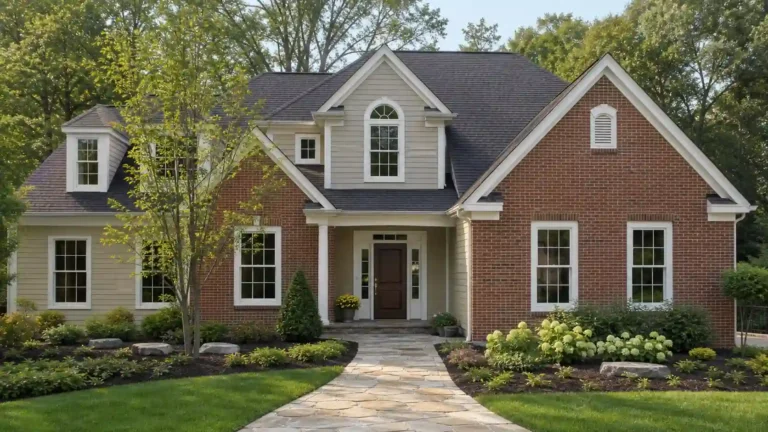
Start With What You Can't Change
The easiest way to choose a house color is to work from permanent features.
Look at these in order:
Roof → brick or stone → windows → driveway and hardscape → landscaping → architecture → paint color.
Your roof may have black, gray, brown, red, or mixed tones. Brick and stone also have fixed colors that can stay visible after painting. Your new exterior paint needs to work with those colors.
This approach also helps you avoid a common mistake. A color can look great on a small sample but look wrong beside your roof or masonry.
Benjamin Moore recommends starting with unchanging elements such as roofing, brick, stone, and landscaping when building an exterior palette.
6 Things to Check Before Choosing an Exterior Paint Color
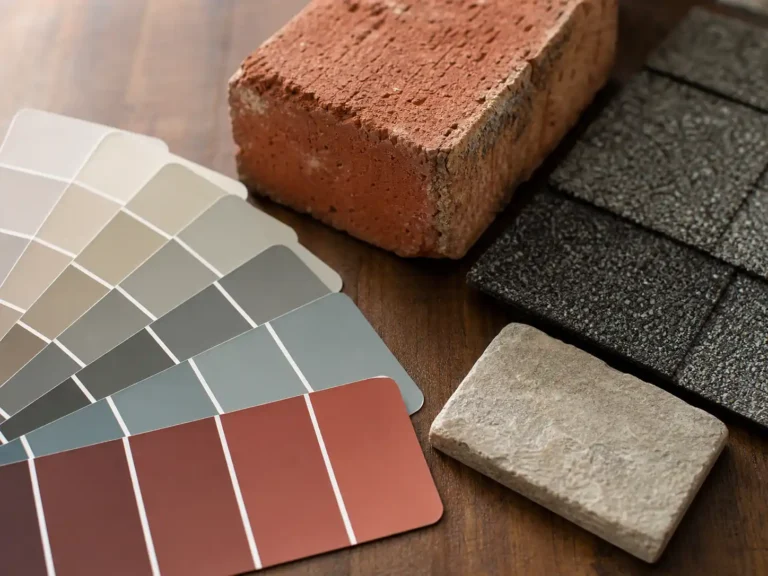
Your Roof Color
The roof is one of the largest color areas in your home. Treat it as part of the color palette.
A black or dark gray roof gives you more room for light colors, soft gray, greige, muted blue, sage, or warm white. Brown roofs usually pair well with cream, beige, taupe, warm gray, and earthy green.
Red or terracotta roofs often work best with warm neutrals, muted greens, cream, and soft tan.
Do not pick the paint first and hope the roof works with it. The roof should help narrow your choices.
Brick, Stone, or Other Permanent Materials
Brick and stone often contain several colors. Look closely before choosing your paint.
A warm brick may have red, brown, tan, orange, or cream notes. A cool stone may include gray, blue, or muted green tones.
You do not need to match every color. Instead, find the main temperature and undertone.
For example, warm brick usually looks better with warm white, taupe, beige, greige, or muted green than with a sharp blue-gray.
Your Home’s Architectural Style
Your home’s shape should guide the color choice.
Modern and contemporary homes can handle clean whites, charcoal, black, gray, and deep blue.
Modern farmhouse homes often suit white, warm gray, greige, black, and natural wood accents.
Craftsman homes work well with earthy green, brown, cream, muted blue, and warm neutral palettes.
Ranch homes give you more freedom. Soft gray, beige, white, sage, and blue-gray can all work well.
Colonial homes often suit balanced combinations with white, gray, navy, black, or classic warm neutrals.
Tudor homes can benefit from rich brown, cream, warm gray, muted green, or dark accent colors.
Victorian homes can support more detailed color schemes, especially when trim and architectural details deserve attention.
Mediterranean and Spanish-style homes often work well with warm white, cream, tan, terracotta, muted green, and earthy brown.
Sherwin-Williams also organizes exterior palettes around architectural styles, showing why the home’s design should influence the paint choice.
Natural Light and Sun Exposure
Paint color changes outside.
Direct sun can make a color look lighter. Shade can make it look deeper or cooler. The direction of the wall also affects how the color appears.
Check your paint in:
- Morning light
- Afternoon light
- Evening light
- Direct sun
- Full shade
Pay extra attention to south- and west-facing walls because they can receive strong sun for long periods.
Never approve a whole-house color from a tiny indoor paint chip.
Landscaping and Neighborhood
Your yard is part of the final picture.
A home surrounded by trees may look better with sage, muted green, warm gray, beige, or natural brown. A coastal setting may suit soft blue, white, gray, or sandy neutrals.
Also look at nearby homes. You do not need to copy them, but your color should make sense on the street.
If your HOA has color rules, check them before ordering paint.
Your Climate and Maintenance Needs
Hot, sunny climates fade dark colors faster and can raise cooling costs, since dark surfaces absorb more heat than light ones, according to ENERGY STAR’s research on cool roofs and walls. Humid coastal areas need paint built to resist mildew and salt air. If you live in a place like Southern California, a color that looks perfect in a photo might fade twice as fast under real sun exposure. This is exactly why local expertise matters.
If you want a color that holds up long term, exterior painting services in San Diego from San Diego Custom Painting can help you pick a shade and a paint product built for our coastal sun and salt air, not just a color that looks good on a screen.
What Are the Best Exterior House Colors?
There is no single best color for every home. These color families are useful starting points.
White and Off-White
White and off-white are flexible choices for traditional, farmhouse, coastal, and modern homes. Off-white can feel softer than a bright white. It can also work better beside warm brick, stone, or a brown roof. For a modern home, pair a clean white body with dark trim or a black front door.
Gray and Greige
Gray works well with modern, contemporary, and transitional homes. Greige combines gray and beige. It is useful when you want a neutral color that does not feel too cold. Check the undertone before choosing. Some grays lean blue, green, or violet.
Beige and Warm Neutrals
Warm neutrals are useful for traditional homes, stucco, warm roofs, and natural surroundings. They can make an exterior feel calm without looking plain. Look at the roof and masonry before choosing between beige, taupe, and greige.
Blue and Blue-Gray
Blue and blue-gray can work well for coastal, traditional, and modern homes. A muted blue is usually easier to live with than a bright blue across a large exterior. Blue-gray can also connect nicely with gray roofs, white trim, and natural stone.
Green and Sage
Sage and muted green are strong choices for homes surrounded by trees or gardens. They can also suit Craftsman and farmhouse architecture. Green works best when the shade feels connected to the natural colors around the home.
Charcoal and Black
Charcoal and black can create a strong modern look. They work especially well on contemporary homes with simple shapes and clean lines. Dark colors need more care in strong sunlight. Test them on your actual exterior before making a final choice.
Modern Exterior House Colors That Work on Real Homes
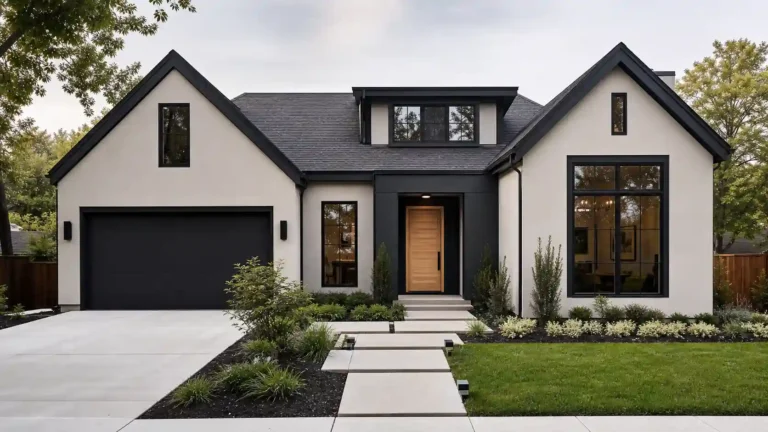
Modern exterior house colors do not have to be cold or dramatic.
Try these combinations:
- White + black: Clean and high contrast.
- Greige + charcoal: Modern without feeling harsh.
- Light gray + dark gray: Simple and balanced.
- Sage + cream: Soft and natural.
- Navy + white: Classic with a modern edge.
- Charcoal + warm white: Strong contrast with warmth.
- Black + natural wood: Bold with a softer natural element.
The right combination depends on the home’s roof, windows, siding, and architecture.
How to Choose Exterior Paint Colors for Different House Styles
Your architecture should not be ignored just because a color is trending.
Modern and Contemporary Homes
Stick to two or three tones at most. White, charcoal, black, gray, and deep blue all work well here.
Modern Farmhouse
Crisp white or warm white siding with black or dark gray trim is the standard look, and for good reason. It’s simple and it ages well.
Craftsman Homes
Earthy greens, warm browns, and muted golds match the natural materials Craftsman homes were built with.
Ranch Homes
Ranch homes are long and low, so muted, grounded colors like warm beige, soft green, or gray work better than anything too bright.
Colonial Homes
Colonial homes look best in classic, symmetrical color schemes. White or soft yellow with black shutters is a proven combination.
Tudor Homes
Tudor homes already have strong contrast from their timber framing. Keep the stucco or brick sections neutral so the architecture stays the focus.
Victorian Homes
Victorian homes can carry more color than any other style on this list. Multiple trim colors on the same house are common and expected here.
Mediterranean or Spanish-Style Homes
Warm white, tan, and terracotta tones match the clay roofs and stucco walls these homes are known for.
The goal is not to force the home into a trend. The goal is to make the existing design look intentional.
How to Choose Paint Colours for Outdoors Based on Your Exterior Material
The right paint colours for outdoors depend heavily on what your siding is made of. Each material behaves differently in sunlight and holds color differently over time.
Stucco
Stucco works well with warm white, cream, beige, greige, muted green, and soft gray. Large stucco walls can make a color appear stronger than it looked on a small sample.
Brick
Brick already provides strong color. You can paint the trim and other surfaces while allowing the brick to remain the visual anchor. Warm white, taupe, greige, muted green, and charcoal can work well with many brick colors.
Vinyl Siding
Vinyl siding gives you many color options, but choose a coating made for vinyl. Light gray, blue-gray, cream, sage, and muted beige are useful starting points.
Wood Siding
Wood siding works well with natural colors, warm neutrals, muted green, blue, white, and charcoal. The condition of the wood matters. Repair rot, peeling areas, or damaged boards before painting.
Fiber Cement Siding
Fiber cement gives you broad color flexibility. Modern homes can use charcoal, white, gray, or deep blue. Traditional homes may suit cream, beige, sage, or soft gray.
Stone and Mixed Materials
Do not try to match stone exactly. Pull one subtle color from the stone and use it as a guide for your paint. This creates a connected palette without making every surface look the same.
How to Create House Color Exterior Combinations
A simple exterior palette usually starts with three roles:
Body + Trim + Accent
How to Choose the Main Body Color
The body is the largest painted area. Choose this first. Use the roof, masonry, siding, architecture, and surroundings to narrow your choices.
How to Choose the Trim Color
Trim can create contrast or keep the exterior quiet. White trim gives strong contrast against many darker colors. A softer cream can look better beside warm colors. You can also use a trim color close to the body for a more modern appearance.
How to Choose the Front Door or Accent Color
Your front door is the easiest place to add personality without repainting the whole house. It also carries real weight at resale. Zillow’s paint color research found that homes with black or charcoal front doors sold for thousands more than homes with pale pink or plain white doors.
Should the Garage Door Match the Trim or Body?
There is no single rule.
If you want the garage to blend in, match it closely to the body color. If you want more definition, use the trim color. The garage is large, so a strong contrast can draw more attention than expected.
What Exterior Colors Work Best With Different Roof Colors?
- Black and Dark Gray Roofs: Try white, off-white, gray, greige, sage, navy, or charcoal.
- Brown Roofs: Warm white, cream, beige, taupe, warm gray, and earthy green are good starting points.
- Red or Terracotta Roofs: Look at warm white, cream, tan, muted green, and warm gray.
- Light Gray Roofs: White, darker gray, blue-gray, navy, sage, and charcoal can work well.
- Mixed or Multicolor Roofs: Pick one quiet color from the roof rather than trying to match every shade.
How to Test Exterior House Colors Before You Paint
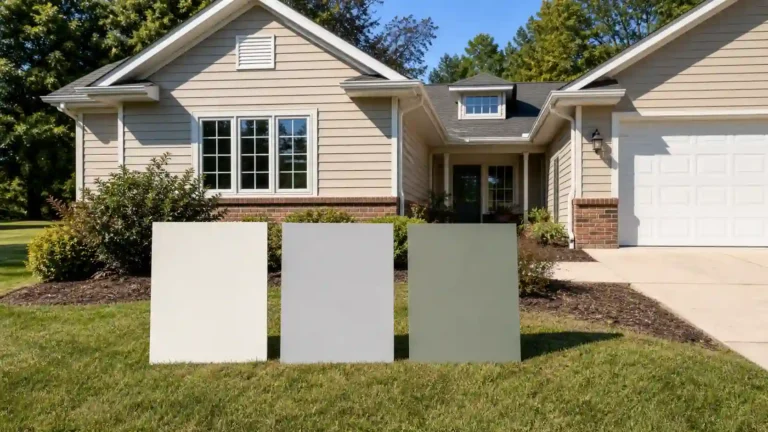
A color visualizer is useful for narrowing your choices. It should not be your final test.
Follow this process:
- Narrow your choices to two or three colors.
- Check each one against the roof and permanent materials.
- Use a color visualizer to compare the options.
- Buy physical paint samples.
- Test large sample areas or sample boards.
- Check them in morning, afternoon, and evening light.
- Look at them from the street.
- Test your trim and accent colors beside the body color.
Benjamin Moore also recommends using samples because lighting and the direction of the home can change how a color appears.
What Does It Cost to Change Your Exterior Color?
Color selection is free. The painting project is not.
Current 2026 national data from Angi puts professional exterior painting at about $1.50 to $4 per square foot, with an average project cost of about $3,177. A 2,000-square-foot home can range from about $3,000 to $8,000, depending on the project.
The surface also matters. Angi reports typical ranges of about $1.25 to $3 per square foot for vinyl, $1.50 to $4 for stucco, and $1.50 to $4.50 for brick. Prep work, stories, access, repairs, and paint quality can change the final price.
That is why choosing the right color before painting matters. Changing your mind after the job is complete can mean paying for extra labor and materials.
Exterior Paint Colors to Avoid in Certain Situations
No color is automatically bad. A color becomes a poor choice when it fights the home.
Colors That Clash With Your Roof
A color that fights your roof’s undertone will always look off, no matter how nice it looks on its own.
Colors With the Wrong Undertone
A gray with too much blue can look cold and sterile against a warm brick home. Match undertones, not just the base color name.
Extremely Bright Colors on Large Exteriors
A bright color that looks fun on a small sample can feel overwhelming across an entire large home.
Very Dark Colors in High-Sun Locations
Very dark siding absorbs more heat and can fade faster in places with strong, consistent sun exposure.
Too Many Competing Accent Colors
Stick to one accent color. Multiple accent colors fighting for attention makes a home look busy instead of designed.
Trendy Colors That Fight the Home’s Architecture
A trendy color on the wrong architectural style can date your home faster than an outdated color ever would.
7 Common Mistakes Homeowners Make When Choosing Exterior Colors
- Choosing from a tiny swatch. Large walls change how color feels.
- Ignoring the roof. The roof is a major fixed color.
- Ignoring undertones. Warm and cool colors can clash.
- Matching everything exactly. A little contrast can add depth.
- Using too many colors. Keep the palette controlled.
- Forgetting sunlight. Check colors at different times.
- Skipping physical testing. Always test before committing.
A Simple Exterior Color Decision Guide
Use this quick guide when you feel stuck.
Want a timeless look? Start with warm white, soft gray, greige, or beige.
Want a modern look? Start with white, charcoal, black, gray, or deep blue.
Have lots of trees? Try muted green, earthy neutrals, or blue-gray.
Have warm bricks? Start with warm white, taupe, greige, or muted green.
Have a dark roof? Consider a lighter body with controlled contrast.
Have a small house? Light and airy colors can help the home feel more open.
Want stronger curb appeal? Use a clear body color and a focused accent.
Still unsure? Pick the body color first. Then choose the trim and accent.
The right choice should make your roof, architecture, materials, and yard feel connected.
Frequently Asked Questions
What is the most popular color for a house exterior?
White, off-white, gray, greige, beige, and other neutrals remain common choices. Sherwin-Williams describes neutrals as a foundation for many exterior color schemes.
What is the best exterior house color for resale?
There is no guaranteed resale color. Neutral colors are usually easier to work with because they appeal to a wider range of buyers.
What color makes a house look expensive?
A well-matched palette matters more than one expensive-looking color. Warm white, greige, charcoal, deep blue, and muted green can create a polished look when the roof and trim work with them.
Should exterior trim be lighter or darker than the house?
Either can work. Lighter trim creates more contrast. Similar trim colors create a quieter, more modern look.
What exterior colors make a house look modern?
White, charcoal, black, gray, greige, deep blue, and muted green are strong modern options. The finish and color combination also matter.
What color house looks best with a black roof?
White, off-white, gray, greige, sage, navy, and charcoal are useful starting points. Always test the exact shades against the roof.
Should the front door match the garage door?
Not always. A garage can blend with the body while the front door uses a stronger accent color.
How many exterior paint colors should a house have?
Three colors are a simple starting point: body, trim, and accent. Larger homes with more architectural details may use additional colors with care. Benjamin Moore notes that homeowners commonly use about three to four colors across the exterior and its details.
How do I know if an exterior paint color will look good?
Test large samples outdoors and view them in different light. Check them against the roof, brick, stone, siding, windows, and landscaping before making the final choice.