
Getting ready to paint a room is a great feeling, but staring at a blank wall with a brush in your hand can bring up quick questions. You want sharp edges and a smooth finish, but you might not know what to coat first. If you paint the wrong section at the wrong time, you risk ruining your fresh paint with accidental smears and messy lines.
You can stop worrying (do you paint trim or walls first) because the answer is simple. You should almost always paint the trim first, let it dry, and then paint your walls. Painting the woodwork like baseboards, window trim, and door frames first saves you time. It is much easier to protect your woodwork and roll the large open areas of the walls later.
Table of Contents
ToggleQuick Answer: Paint Trim or Walls First?
Paint your trim first, then your walls. That covers baseboards, crown molding, window trim, and door frames. Once the trim has dried, roll your wall paint right up to the edge, then cut in by hand for a clean line.
The basic order looks like this:
- Ceiling (if it needs paint)
- Trim
- Walls
- Small touch ups
This order works for most rooms. The next sections explain why it works, plus when it’s smart to flip it around.
Reasons to Paint Trim First
Trim work takes a steady hand and good light. Doing it first lets you focus, without wet wall paint nearby to worry about.
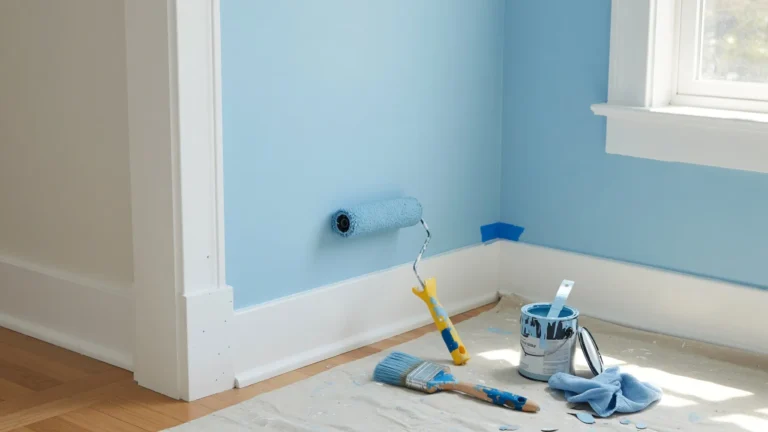
Cutting in around the trim is harder than cutting in along a wall. Cutting in means using a brush to paint a straight line by hand, with no tape. The trim has corners, gaps, and tight angles. A wall edge is just one line.
If you get trim paint on the wall while you work, that’s fine. You’ll roll over it when you paint the walls. This is why trim-first saves time: you skip taping off every inch of woodwork.
Once your trim is dry, push your roller close to the edge and brush in the leftover strip by hand. That gives you a sharp, clean line where the wall meets trim, and far less touch-up paint to deal with later.
Why Paint Order Impacts Finish Quality
Trim is usually painted in semi-gloss or satin. Walls are usually flat or eggshell. That sheen difference matters more than most people think.
Glossy paint shows surface flaws more than flat paint does. A speck of glossy trim paint that lands on a flat wall disappears once you roll over it. But a speck of flat wall paint on glossy trim can leave a faint mark, even after a second coat. This is one more reason trim goes first: any overlap on the wall gets buried, and the only cleanup left is a quick touch-up brush along the trim.
What Order Do Professional Painters Paint a Room?
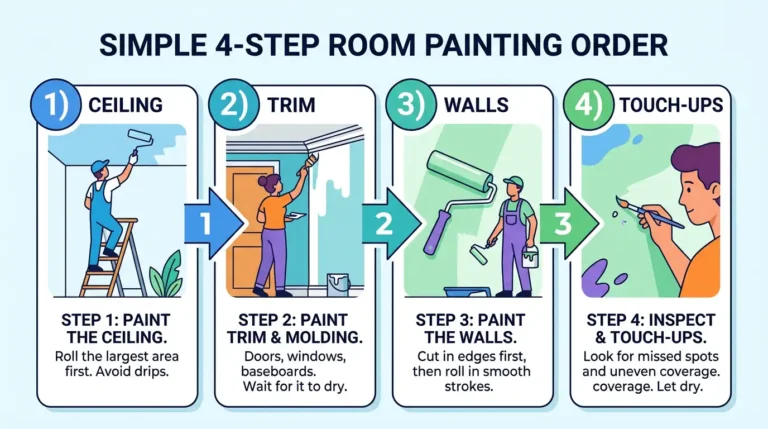
Most professional painters follow the same basic painting sequence on every job:
- Patch holes and sand rough spots
- Paint the ceiling
- Paint the trim (baseboards, window trim, door frames, crown molding)
- Let the trim dry completely
- Roll the wall paint, close to the trim edge
- Cut in the wall by hand
- Touch up any spot where the colors overlapped
This keeps the detailed work first and the big, simple work last.
Do You Paint the Ceiling Before Walls and Trim?
Yes, always. Ceiling paint drips down. If you paint walls or trim before the ceiling, drips can ruin your fresh work below. Finish the ceiling, let it dry, then move to trim.
When You Might Paint Walls First Instead
Trim first isn’t the right call every time. A few cases flip the order:
- New trim installation. If you’re installing new baseboards or molding, paint them before they go on the wall. In this case, the question isn’t really to paint the wall or trim first, since the trim gets painted off-site or before it’s hung.
- Heavy wall prep. If your walls need a lot of patching, sanding, or skim coating, do that messy work before your trim is finished. Dust and debris can land on wet trim paint.
- Full trim replacement. If you’re tearing out old trim, paint the walls first, then install and paint new trim last.
A lot of homeowners search painting walls and trim first because the right order really does depend on the project, not just personal taste.
Prep Tips for a Clean Paint Job Either Way
No matter which order you choose, good prep makes the biggest difference in your final result.
- Clean your walls and trim with a damp cloth before you start. Dust stops paint from sticking well.
- Patch holes and cracks, then sand smooth once dry.
- Use a good angled brush for cutting in. A cheap brush sheds bristles into wet paint.
- A sash brush works well for tight spots near window trim.
- Pick a roller nap based on your wall texture; thicker nap for textured walls, thinner for smooth drywall.
- Use painter’s tape only where you need it, and press it down firmly so paint can’t bleed underneath.
- Lay down a drop cloth before you open a single can.
- Plan on two coats of paint for full, even coverage. One coat rarely gives a true color match.
- Use a paint shield or edging tool near carpet and flooring to avoid splatter.
These steps matter just as much as the order you paint in. Good prep is what actually gives you a professional finish.
How Trim Installation Affects Paint Timing
If your project includes new construction painting or replacing trim, timing changes. Paint trim before it’s installed when you can. It’s far easier to coat a flat board on a table than to cut in around it once it’s nailed to the wall.
Once the trim is up, you only need to handle small touch ups instead of a full paint job in a tight, awkward spot.
How Long Should Trim Paint Dry Before Painting Walls?
Most latex trim paint feels dry to the touch within one to two hours. Even so, wait at least 24 hours before rolling wall paint right up against it. This gives the trim paint time to firm up fully, so your roller doesn’t leave marks or pull at the soft finish.
Is It Easier to Cut In Trim or Walls?
Cutting in along a wall edge is easier than cutting in trim. A wall edge is one straight line. Trim has corners, joints, and narrow surfaces that take more brush control.
Can Wall Paint Cover Trim Paint Mistakes?
Yes, in most cases. If trim paint splatters onto a wall before it’s painted, your wall paint will roll right over it. The reverse is harder. Wall paint on finished trim usually needs a real touch-up coat to fully hide.
Matching Your Paint Order to the Project
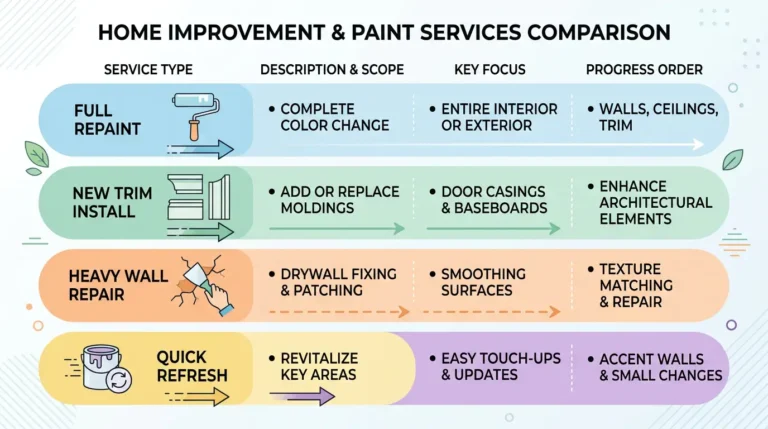
A full room makeover, a quick refresh, and a new build don’t all call for the same approach.
Project type | Best order |
Full interior repaint | Ceiling, trim, walls, touch ups |
New trim install | Paint trim first, install, then paint walls |
Heavy wall repair | Walls first, trim after |
Quick room refresh | Trim first, walls second |
If managing all of this on your own sounds like a lot, you don’t have to handle it alone. San Diego Custom Painting takes care of every step, from patching and prep to picking the right sheen for trim and walls. Our interior painting services in San Diego cover the full job, including color guidance, correct paint sequencing, and a clean site when we’re done. Contact us today for a free quote, and let our team handle the cutting in, rolling, and touch ups for you.
Summary of Paint Trim or Walls First
- Paint the ceiling first, if it needs it.
- Paint the trim next: baseboards, crown molding, window and door trim.
- Let the trim dry for at least 24 hours.
- Roll wall paint close to the trim, then cut in by hand.
- Touch up any spot where the two paints overlap.
- Flip the order only for new trim installs or heavy wall repair.
So, do you paint trim or walls first? For most homes, the answer stays simple: trim first, walls second, touch ups last.
FAQs: Do You Paint Trim or Walls First?
Should I paint walls or trim first?
Paint trim first in most rooms. It gives you cleaner edges and fewer touch ups, since wall paint covers any small mistakes left on the wall.
Should you paint trim or walls first if the trim is brand new?
Paint new trim before it’s installed, whenever that’s possible. It’s easier to coat on a flat surface than once it’s mounted.
What paint sheen should I use for trim versus walls?
Trim usually gets semi-gloss or satin for durability. Walls usually get flat or eggshell, which hides texture better.
Do I need painter’s tape for clean lines?
No, not always. A good angled brush gives sharp, clean lines without tape, though tape can help on tricky corners.