
Most people ask what temperature you can paint outside expecting a single number. There isn’t one there’s a window, and missing it is the single most common reason exterior paint fails early.
The best temperature to paint outside sits between 50°F and 85°F for most standard paints, but that range only tells half the story. Get the other half wrong surface heat, dew point, or humidity and you’ll be repainting sooner than you think.
Table of Contents
ToggleWhy This Question Matters More Than It Used To
Paint chemistry has changed a lot over the last decade. Low-temperature acrylic formulas now let crews work down into the 35°F range, something that simply wasn’t reliable ten years ago. That shift matters because it stretches the painting season by months in colder climates, and it changes the old “wait until spring” advice a lot of homeowners still repeat.
Here’s what we’ll walk through: the real temperature range for exterior paint, why surface temperature matters more than the number on your weather app, how dew point wrecks jobs nobody warned you about, and a simple system for deciding whether today is a paint day or a wait day.
What Temperature Can You Paint Outside? The Straight Answer
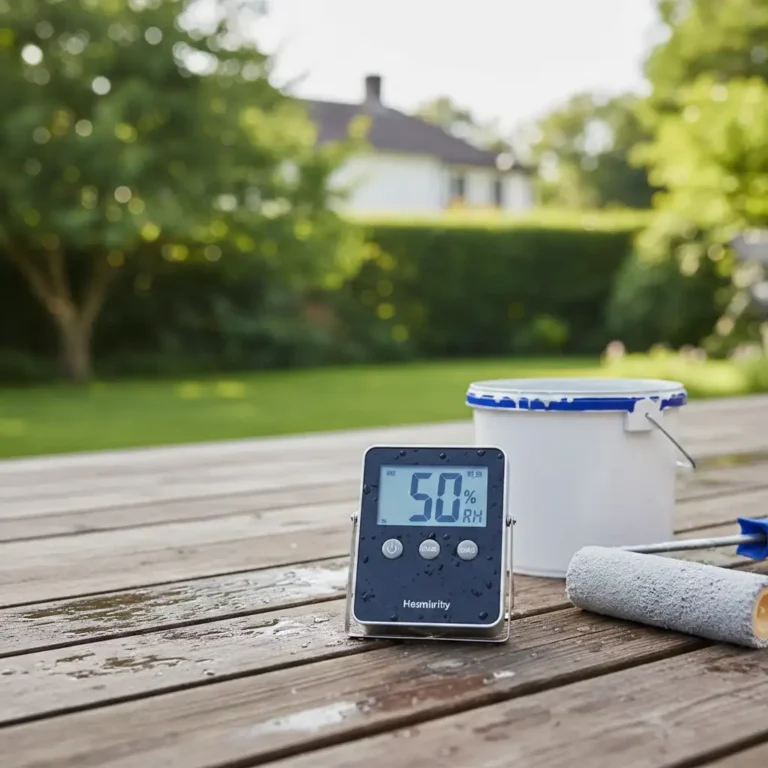
For traditional latex and acrylic exterior paint, the minimum temperature to paint outside is 50°F, with an ideal range of 50°F to 85°F. Go colder, and the paint particles can’t fuse together properly. Go hotter especially above 90°F and the paint dries too fast to level out, leaving lap marks and poor adhesion behind.
If you’re working with a low-temperature exterior paint, formulated by most major manufacturers, that floor drops to 35°F. Products like these use different resin chemistry that keeps coalescing the process where paint particles melt together into a solid film happening even in cold air.
Quick answer key for temperature for exterior painting:
- Standard latex/acrylic paint: 50°F to 85°F
- Low-temperature latex/acrylic paint: 35°F to 85°F
- Oil-based paint: 40°F to 90°F (more forgiving in cold, slower to dry)
- Elastomeric coatings: 50°F to 90°F, check the data sheet these are thick and temperature-sensitive
- Absolute ceiling for most paints: around 90°F to 95°F before dry-too-fast problems start
That’s the outdoor painting temperature range in a nutshell. But the number alone won’t save your paint job. Three other factors decide whether that window actually works for you.
The Three Things That Actually Determine Your Paint Day
1. Surface Temperature, Not Air Temperature
This is the mistake that trips up more people than anything else. Your phone says 55°F. Great, you think, that’s within range. But the wall you’re about to paint might be sitting at 30°F if it’s shaded, or 110°F if it just spent two hours in direct afternoon sun.
Paint doesn’t care what the air says. It cures based on the surface it’s stuck to.
- A north-facing wall in early spring can stay 15-20 degrees colder than the air temperature.
- A south-facing wall in July can run 30-40 degrees hotter than the air temperature.
- Metal, vinyl, and dark-colored siding swing further and faster than wood or masonry.
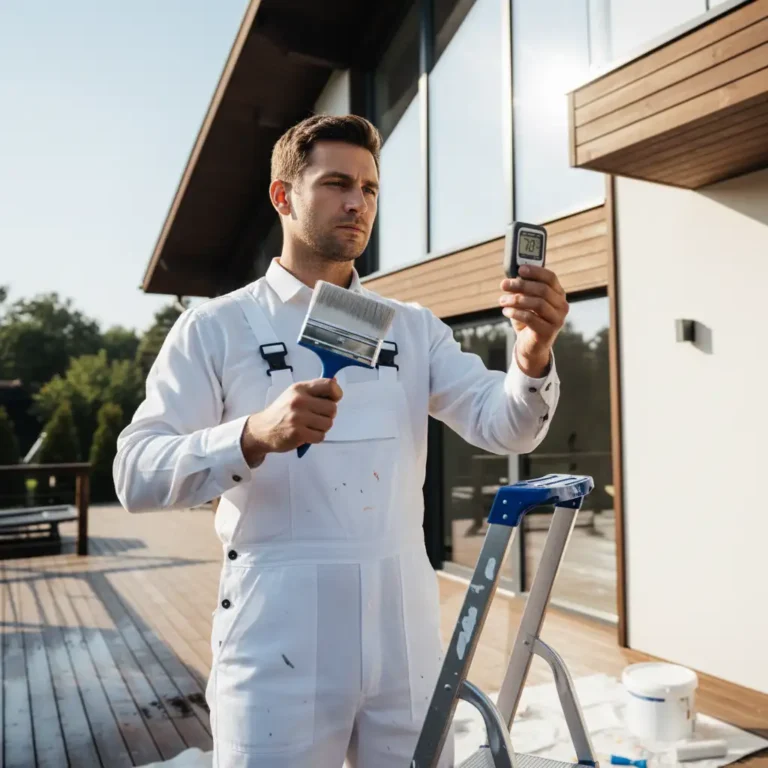
A $30 infrared thermometer solves this problem completely. Point it at the actual surface before you commit a gallon of paint to it. Pros don’t guess here we check every single time, on every wall, especially in shoulder seasons.
2. Dew Point: The Rule Nobody Tells You About
Temperature for painting outside means nothing if moisture is forming on the surface. Once the air temperature drops within about 5°F of the dew point, condensation starts settling on exterior surfaces even if it looks perfectly dry outside.
Paint that’s still curing when dew hits it can develop a hazy white film called surfactant leaching, or worse, it can fail to bond at all. This is why a beautiful 70°F afternoon can still ruin a paint job if the temperature crashes toward the dew point by 6 p.m.
The rule: keep the surface temperature at least 5°F above the dew point for the entire painting window, and ideally for 24-48 hours after application.
3. The 48-Hour Rule
Freshly applied paint needs the temperature to stay in range not just at the moment of application, but for roughly 48 hours afterward, while the film cures and hardens. A lot of people paint successfully at 2 p.m. and then watch temperatures crash to 38°F that night, wondering later why their paint job is chalking or peeling within a year. The cold snap after application is often the real culprit, not the application itself.
You may also want to read these posts:
How Warm Does It Need to Be to Paint Outdoors, Season by Season
Season | Typical Challenge | What to Watch |
Spring | Warm days, cold nights, high dew point | Confirm overnight lows stay above your paint’s minimum for 48 hours |
Summer | Surface overheating, fast drying | Paint in early morning or late afternoon shade, avoid direct sun on the wall |
Fall | Shrinking daylight, dropping nighttime temps | Track the dew point closely; this is when surfactant leaching spikes |
Winter | Air temp below standard paint range | Switch to a low-temperature formula rated to 35°F, or wait |
Myth vs. Fact: The "50°F Rule"
Myth: “You absolutely cannot paint outside below 50°F, no exceptions.”
Fact: That’s true for standard latex paint, but low-temperature acrylic formulas are engineered to cure properly down to 35°F. The 50°F number is a product limitation, not a law of physics. Check the label on your specific can. The temperature range is printed right on it, and it varies by product line, not just by brand.
From the Ladder: What 26 Years of Exterior Jobs Has Taught Me
I’ve painted through Santa Ana wind events, June gloom mornings that never quite burn off, and the rare frosty January week that catches everyone off guard. The single biggest mistake I see, even from experienced crews, is trusting the forecast high and ignoring the overnight low.
A client wants their fence done before a weekend party. The daytime number looks fine. Nobody checks that the temperature is forecast to drop to 36°F that night, right in the middle of the cure window. Six months later, that fence is peeling in sheets, and it has nothing to do with the paint quality; it’s a timing problem, not a product problem.
The fix is boring but it works: check the overnight low for two full days after your painting date, not just the daytime high. That one habit prevents more callbacks than any product upgrade ever will.
The Bottom Line
Getting the outdoor painting temperature right comes down to four things: the air temperature range for your specific paint, the actual surface temperature, the dew point, and 48 hours of stable conditions after the last coat goes on. Miss any one of those, and even premium paint will let you down early.
Paint technology keeps improving, and low-temperature formulas are quietly stretching what counts as a “good” painting season in a lot of climates. That’s worth knowing before you assume a project has to wait until summer.
If you’re weighing whether this is a DIY weekend or a job worth handing off, SD Custom Painting tracks surface temperature, dew point, and cure windows on every exterior project we take on; it’s part of how we avoid the callbacks that come from rushing a paint day. If you’re in the area and want a second opinion on timing before you commit to a project, our exterior painting services in San Diego team can walk your property and tell you straight whether this week works or next month is smarter.
Frequently Asked Questions
What temperature can you paint outside with oil-based paint?
Oil-based paint can typically be applied down to about 40°F, a bit lower than latex. It dries more slowly in cold weather, so plan for extra cure time before rain or dew is expected.
Is there a minimum temperature to paint outside at night?
Most labels specify daytime application, but the real limit is the overnight low for the 48 hours after painting. If that low drops below your paint’s minimum, the film may not cure properly even if you painted during a warm afternoon.
Can I paint outside if it’s too hot?
Yes, but above roughly 90°F, paint can dry faster than it can level out, leading to lap marks and poor adhesion. Painting in shade during peak heat, or working early morning and early evening, solves most of this.
Does humidity affect outdoor painting temperature limits?
Yes. High humidity slows drying and raises the risk of moisture settling on the surface before the paint cures, even within the “safe” temperature range. Watch the dew point, not just the humidity percentage.
How long does paint need to stay above the minimum temperature after application?
Roughly 48 hours. This is when the paint film is most vulnerable to cold snaps, dew, and moisture disrupting the cure.