
How to Paint Wood Paneling: A Complete DIY Guide (2026)
That dark, grooved wood paneling from the 1970s doesn’t match your style anymore. You’re tired of looking at those dated walls, but removing them sounds expensive and messy. Here’s the good news: painting wood paneling is a budget-friendly way to transform your space in just one weekend. For around $150-$300, you can completely modernize a room without hiring a contractor or tearing down walls.
This guide shows you exactly how to paint wood paneling step by step. You’ll learn which supplies work best, how to prep the surface properly, and which mistakes to avoid. Whether you have real hardwood, veneer, or faux paneling, these proven methods will give you a smooth, lasting finish.
Table of Contents
ToggleIs Painting Your Paneling the Right Choice?
Before you open that first paint can, consider your options. You have three main paths: remove the paneling, stain it, or paint it.
Removing paneling costs between $1,000-$2,500 for an average room. You’ll also need to repair the walls underneath, which often have holes, adhesive residue, or damaged drywall. The total project can take 2-3 weeks.
Staining works only if your paneling is real wood in decent condition. It costs $200-$400 in materials but won’t dramatically change the look. The wood grain stays visible, and dark tones remain.
Painting over wood paneling wins for most homeowners. Here’s why:
- Total cost: $150-$300 for a 12×14 room
- Time needed: One weekend (2-3 days)
- Completely changes the room’s appearance
- No wall damage or major construction
- Covers imperfections and outdated finishes
The only downside? Paint is harder to remove than stain if you change your mind later. Once you commit to painting wood panels, reversing the process means stripping or sanding everything down again.
What You’ll Need
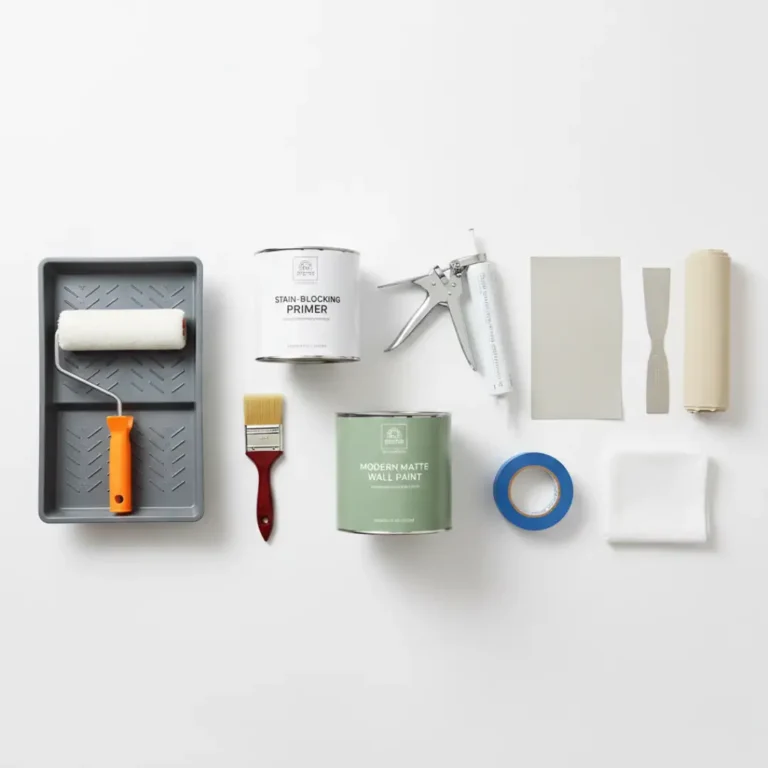
Smart shopping saves money. Here’s your complete supply list with real pricing:
Surface Prep Supplies ($40-$60):
- All-purpose cleaner or TSP substitute ($8-$12)
- 220-grit sandpaper or sanding sponge ($10-$15)
- Spackling compound for holes ($6-$10)
- Caulk for seams ($5-$8)
- Putty knife ($4-$7)
- Tack cloth or microfiber rags ($3-$5)
- Painter’s tape ($6-$10)
Primer ($35-$50):
- Stain-blocking bonding primer (1 gallon covers 300-400 sq ft)
- For veneer or laminate paneling: adhesion primer
- For real hardwood: high-hiding primer
- For cedar or redwood: oil-based primer to block tannin bleed
Paint ($40-$80):
- Interior paint with primer (1 gallon per 350-400 sq ft)
- Semi-gloss or satin finish works best
- Budget brands: $25-$35 per gallon
- Premium brands: $45-$65 per gallon
Application Tools ($35-$60):
- 2-inch angled brush for grooves and trim ($8-$15)
- 9-inch roller frame ($6-$10)
- Roller covers with 3/8-inch nap ($8-$12 for 2)
- Paint tray and liner ($5-$8)
- Drop cloth ($8-$15)
A 12×14 room with 8-foot ceilings has roughly 350 square feet of wall space. Budget $150 for basic supplies or $300 for premium products.
How to Prepare Your Paneling for Painting
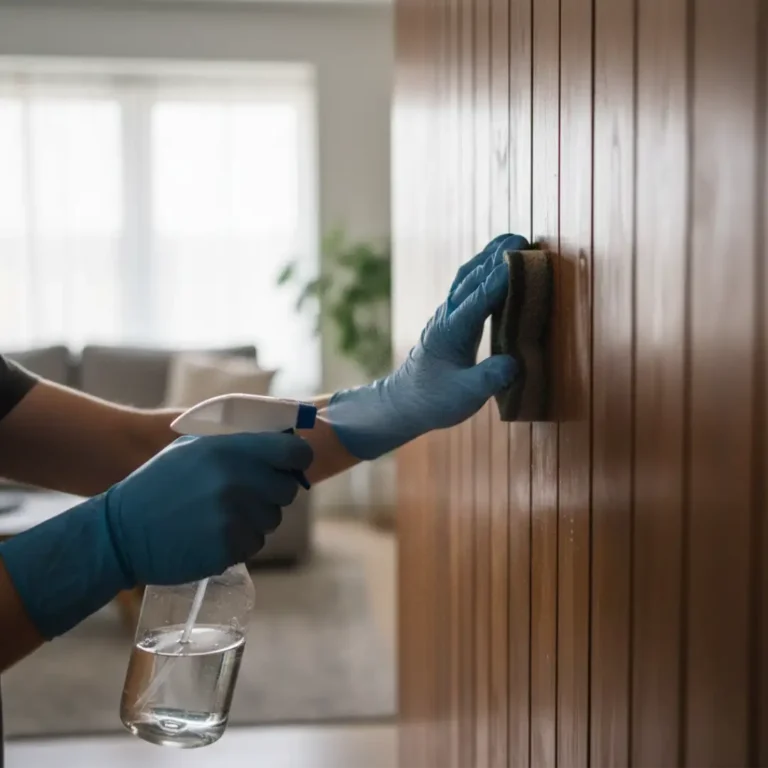
Preparation is 90% of a successful paint job. If you skip these steps, the paint will likely scratch off with a fingernail within weeks.
Step 1: Clean Every Surface
Decades of grease, smoke residue, and cleaning product buildup prevent paint from sticking. Start with a damp rag to wipe down the walls. This removes surface dust.
Next, mix an all-purpose cleaner or TSP substitute according to package directions. Scrub the paneling with a sponge, paying extra attention to areas near the kitchen or where people touch the walls. Rinse with clean water and let everything dry completely. This takes 2-4 hours depending on humidity.
If your paneling feels slick or glossy after cleaning, it has a polyurethane finish or varnish. You’ll need to scuff sand it in Step 3.
Step 2: Fix Holes and Gaps
Inspect your walls for damage. Fill nail holes and small dents with spackling compound using a putty knife. Smooth it flush with the surface. Let it dry for 30-60 minutes.
For seams between panels, use caulk instead of spackle. Caulk stays flexible as the wood expands and contracts. Spackles will crack at seams within a few months. Run a thin bead of caulk along each seam, then smooth it with your finger or a damp cloth.
Step 3: Sand for Better Adhesion
This step matters most for glossy or varnished hardwood paneling. Grab your 220-grit sandpaper and lightly scuff the entire surface. You’re not removing the finish completely. You’re just creating tiny scratches that give the primer something to grab.
Sand in the direction of the wood grain. Use light pressure. If you have veneer paneling, be extra careful. Veneer is paper-thin, and aggressive sanding will expose the fiberboard underneath.
After sanding, vacuum the walls thoroughly. Wipe them down with a tack cloth to remove every bit of dust. Any dust left behind will create bumps under your paint.
Step 4: Protect Your Space
Tape off baseboards, ceiling edges, and door frames with painter’s tape. Lay drop cloths on the floor. Remove outlet covers and light switch plates. Dust falls into wet paint easily, so vacuum the room one more time.
The Secret to Success: Choosing the Right Primer
The most common mistake is using a standard wall primer. Wood contains tannins that can “bleed” through white paint, causing yellow or brown stains.
An oil based primer for wood paneling is often the gold standard. It blocks stains and sticks to glossy surfaces better than water-based options. If you prefer a water-based product, ensure it is labeled as a “High-Bonding” or “Stain-Blocking” primer. For laminate or veneer, look for a “bonding primer” specifically designed for non-porous surfaces.
How to Paint Wood Paneling and Trim Like a Pro
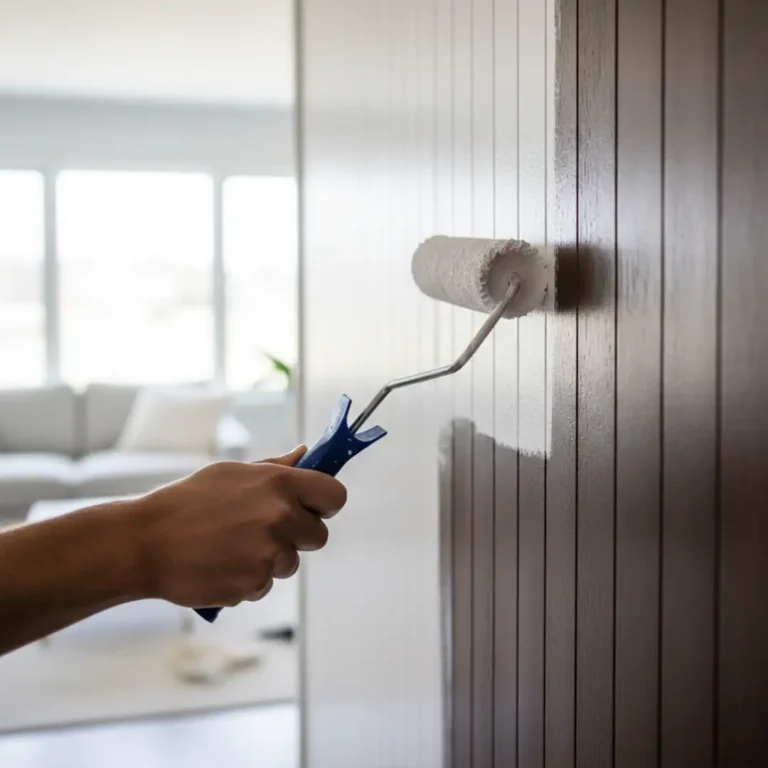
Once your prep is done, follow these steps to finish the job.
Step 1: Apply Stain-Blocking Primer
Primer stops wood knots and tannins from bleeding through your topcoat. Without a primer, you’ll see dark spots and yellow stains appear within weeks.
Pour primer into your paint tray. Start with your angled brush. Paint the grooves between panels first, using the brush to work primer into every crevice. Then switch to your roller for the flat surfaces.
Apply primer in thin, even coats. Thick coats drip and take forever to dry. Work in 4×4 foot sections, maintaining a wet edge so you don’t see roller marks where sections meet.
For cedar, redwood, or mahogany, use an oil-based primer for the first coat. These woods contain high levels of tannins that bleed through water-based products. Oil-based primer blocks them completely.
Let the primer dry for the time listed on the can. Usually 2-4 hours for water-based, 6-8 hours for oil-based.
Step 2: Prime Again (Yes, Really)
If you filled grooves with spackling compound to create a smooth wall, apply a second coat of primer. This evens out the texture difference between the spackled areas and the wood panels.
Even if you kept the grooved look, inspect your first primer coat. Can you still see wood grain showing through? Dark knots visible? Apply a second primer coat to those areas.
Step 3: Paint Your First Coat
Use the same brush-then-roller technique. Cut in around edges, trim, and grooves with your angled brush. Then roll the flat areas.
Choose semi-gloss or satin paint for paneling. These finishes hide imperfections better than flat paint and are easier to clean. Flat paint shows every roller mark on paneling.
Work from top to bottom. Keep a wet edge. Don’t overwork the paint by going over the same area repeatedly. This creates visible brush marks and roller stipple.
First coats often look streaky or uneven. That’s normal. The second coat fixes it.
Step 4: Apply the Second Coat
Wait until the first coat dries completely. Check the paint can for dry times. Usually 4-6 hours, but overnight is better.
Your second coat should go on easier than the first. The paint flows smoothly over the primed surface. Pay attention to any thin spots or areas where the wood grain still shows through. Hit these with extra coverage.
Let the final coat cure for 24 hours before replacing outlet covers or hanging pictures.
Step 5: Paint the Trim
Many homeowners paint trim in a different finish than the walls. Semi-gloss on baseboards and door frames resists scuffs and wipes clean easily. Satin on the walls creates nice contrast.
Some people use a slightly different color for trim to make it pop. Bright white trim with pale gray walls looks crisp and modern.
What Color to Paint Wood Paneling?
Dark paneling makes rooms feel small and outdated. Light colors open up the space and reflect more natural light.
Top Colors for Painted Paneling:
- White remains the most popular choice. It maximizes light reflection and pairs with any decor. Classic white, soft white, and warm white all work. Avoid stark white, which can feel cold.
- Light gray modernizes paneling without the starkness of white. It hides minor imperfections better than pure white. Greige (gray-beige) adds warmth while keeping things neutral.
- Soft blues and greens work well in bedrooms and bathrooms. They feel calm and fresh. Pale sage, dusty blue, and seafoam all suit painted paneling.
- For bold spaces, consider navy, forest green, or charcoal. Dark paint over dark paneling requires excellent primer coverage and likely three coats, but the result looks sophisticated.
Test colors before committing. Buy 8-ounce sample sizes and paint poster boards. Tape them to your walls and observe how the color looks at different times of day.
Common Challenges and Solutions
How do you paint the panelling without sanding?
If you absolutely cannot sand, you must use a specialized bonding primer or a “liquid deglosser.” However, a light manual scuff-sanding is always the safest bet for long-term durability.
Dealing with Tannin Bleed
If you see yellow spots appearing through your paint, stop. This means your primer isn’t blocking the wood oils. You will need to apply a coat of oil-based stain blocker over those spots before continuing.
Veneer vs. Solid Wood
Be gentle with veneer. It is a very thin layer of wood over a composite core. Excessive sanding can tear through it. Use a light touch and focus on the cleaning and priming stages.
Conclusion
Painting wood paneling transforms dated rooms into fresh, modern spaces for a fraction of what removal costs. With proper surface prep, quality primer, and two coats of paint, your weekend project will last for years.
The key steps: clean thoroughly, fill and caulk gaps, sand lightly, prime with a stain-blocker, and apply two coats of quality paint. Budget $150-$300 and plan for a full weekend from start to finish.
Looking for professional results without the DIY effort? San Diego Custom Painting offers expert interior, exterior, and cabinet painting services in San Diego. Our team handles everything from surface prep to final cleanup, ensuring your painted paneling looks flawless.
Painting Wood Paneling FAQs
Can you paint directly over wood paneling?
Not without prep work. You must clean the surface, sand glossy finishes, and apply primer first. Paint applied directly to unprepared paneling will peel within months.
What’s the best primer for wood paneling?
For veneer or laminate: use a bonding primer designed for glossy surfaces. For real hardwood: choose a high-hiding primer. For cedar or redwood: use oil-based primer to block tannin bleed.
Do you need to sand paneling before painting?
Yes, if the paneling has a glossy varnish or polyurethane finish. Light sanding with 220-grit sandpaper creates texture for the primer to grip. Skip heavy sanding on veneer to avoid damage.
How many coats of paint does paneling need?
Two coats over primer gives the best coverage. Dark paneling under light paint might need a third coat in spots where grain shows through.
What’s the best paint for paneling?
Semi-gloss or satin interior paint works best. These finishes are durable and cleanable. Avoid flat paint, which shows every texture and imperfection.
Can you paint fake wood paneling?
Yes. Faux paneling made from fiberboard or composite takes paint well. Use an adhesion primer designed for slick surfaces, then follow the same steps as real wood.
How long does painted paneling last?
With proper prep and quality paint, painted paneling lasts 8-12 years before needing a fresh coat. High-traffic areas may need touch-ups sooner.
Should I remove the paneling or paint it?
Paint it if the paneling is secure and in good condition. Removal makes sense only if panels are damaged, water-stained, or hiding walls you want to expose. Painting costs 75% less than removal.