

Melamine cabinets are affordable, durable, and easy to maintain, but their smooth, factory-made finish can make painting more challenging than painting traditional wood cabinets. If your cabinets have an outdated color or a finish you no longer like, painting them can be a cost-effective alternative to replacing the entire set.
The key to a successful melamine cabinet painting project is preparation. Unlike natural wood, melamine has a smooth, nonporous surface that does not readily accept paint. Cleaning, lightly sanding, repairing damage, and choosing the right bonding primer and cabinet paint can help create a finish that lasts.
Table of Contents
Toggle
Why Melamine Cabinets Need Extra Preparation
Melamine is a resin-based material or finish applied over a manufactured wood product. Its smooth, nonporous surface is designed to resist stains, moisture, and everyday wear. Those qualities make melamine practical for cabinets, but they also make it difficult for standard paint to adhere properly.
If you apply paint directly to glossy melamine without preparing the surface, the coating may eventually chip, peel, or curl.
Proper preparation gives the primer and paint a surface they can bond to. This usually involves removing grease and residue, lightly deglossing the surface with fine-grit sandpaper, repairing any damage, and applying a bonding primer designed for slick surfaces.
Skipping these steps may save time at the beginning, but it can significantly reduce the durability of the finished coating.
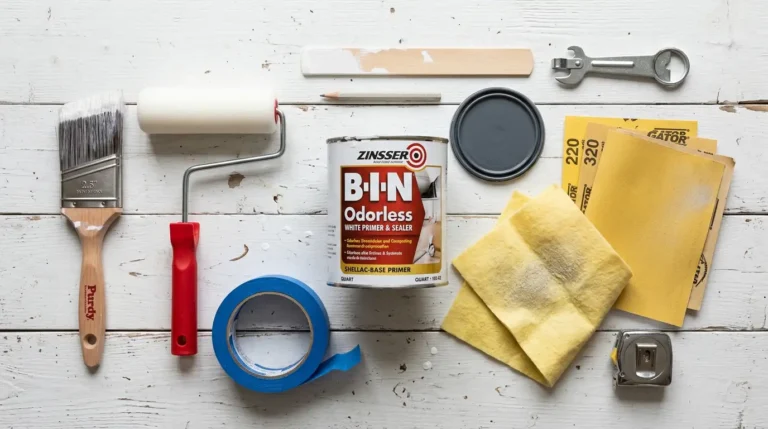
How to Paint Melamine Cabinets Step by Step
Painting melamine cabinets is easier when you complete each stage in the right order. The goal is not simply to cover the existing color. You need to create a clean, smooth, properly prepared surface that allows the new primer and paint to adhere.
Taking your time during preparation can make a noticeable difference in the final result.
1. Remove the Cabinet Doors and Hardware
Start by removing the cabinet doors, drawer fronts, knobs, handles, and other hardware.
Label each door as you remove it so you know exactly where it belongs when it is time to reinstall everything. This is especially helpful when several doors look nearly identical.
Place the doors on a suitable work surface where they can remain flat while you clean, sand, prime, and paint them. Keep the hardware separate and organized so it does not get mixed up with the doors.
Removing the doors and hardware also makes it easier to achieve an even finish and helps prevent paint from getting onto hinges, handles, and other hardware.
2. Clean the Melamine Thoroughly
Cabinet surfaces collect more than dust over time. Kitchen cabinets can also accumulate cooking oils, fingerprints, grease, and residue from cleaning products.
Even a small amount of contamination can interfere with primer adhesion, so cleaning is an important part of the preparation process.
Use an appropriate degreasing cleaner according to the product manufacturer’s instructions. Wipe the surface thoroughly with a clean cloth to remove grease and residue, then allow the cabinets to dry completely.
Do not begin sanding, priming, or painting while the surface is still wet. Moisture can interfere with the coating and affect the final finish.
3. Lightly Sand the Melamine
Melamine does not need aggressive sanding. The goal is to lightly dull the smooth surface and create enough texture, or “tooth,” for the primer to adhere.
Use a fine or medium-fine abrasive suitable for the surface. Work evenly and avoid sanding so aggressively that you damage the melamine layer.
After sanding, remove all dust and residue with a clean cloth or suitable dusting method. Any remaining particles can become trapped under the primer and create an uneven finish.
4. Repair Any Damage
Inspect the cabinet doors, drawer fronts, edges, and frames for chips, cracks, holes, or other damage before applying primer.
Pay particular attention to areas around cabinet hardware and edges where the melamine surface may have chipped or separated.
Use an appropriate filler or repair product for minor damage. Allow the repair material to cure according to the manufacturer’s instructions, then sand the repaired area until it is smooth and level with the surrounding surface.
Primer and paint will not hide significant surface damage. Taking care of these imperfections before priming gives you a much better starting point.
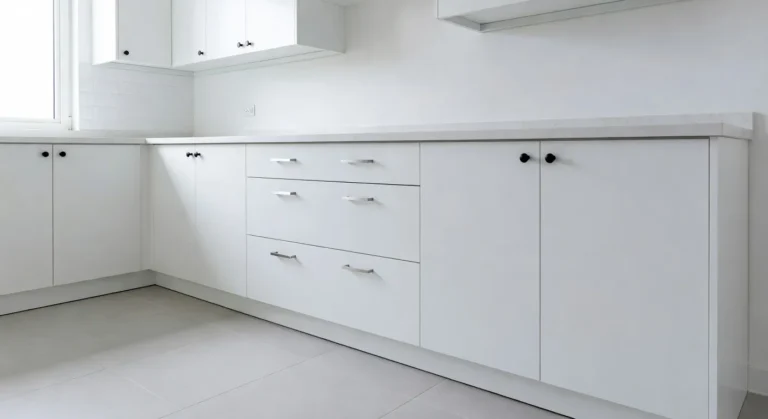
Choosing the Right Primer and Paint
The products you choose can have a major effect on how your painted cabinets look and perform over time.
A bonding primer is particularly important when painting melamine because it is designed to adhere to difficult, smooth surfaces where a standard primer may not perform as well.
For the topcoat, choose a durable cabinet or enamel paint that is specifically suitable for cabinets, laminate, melamine, or other slick surfaces. The coating should also be appropriate for the amount of daily use the cabinets receive.
Kitchen cabinets, for example, are exposed to frequent touching, cleaning, and general wear. A durable coating is therefore important for maintaining the finish.
Always follow the product manufacturer’s instructions for surface preparation, application, drying, and recoat times.
Is Specialty Melamine Paint Necessary?
Specialty coatings can be useful because they are designed with hard, smooth surfaces in mind. However, the word “melamine” on the label should not be the only factor you consider.
Check the manufacturer’s instructions to make sure the product is compatible with your cabinet surface. Also determine whether the product requires a separate primer or is designed to be used without one.
Once the cabinet surfaces have been properly prepared, a suitable melamine or cabinet coating can be applied with a brush, roller, or sprayer, depending on the product and your preferred application method.
Allow each coat to dry and recoat according to the manufacturer’s recommendations. Rushing between coats can affect the final appearance and durability.
Apply Primer Evenly
Primer creates the foundation for your new cabinet finish, so apply it carefully and evenly.
Avoid applying an excessively thick coat in an attempt to achieve complete coverage in one pass. Thin, even coats help reduce drips, runs, ridges, and uneven drying, especially around corners and edges.
If the product requires more than one coat, allow the first coat to dry according to the manufacturer’s instructions before applying the next one.
Once the primer has dried, inspect the surface under good lighting. If you notice small bumps or rough areas, lightly sand them as appropriate and remove the resulting dust before continuing.
A smooth primer coat gives your cabinet paint a better surface to work with.
Paint the Cabinet Surfaces
Once the primer has dried and the surface has been properly prepared, apply your cabinet paint to the door fronts, drawer fronts, and other cabinet surfaces.
Whether you use a brush, roller, or sprayer, apply thin, even coats rather than trying to cover everything with one heavy application.
Applying too much paint at once can cause pooling, drips, and uneven areas, particularly around edges and hardware holes.
Work methodically across each surface so the paint is applied consistently.
Spraying can produce a particularly smooth finish, but it requires proper masking, ventilation, and an application method that is suitable for the product you are using.
Allow each coat to dry according to the manufacturer’s instructions before applying another coat. Several thin coats can provide better coverage and a smoother appearance than a small number of heavy coats.
Do not rush to reinstall the cabinet doors immediately after the final coat. The paint may feel dry to the touch while still needing additional time to cure and harden.
You may also want to read these post:
Mistakes to Avoid When Painting Melamine Kitchen Cabinets
Melamine cabinets require a different approach from bare wood cabinets. Wood is porous and can absorb coatings, while melamine has a hard, smooth, nonporous surface.
Because of this, proper preparation and product compatibility are especially important.
The most common mistakes include:
- Skipping degreasing before sanding and priming
- Using overly coarse sandpaper that damages the melamine surface
- Applying primer or paint in excessively thick coats
- Ignoring chipped, cracked, or loose areas
- Using incompatible primer and paint products
- Painting in a dusty or poorly prepared workspace
- Reinstalling cabinet doors before the coating has adequately cured
Give the Paint Enough Time to Cure
One of the biggest mistakes when painting kitchen cabinets is not allowing enough curing time.
A coating can feel dry to the touch while the layers underneath are still curing. Opening and closing drawers, reinstalling hardware, or repeatedly handling freshly painted surfaces too soon can leave marks or cause surfaces to stick together.
Follow the manufacturer’s recommended drying and curing times before putting the cabinets back into regular use.
Patience at this stage helps protect the finish you worked hard to create.
Repainting Melamine Kitchen Cabinets for Durability
Repainting can be a good option when the existing melamine surface is still structurally sound and you simply want to change its color or refresh its appearance.
Before starting, inspect the cabinets carefully. Painting may not be the best solution if the existing melamine is severely peeling, the laminate is blistering because of moisture, or the surface is separating from its base.
If the existing material is significantly damaged or deteriorated, additional repairs may be necessary before painting.
A good paint job starts with a sound surface. Take time to assess the condition of the cabinets before investing in a new coating.
When Professional Cabinet Painting Makes Sense
Painting cabinets may appear straightforward, but achieving a consistent, durable finish requires proper materials, careful preparation, and attention to detail.
A kitchen can contain dozens of doors, drawer fronts, cabinet boxes, edges, and trim pieces. Each component needs to be prepared and coated properly, and a small mistake can become very noticeable when repeated across an entire kitchen.
Professional cabinet painters have experience selecting appropriate preparation and application methods for different cabinet surfaces and profiles.
At SD Custom Painting, we work with homeowners on a variety of cabinet painting projects, with a focus on thorough surface preparation, even application, clean lines, and a finished appearance that complements the space.
Professional painting can be especially helpful when cabinets are heavily worn, have detailed profiles, or include a large number of doors and drawer fronts. Hiring a professional can also reduce the amount of time your kitchen or living space is affected by the project.
Final Thoughts
If your melamine cabinets are in good structural condition but look outdated, painting can be an affordable way to refresh their appearance instead of replacing them.
Preparation is the most important part of the process. Start by thoroughly degreasing the cabinets, lightly sanding the smooth surface, repairing chips or damage, and applying a bonding primer designed for difficult surfaces.
From there, use a durable cabinet paint and apply thin, even coats. Give every coat enough time to dry and cure before moving on to the next step or reinstalling the hardware and doors.
With proper planning and preparation, painted melamine cabinets can give your kitchen an updated appearance without the cost of a complete cabinet replacement.
If you would rather have the preparation and painting handled by professionals, SD Custom Painting can help you determine the right approach for your existing melamine cabinets.
FAQs
Can melamine cabinets be painted?
Yes. Melamine cabinets can be painted when the existing surface is in suitable condition and is properly prepared. Clean the surface thoroughly, lightly sand it to reduce the gloss, and use a bonding primer designed for slick surfaces before applying a suitable cabinet paint.
Can I paint melamine cabinets without removing the doors?
It is possible, but removing the doors and hardware generally makes preparation and painting easier. Taking the doors off also helps you avoid getting paint on hinges and surrounding areas and gives you better access to the edges and surfaces.
How many coats of paint should I apply to melamine cabinets?
The number of coats depends on the specific paint, the existing color, and the desired finish. Follow the paint manufacturer’s recommendations and allow each coat to dry properly before applying the next one.
Is it worth hiring a professional to paint melamine cabinets?
Professional cabinet painting can be worthwhile if you want consistent surface preparation, an even application, and a durable finish without handling the entire project yourself.
SD Custom Painting can assess the condition of your cabinets and help determine an appropriate preparation and painting approach.