
You’ve seen it a hundred times. A crew shows up in bright white overalls, and somehow, by the end of the day, they’re speckled head to toe in every color but white. It looks impractical. It looks like a uniform designed by someone who never actually painted a wall.
But why do painters wear white clothes? The short answer is a mix of old chemistry, hot sun, cheap fabric, and a trade that never bothered to change something that already worked. Stick with me, because the real story covers a lot more ground than “it’s tradition.”
Table of Contents
ToggleWhat Counts as "Painter's Whites," Exactly?
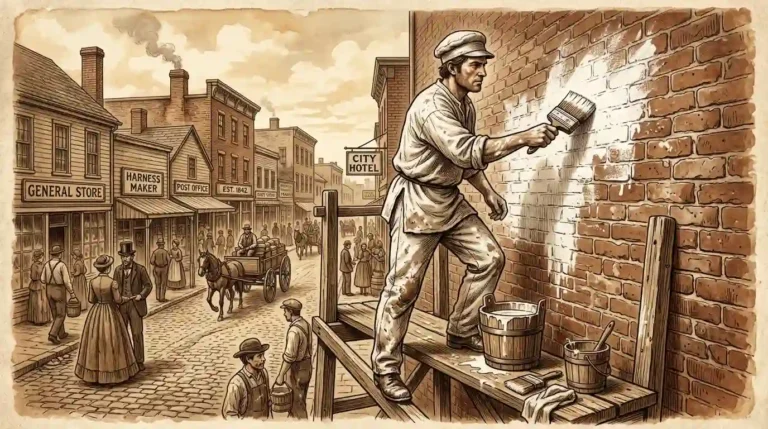
Before we get into the why, let’s define the what. A painter’s suit isn’t one single garment. It’s a small wardrobe built around one color rule.
- Top: A white t-shirt or long-sleeve shirt, sometimes a button-up for cooler days
- Bottom: White painter’s overalls, bib overalls, or straight-leg canvas pants
- Outer layer: A white or off-white painter’s jacket for early mornings
- Footwear: Painters shoes are usually a separate story — most painters wear light-colored, slip-resistant work shoes rather than pure white, since white shoes show grime fast and offer no extra grip on ladders or drop cloths
- Extras: A canvas cap, a nail apron or pouch, and a rag or two hanging out of a back pocket
Old-school white painters overalls were heavy cotton duck canvas. Modern versions blend in polyester for stretch and quicker drying. The color rule, though, hasn’t budged in over a century.
The Historical Root: White Lead and White Dust
Here’s where most articles skip the actual chemistry, so let’s not skip it.
Long before pre-mixed cans and acrylic paint, house paint was made on-site. Painters ground white lead carbonate into a paste and mixed it with linseed oil to build a base, then tinted it by hand for color. That process threw white lead dust into the air and onto everything nearby — including the painter.
A dark shirt would show every speck of that dust as a smear. White clothing hid it. So painters wearing white wasn’t really a fashion choice at first. It was camouflage against a job that already covered them in white powder before a single color got mixed in.
That single practical habit outlived the white lead paint itself. Lead-based paint got phased out of U.S. residential use by 1978, but by then the white painter’s suit had been standard for generations. Nobody needed a reason to switch it back — it just kept working for new reasons.
Practical Reasons Painters Still Wear White Today
Once you get past the history, the modern reasons are just as solid. Here’s why the habit stuck around long after white lead paint disappeared from job sites.
1. White Reflects Heat
Painters spend long stretches outdoors, on scaffolding, on roofs, in direct sun with zero shade. Light colors reflect more solar radiation than dark ones, which means a white shirt runs noticeably cooler than a black one on a summer afternoon. In a climate like San Diego, where exterior jobs run nearly year-round, that’s not a small detail — it’s the difference between a comfortable ten-hour day and a miserable one.
2. White Shows What’s Underneath — And What Isn’t
A painter’s clean whites tell a client something at a glance: this crew hasn’t tracked mud, grease, or unknown stains from a different job onto your property. Any dirt or paint drip shows up instantly on white fabric. That visibility works as a built-in accountability check most other colors don’t offer.
3. It’s the Cheapest Fabric to Produce
Undyed cotton is less expensive to manufacture than dyed fabric, since dyeing adds a full extra step in production. For a trade that goes through clothing fast — paint doesn’t wash out completely, ever — cheaper base fabric matters. Buying a fresh pair of white painters overalls costs less than buying colored ones of the same quality.
4. Stains Bleach Out (Mostly)
White cotton tolerates bleach and hot water far better than colored fabric, which fades or discolors under the same treatment. A painter can run whites through a hard wash cycle to knock out latex splatter without worrying about the shirt losing its color. Try that with a navy shirt and you’ll pull it out gray and blotchy.
5. Safety and Recognition on a Job Site
On a construction site or in a commercial building mid-renovation, a painter in bright white stands out against drywall, ladders, and drop cloths. That visibility helps other trades and site supervisors clock who’s who at a glance — useful when wet paint, open cans, or extension cords are scattered around a work zone.
6. The Painters Union Helped Lock It In
The International Union of Painters and Allied Trades formalized white as expected attire decades ago, and the habit spread beyond union shops. So even painters who’ve never belonged to a union tend to default to white, because it’s simply what “looking like a painter” means in the trade now.
Painter's Suit Through the Decades: A Quick Comparison
Era | What Painters Wore | Why White Made Sense Then |
Pre-1900s | Hand-tinted white lead paint, cotton work clothes | Hid white lead dust from paint mixing |
Early-to-mid 1900s | Union-mandated white painter’s suit | Union trade standards, professional identity |
1950s–1970s | White canvas overalls, white cotton shirts | Lead-based paint still common; habit fully entrenched |
1980s–2000s | White cotton-poly blend coveralls | Lead paint banned in 1978, but tradition and heat reflection kept white standard |
Today | Moisture-wicking white/light poly-cotton blends, stain-release treated fabric | Sun protection, easy bleaching, brand recognition, trade tradition |
Myth vs. Fact
Myth: Painters wear white because white paint was the only color available in the old days.
Fact: Painters mixed their own colors by hand for centuries. White clothing came from hiding white lead dust during mixing, not from a lack of paint color options.
Myth: Every painter is legally required to wear white.
Fact: There’s no law mandating it. It’s an industry norm carried forward by tradition, union culture, and genuine practical benefits not a regulation.
Myth: White clothes get too dirty to be practical for a messy trade.
Fact: That “dirt” is the point. Paint-stained whites are treated as a badge of experience in the trade, and the fabric handles bleach and hot washing better than most alternatives anyway.
From 26 Years on the Ladder: What Clean Whites Actually Tell You
Having run painting crews across San Diego for over two and a half decades, I can tell you the uniform still does real work beyond nostalgia. When a crew shows up to a client’s home in fresh, clean painter’s whites, it signals the same thing it signaled fifty years ago: preparation, care, and pride in the job before a single brush touches the wall.
The common mistake we see from newer painters is treating the whites as optional or wearing whatever’s clean that morning but clients notice the difference between a crew that looks the part and one that doesn’t, and it shapes trust before a single word gets said. At SD Custom Painting, our crews still show up in whites for that exact reason. It’s a small detail that says a lot.
The Bottom Line
The white painter’s suit isn’t a random fashion choice. It started as a way to hide white lead dust during hand-mixed paint jobs, and it stuck around because white fabric reflects heat, bleaches clean, shows dirt honestly, and signals professionalism the whole trade recognizes. From painter’s overalls to the modern painter’s suit, the color rule has outlasted the paint that started it.
Next time a crew shows up to your door in white, you’ll know exactly why and what it says about the work ahead. If you’re planning a project and want that same level of care on your own walls, SD Custom Painting brings the same standards to every job across the region, including painting services in San Diego for homeowners who want it done right the first time.
Frequently Asked Questions
Why does a painter wear white instead of another light color?
White specifically bleaches cleanest, costs the least to produce undyed, and became the standard through union culture — other light colors like tan or gray never built the same trade-wide habit.
Do all professional painters still wear white painters overalls?
Most do, especially on residential jobs, though some crews now use light gray or tan as a practical alternative. White remains the trade default and the visual shorthand for “professional painter.”
Is there a rule that painters must wear white?
No official rule exists. It’s an industry norm, not a regulation — companies and independent painters choose it because of tradition and function, not because any code requires it.
What about painters shoes — are those white too?
Rarely. Most painters wear neutral or dark slip-resistant work shoes rather than white ones, since white shoes show grime almost immediately and offer no functional advantage on ladders or scaffolding.
Does the painter’s suit tradition go back to a specific paint type?
Yes — it traces to white lead carbonate paint, which painters mixed by hand before pre-tinted paint existed. The white clothing habit outlasted the lead paint itself by nearly a century.