
If your exterior walls are suffering from cracks, fading, or moisture issues, chances are you’ve encountered the suggestion of using elastomeric paint. However, the majority tend to halt at that point. Many are unaware of its true nature, functionality, or whether it’s the ideal option for their particular surface. This guide covers precisely that.
So, what is elastomeric paint? This is a robust, adaptable coating engineered to stretch and effortlessly revert to its original form without any cracking. This innovative exterior paint creates a flexible, rubber-like barrier on surfaces such as stucco, masonry, and concrete block, effectively sealing out water and safeguarding against long-term weather damage. By the end of this article, you’ll have a clear understanding of its functionality, optimal applications, and whether it’s essential for your project.
Table of Contents
ToggleWhat Is Elastomeric Paint and How Does It Work?
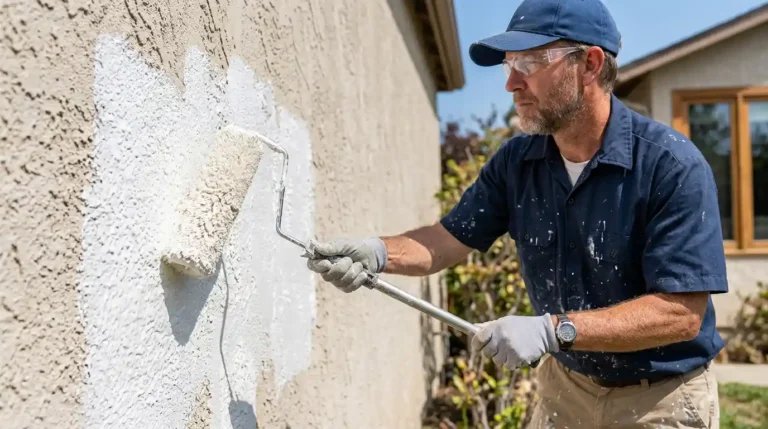
Elastomeric paint is a high-build, flexible coating engineered to expand and contract with temperature changes without losing its seal. It contains a high concentration of acrylic polymers that allow it to stretch up to 300% beyond its original shape. This makes it fundamentally different from standard latex or acrylic paints.
Think of it like a thick rubber glove stretched over your wall. When the surface shifts slightly due to heat, cold, or structural movement, the coating moves with it instead of cracking.
It’s easy to understand how elastomeric paint works. It dries into a thick, smooth membrane that sticks closely to the surface when you put it on. This membrane fills in hairline cracks, keeps rain from getting in through the wind, and keeps moisture from getting into the wall.
One technical detail worth understanding is dry film thickness (DFT). Standard paint dries at around 2 to 3 mils thick. Elastomeric coatings dry at 10 to 20 mils. That’s roughly 5 to 10 times thicker, which is where most of its protective power comes from.
According to paint manufacturer specs, elastomeric coatings cover approximately 100 sq ft per gallon on stucco vs. 250 to 300 sq ft per gallon for standard acrylic.
The Advantages and Disadvantages of Elastomeric Paint
You should look at the whole picture before you spend money on any coating. There are real pros and cons to using elastomeric paint.
Advantages of Elastomeric Paint
1. Superior Waterproofing
This is the biggest reason people choose it. The coating creates a waterproof barrier that prevents water from penetrating surfaces. It’s especially useful on stucco and masonry that’s regularly exposed to rain or humidity. For homes near the coast or in high-rainfall regions, this benefit alone justifies the cost.
2. Crack Bridging
Elastomeric coatings are made to fill up hairline cracks that naturally happen in stucco and concrete over time. It doesn’t just cover them up. It keeps water from getting underneath and making the damage worse by sealing it.
3. Durability and Long-Term Protection
Most elastomeric paints come with warranties of up to 10 years or more. Standard acrylic paints typically carry 2 to 3 year warranties. When properly applied on the right surface, an elastomeric coating genuinely outlasts most alternatives.
4. Energy Efficiency
The thickness of the coating adds a small but measurable thermal layer to your exterior walls. In warmer climates, this helps reflect heat and can reduce cooling costs over time. It’s not a substitute for proper insulation, but it’s a useful added benefit.
Disadvantages of Elastomeric Paint
1. Fading, Especially in Dark Colors
This is a serious limitation that many product descriptions gloss over. Darker elastomeric paint colors tend to fade badly, often within 4 to 6 years when exposed to direct sunlight. If your home gets full sun exposure, lighter colors hold up significantly better.
2. High Cost
Elastomeric paint costs up to 50% more than standard acrylic options. Since it covers less surface area per gallon, you’ll also use more of it. Factor in surface preparation and professional application, and the total cost climbs quickly.
3. Heavy Surface Preparation Required
You can’t just roll it over paint that’s already there and be done. You need to pressure wash the surface, clean it with chemicals like borax or chlorine, and make sure there is no old paint or grease on it. Not doing the preliminary work can cause bonding failures and peeling.
4. Requires Professional Application
Applying elastomeric paint is not a weekend DIY project for most people. It needs to go on at the correct thickness, in multiple coats, with adequate drying time between layers. Amateur applications often result in lumps, thin spots, or premature peeling.
When and Where to Use Elastomeric Paint

Elastomeric paint performs best on exterior surfaces that regularly face moisture, temperature swings, or minor structural movement. The surfaces it bonds to best include:
- Stucco and EIFS (Exterior Insulation and Finish Systems)
- Concrete block walls
- Brick and masonry
- Cement board siding
- Tilt-up concrete panels
It’s particularly well-suited for commercial buildings, industrial warehouses, and older residential homes with stucco exteriors that have developed fine surface cracks.
Where it doesn’t perform as well is on wood, metal, or surfaces already coated with oil-based paint. On those surfaces, adhesion becomes a problem even with primer.
According to estimates from the industry, more than 60% of the outside of commercial buildings in warm, humid areas utilize some kind of elastomeric or high-build coating.
Elastomeric Paint vs. Acrylic Paint: Which One Should You Choose?
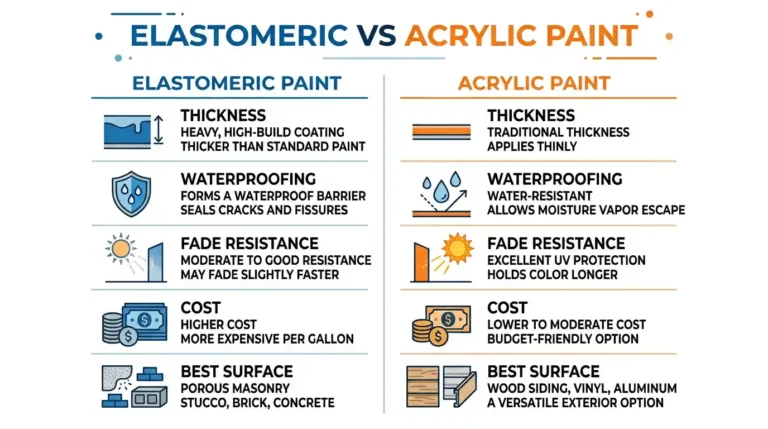
This comparison is one of the most searched questions on the topic, and both competitors skip past it too quickly.
Feature | Elastomeric Paint | Premium Acrylic Paint |
Thickness | 10 to 20 mils | 2 to 3 mils |
Crack Bridging | Yes | Limited |
Waterproofing | High | Moderate |
Fade Resistance | Lower (especially dark colors) | Higher |
Cost Per Gallon | $40 to $80+ | $20 to $45 |
Coverage Rate | ~100 sq ft/gal | ~250 to 300 sq ft/gal |
Best Surface | Stucco, masonry, concrete | Most exterior surfaces |
Breathability | Lower | Higher |
If you’re painting stucco for the first or second time, elastomeric paint is the better call. If your home has already been coated with elastomeric paint within the last 6 to 8 years and you’re repainting, a premium acrylic might serve you better, especially for fade resistance.
How to Apply Elastomeric Paint (What the Process Actually Looks Like)
Understanding the application process helps you ask the right questions when hiring a contractor.
Step 1: Surface Preparation
The surface gets pressure washed to remove dirt, mildew, and loose paint. Any mold or algae is treated with a chemical solution like diluted bleach or borax.
Step 2: Crack Repair
Larger cracks get filled with patching compound or caulk before any paint goes on. Elastomeric coatings handle hairline cracks, but they’re not a substitute for proper crack repair on wider gaps.
Step 3: Priming
A compatible primer gets applied to improve adhesion, especially on porous or older surfaces.
Step 4: Applying Elastomeric Paint
The coating goes on in multiple thick coats using a sprayer or heavy-nap roller. Each coat needs adequate drying time, typically 4 to 6 hours depending on conditions. Rushing this step causes bubbling and weak spots.
Is Elastomeric Paint Right for Your Project?
If your exterior surface is stucco, masonry, or concrete block and you’re dealing with hairline cracks, moisture intrusion, or repeated peeling, elastomeric paint is likely worth the investment. It costs more upfront, but it genuinely protects your structure over the long term in ways standard paint simply can’t.
However, if you’re working with wood siding, already have a well-maintained acrylic coat, or your main concern is color vibrancy, a premium acrylic exterior paint is the smarter choice.
If you’re still unsure which coating fits your specific project, getting a professional assessment is always the right move. At SD Custom Painting, the team provides expert exterior painting services in San Diego and can evaluate your surface, recommend the right product, and apply it correctly the first time. No guesswork, no wasted money.
FAQs About Elastomeric Paint
How long does elastomeric paint last?
When applied correctly on a properly prepared surface, elastomeric paint typically lasts 10 to 15 years. The lifespan depends heavily on UV exposure, climate, and whether the right number of coats were applied at the correct thickness.
Can you paint over existing elastomeric paint?
Yes, but it requires care. You need to clean the surface thoroughly, check for peeling or delamination, and apply a compatible primer before adding new coats. Adding a fresh elastomeric coat over intact existing coating is a common approach for older stucco homes.
Is elastomeric paint suitable for indoor use?
It’s designed for exterior applications. Its thickness and waterproofing properties are engineered for outdoor weather conditions, not indoor surfaces.
Why is elastomeric paint more expensive than regular paint?
It contains a higher concentration of solid materials and acrylic polymers, which increases the cost per gallon. Its lower coverage rate (around 100 sq ft/gal vs. 250 to 300 sq ft/gal for acrylic) also means you use more of it, adding to the overall cost.
Does elastomeric paint prevent mold and mildew?
It reduces the risk by blocking moisture from entering the wall. Some formulations also contain mildewcide additives for extra protection. However, it’s not a guaranteed mold solution if there’s already moisture trapped inside the wall.
What surfaces work best with elastomeric coatings?
Stucco, concrete block, brick, masonry, and cement board siding are the primary surfaces. It’s not recommended for wood, metal, or surfaces coated with oil-based paint without specific surface preparation.