
You’re standing in the paint aisle trying to sort out satin vs matte vs gloss, and you just want one straight answer before you buy. Here it is. Matte hides wall flaws best but scuffs the easiest. Satin cleans well and works in almost any room. Gloss is the toughest option, built for trim, doors, and surfaces that get touched, washed, or splashed.
This guide breaks down all three finishes in plain language. Then it walks through which one fits your kitchen, bathroom, bedroom, hallway, and trim. You’ll see real sheen numbers, color pairing tips, and the mistakes that ruin most paint jobs. By the end, you’ll know exactly what to put on your shopping list.
Table of Contents
Toggle
Quick Answer
Use matte or flat for ceilings and adult bedrooms. Use satin for living rooms, hallways, and kids’ rooms. Use semi-gloss or gloss for kitchens, bathrooms, trim, and doors. Satin sheen sits around 25 to 35 percent reflectivity. That’s why it’s the most common all-purpose wall finish in American homes.
Paint Sheen Comparison: Quick Guide
Use this paint sheen guide to compare all the finishes at a glance. Comparing low sheen vs high sheen paint comes down to two trade-offs. How much shine do you want, and how easily does the wall need to clean?
Finish | Approx. Sheen | Best For | Watch Out For |
Flat / Matte | 0–10% | Ceilings, adult bedrooms, low-traffic walls | Hard to scrub, shows marks fast |
Eggshell | 10–25% | Living rooms, dining rooms, home offices | Some flaws still show in bright light |
Satin | 25–35% | Kitchens, kids’ rooms, hallways, trim | Highlights roller marks if applied unevenly |
Semi-Gloss | 35–70% | Bathrooms, trim, doors, cabinets | Shows dents and patch marks |
High Gloss | 70–90% | Front doors, furniture, accent trim | Needs near-perfect wall prep |
Sherwin-Williams paint finishes use a gloss meter for this measurement. The meter aims light at the surface from a 60-degree angle. Zero means no shine. A hundred means a mirror finish.
Keep one thing in mind when comparing matte vs satin vs gloss across brands: sheen names aren’t standard. Benjamin Moore’s matte sits closer to true flat, while Sherwin-Williams’ matte sits closer to eggshell, and Behr uses its own scale too. Check the gloss number on the can, not just the name on the shelf.
Why Paint Finish Matters More Than You'd Think
Not all paint finishes behave the same way once they’re on the wall. Finish controls how much light bounces off the surface, how easily the wall cleans, and how long the paint job looks fresh.
Higher sheen finishes resist scuffs, grease, and fingerprints, which is why kitchens and bathrooms lean toward satin or semi-gloss. Lower sheen finishes spread light more evenly, so they hide drywall imperfections and patch marks better. Higher sheen finishes also tend to need two full coats for even color, while flat paint can sometimes get full coverage in one heavy coat. There’s no finish that wins at everything. The right choice depends on how the room actually gets used.
Understanding Satin, Matte, and Gloss
There are more types of paint finishes than just these three, including eggshell and semi-gloss. But satin, matte, and gloss are the three most homeowners compare first.
Matte and Flat Paint
Matte paint absorbs almost all the light that hits it. That’s why it covers drywall seams, nail holes, and rough texture better than any other finish. If your walls have dents, patches, or uneven texture, matte is usually the best paint finish for walls with imperfections. Some brands split flat and matte into two slightly different sheens, with matte around 10 to 15 percent and true flat under 5 percent.
Matte works well for ceilings and adult bedrooms, where walls don’t get much contact. The trade-off is durability. It marks easily and can’t take hard scrubbing, so it’s a poor match for hallways or busy family rooms.
Satin Finish Paint
Satin finish paint sits in the middle of the sheen scale. It has enough shine to wipe clean with a damp cloth, but not so much that every dent turns into a spotlight. This balance is why satin shows up in more homes than any other finish, from kids’ rooms to hallways to home offices. Good wall prep still matters, since roller marks and patch lines show more under satin than under flat paint.
Gloss Finish
Gloss reflects the most light of any finish, often 70 percent or higher. It creates a hard, almost glass-like surface that handles grease, steam, and heavy cleaning better than anything else on this list. The difference between satin and gloss comes down to wall prep and forgiveness. Gloss needs smooth, well-patched walls, because every dent and brush mark shows under that much shine, which is why most painters save it for trim, doors, cabinets, and furniture instead of full walls.
Selecting the Paint Finish to Use in Your Home
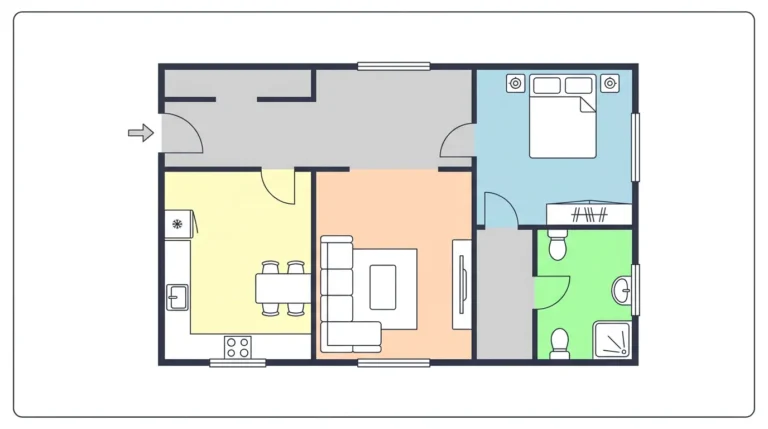
Every room has distinct performance needs based on humidity, foot traffic, and use. Matching the finish to the space ensures the paint job looks good for years.
The Best Paint Finish for Interior Walls
For the vast majority of standard living spaces, a low-to-mid sheen works best. Living rooms, dining rooms, and adult bedrooms benefit from matte or eggshell. These areas do not face heavy moisture or severe friction, so you can prioritize a smooth finish over heavy washability.
High-Traffic Areas (Hallways and Mudrooms)
Hallways, entryways, and staircases face constant contact from hands, backpacks, and pets. Matte finishes will scuff quickly in these zones. A satin finish provides the necessary wear-and-tear protection. Its surface structure allows you to wipe away fingerprints and scuffs without wearing down the paint layer.
Kitchens and Laundry Rooms
Kitchen walls deal with grease splatter, cooking oils, and frequent cleaning. The best paint finish for kitchen walls is satin or semi-gloss. These finishes prevent oils from soaking into the drywall substrate, keeping stains on the surface where they can be washed away with mild soap.
Bathrooms
Bathrooms experience heavy steam and water droplets. Standard low-sheen paint can trap moisture, leading to surfactant leaching or premature peeling. A dedicated moisture-resistant bathroom paint system in a satin or semi-gloss finish is required here. The tight paint film stops vapor from penetrating the wall, which helps prevent mold and mildew growth.
Ceilings
When deciding what paint finish for ceilings is best, the answer is almost always a true flat or ultra-flat paint. Ceilings do not get touched, so washability does not matter. However, overhead artificial light paths easily expose framing lines and drywall joints. A flat finish absorbs this light to keep the ceiling looking flat and uniform.
Trim, Doors, and Baseboards
Architectural woodwork takes a beating from vacuums, footwear, and hands. Trim, doors, and baseboards should be finished with semi-gloss or high gloss paint. The glossy film handles frequent scrubbing and creates a clean visual frame against lower-sheen walls.
Choosing Colors for Satin, Matte, and Gloss Finishes
Finish changes how a color looks, not just how shiny the wall is. Matte deepens color saturation. That’s why navy, charcoal, and deep green look their richest in a flat finish. Satin adds a soft glow that pairs well with earthy tones, soft grays, and pastel colors. The look can shift slightly as natural light gives way to artificial light in the evening.
Gloss can wash out pale colors but makes jewel tones and bold colors look sharper and more saturated. A small gloss accent wall can work in an entryway or dining room, but a full room in high gloss often feels more like a showroom than a home. Test a sample in the exact finish you plan to use, since the same color and undertone can read differently in matte versus satin versus gloss.
Paint Finish Mistakes to Avoid

- Using high gloss on rough or patched walls: Gloss reflects light hard enough that dents, drips, and uneven patches become obvious. This is the main reason gloss paint shows imperfections so clearly.
- Skipping primer before a sheen change: Going from flat to satin, or satin to semi-gloss, without priming first can leave an uneven sheen and visible roller marks across the wall.
- Picking flat paint for high-traffic zones: It looks great on day one. Then it shows scuffs and grease marks within weeks in a busy kitchen or hallway.
- Ignoring the room’s lighting: A wall that looks soft and matte under store lighting can look flat and lifeless under strong natural light. Test a sample before committing to the whole room.
Expert Application and Local Solutions
Achieving a clean, long-lasting finish requires precise surface preparation, proper primer selection, and careful application. If your walls have existing drywall imperfections, heavy wall texture, or old patch marks, getting a uniform look takes significant effort and skill. Shinier finishes require flawless patch sanding and careful caulking along baseboards to look right.
For homeowners looking for flawless results without the hassle, professional help makes a world of difference. San Diego Custom Painting provides top-tier interior and exterior painting services in San Diego, ensuring your home receives the exact care and prep work it needs. Our experienced crews know how local coastal light interacts with different sheen levels, helping you choose the perfect match for your space.
Ready to transform your home with a beautiful, durable finish? Contact San Diego Custom Painting today to schedule your free estimate and get expert advice tailored to your project.
FAQs About Satin vs Matte vs Gloss
What’s the difference between satin and gloss paint?
Satin reflects about 25 to 35 percent of light and feels soft to the touch. Gloss reflects 70 percent or more and feels hard and shiny. Gloss is tougher and easier to scrub, but it shows wall flaws far more than satin does.
Is matte or satin better for high-traffic areas?
Satin is the better choice. It holds up to light scrubbing and bumps far better than matte, which scuffs and stains more easily over time.
What’s the best paint finish for bathrooms?
Semi-gloss is usually the best paint finish for bathrooms, since it resists moisture, mildew, and steam better than flat, eggshell, or satin.
Does gloss paint show imperfections?
Yes. Gloss reflects light strongly, which makes dents, patch marks, and uneven texture much easier to see. Walls need smooth, well-prepped surfaces before a gloss coat goes on.
What paint finish works best for ceilings?
Flat or matte works best for ceilings. It hides uneven texture and old patch marks. Ceilings rarely get touched or dirty, so durability matters less there.
Is satin or eggshell better for a living room?
Both work well. Eggshell has slightly less sheen and a softer look, while satin cleans up a little easier. Either is a solid pick for a living room with normal foot traffic.
What’s the best paint finish for interior walls overall?
For most interior walls, satin or eggshell offers the best mix of looks and easy cleaning. Save semi-gloss and gloss for trim, doors, and rooms that get wet or dirty.