
Antimicrobial paint is a coating made with ingredients that help limit the growth of microorganisms on a painted surface. These coatings can help control certain bacteria, fungi, mold, and mildew, depending on the product and its tested claims.
If you are wondering what is antimicrobial paint, the simple answer is this: it is paint with added antimicrobial properties that give the finished coating an extra layer of protection. It does not replace normal cleaning, good ventilation, humidity control, or repairs for leaks and water damage. This guide breaks down how antimicrobial paint works, what it actually controls, and where it makes sense in your home. You’ll also learn what it won’t fix.
Table of Contents
ToggleWhat Is Antimicrobial Paint?
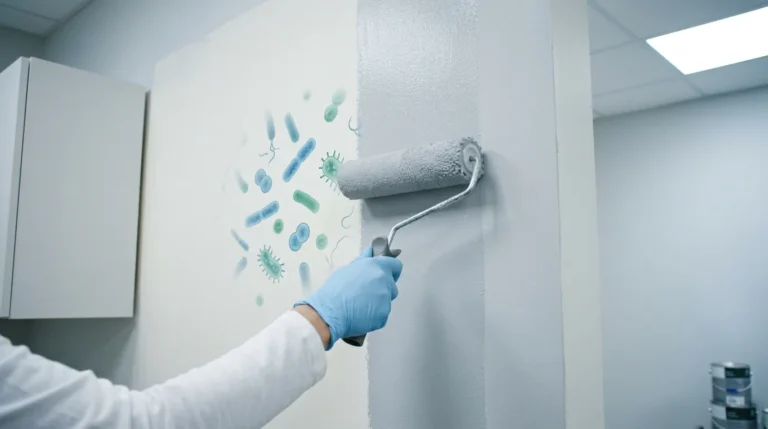
Antimicrobial paint is a coating built with an added antimicrobial agent. This agent is mixed into the paint formulation before it goes on the wall. Once dry, the paint film holds onto that ingredient and keeps working on the surface.
Regular paint covers and protects a wall. Antimicrobial paint does that too, but it also works against microorganisms that land on it, like bacteria, mold spores, and mildew. Builders use it in places where germs spread fast, such as hospitals, schools, and busy bathrooms.
How Does Antimicrobial Paint Work?
The process is simple once you break it down. The antimicrobial agent sits inside the dried paint film. When bacteria or fungi touch the surface, the agent interferes with how they grow or survive. Over time, this slows down microbial activity on that spot.
The exact ingredient changes by brand. Common antimicrobial agents include silver ions, copper, and quaternary ammonium compounds (often called “quats”). Some paints use zinc-based additives instead. Each one works a bit differently, but the goal stays the same: reduce germs on the coating rather than let them multiply.
This is also where an antimicrobial paint additive comes in. Instead of buying pre-mixed antimicrobial paint, some contractors add a separate additive to standard paint at the job site. It’s a flexible option when you already have a paint color picked out but still want the added protection.
Antimicrobial vs. Antibacterial vs. Microbicidal Paint
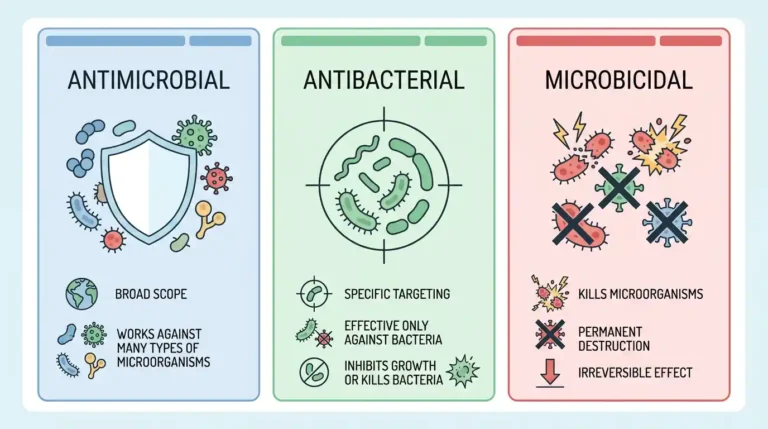
These three words get used like they mean the same thing. They don’t.
- Antimicrobial is the broad term. It covers products that work against bacteria, fungi, and other microorganisms.
- Antibacterial is narrower. It only targets bacteria, not mold or mildew.
- Microbicidal means the product actively kills a wider range of organisms on contact, rather than just slowing them down.
Check the label closely before you buy. A paint marketed as antibacterial may do nothing for mold in a damp bathroom. A true antimicrobial paint covers more ground.
What Are the Benefits of Antimicrobial Paint?
The anti microbial paint benefits are real, but they’re limited to the surface itself. Here’s what it actually does:
- Slows bacteria growth on the painted surface
- Can reduce mold and mildew buildup on suitable walls
- Helps limit odor-causing bacteria
- Adds a layer of protection on high-touch spots like door frames and railings
- Works alongside your normal cleaning routine, not instead of it
None of these benefits mean the paint disinfects a room or kills viruses in the air. It only affects what lands directly on the coating.
Does Antimicrobial Paint Prevent Mold?
Antimicrobial paint can help inhibit mold or mildew growth on the painted surface, but it does not remove the moisture that allows mold to grow.
This is one of the most important facts to understand.
Think of mold control as two separate problems.
- Surface protection: An appropriate coating can make the painted film less favorable to microbial growth.
- Moisture control: You still need to fix leaks, reduce excess humidity, improve ventilation, and address condensation.
If a bathroom wall stays wet because of poor ventilation, antimicrobial paint will not solve the underlying problem.
The same applies to water entering through a roof, plumbing leak, damaged window, or exterior wall.
EPA guidance allows certain treated paints to make claims about protecting the dried paint film from mold or mildew. Those claims are different from claims that a coating destroys mold beneath the paint or protects people from harmful microorganisms.
So, when you want to prevent microbial growth on paint, start with both parts of the problem: the coating and the environment around it.
Is Antimicrobial Bathroom Paint Worth It?
An antimicrobial bathroom paint can be useful when the goal is to add protection to a moisture-prone painted surface.
Bathrooms deal with several conditions that can support mold and mildew:
- High humidity
- Steam
- Condensation
- Water splashes
- Limited ventilation
- Frequent cleaning
A suitable coating can help protect the paint film, but bathroom moisture still needs to be managed.
Use an exhaust fan during and after showers. Keep the room dry when possible. Repair plumbing leaks quickly. Clean visible buildup before it becomes a larger problem.
Antimicrobial paint works best as part of that system.
It should not be used to cover active mold, wet drywall, or a recurring water problem. Those issues need to be corrected before applying a new coating.
Antibacterial Paint for Walls: Where Else It Helps
Bathrooms aren’t the only spot worth considering. Antibacterial paint for walls makes sense in:
- Kids’ rooms and playrooms, where hands touch everything
- Kitchens, near sinks and prep areas
- Shared hallways in apartments or rental units
- Home offices or gyms with frequent contact points
In these rooms, the goal isn’t fighting mold. It’s cutting down on the bacteria that build up on frequently touched surfaces between cleanings.
Does Antimicrobial Paint Replace Cleaning?
No. This is worth repeating because it gets misunderstood often.
Antimicrobial paint is not a disinfectant. The U.S. Environmental Protection Agency classifies many of these products as “supplemental residual antimicrobial” coatings.
That means they can offer added protection between cleanings, but they don’t meet the same standard as an EPA-registered disinfectant and are not meant to replace one. Dirt, grime, and organic residue still build up on painted surfaces over time, and that buildup can undo the paint’s effect if you never wipe it down.
Keep cleaning your walls and bathroom surfaces as usual. Treat the paint as a backup layer, not your main defense.
How Long Does Antimicrobial Paint Last?
There’s no single number that applies to every product. Longevity depends on:
- The specific antimicrobial agent used
- How much wear and cleaning the surface gets
- Whether the paint film stays intact (no chips, peeling, or heavy scrubbing damage)
- The manufacturer’s own tested claim
Some brands report protection lasting several years under normal conditions, as long as the coating isn’t damaged. Others are only rated for shorter windows. Always check the manufacturer’s data sheet instead of assuming every antimicrobial paint performs the same.
How Much Does Antimicrobial Paint Cost?
Antimicrobial paint can cost more than standard interior paint because the coating contains specialized antimicrobial technology and may require additional testing or registration.
There is no single reliable price for every product.
For context, a published Sherwin-Williams Paint Shield document lists a price of approximately $101.99 per gallon for microbicidal products. This figure is historical, not a current retail price. Sherwin-Williams currently lists its new SuperPaint Interior Latex with sanitizing technology in a 1-gallon size, but its website requires customers to sign in to confirm current pricing and availability.
Therefore, rather than assuming that all antimicrobial paints carry the same premium, it is better to compare the cost and tested benefits of the specific product.
For repainting an entire room, labor and preparation can still make up a large portion of the project’s total cost. The paint itself is only one part of the estimate.
When Should You Use Antimicrobial Paint?
Antimicrobial paint makes the most sense in:
- Bathrooms with moisture issues that are already under control
- High-touch areas like door handles, stair rails, and light switches
- Homes with young kids, elderly family members, or anyone with a weaker immune system
- Rental properties with heavy foot traffic between tenants
It’s not the right fix for an active leak, standing water, or a serious mold outbreak. Handle the water problem first. Painting over a wet wall, antimicrobial or not, will not solve anything.
How to Choose the Right Antimicrobial Paint
Before you buy, check these details on the can or the product page:
- Which microorganisms the paint targets (bacteria, mold, mildew, or all three)
- Whether the claim is “inhibits growth” or “kills on contact”
- Durability and washability ratings, so you know how it holds up to scrubbing
- Whether it’s rated for interior, exterior, or both
- Any EPA registration number, if the label mentions antimicrobial performance claims
- Manufacturer application instructions, including dry time and number of coats
A little label reading now saves you from repainting sooner than expected.
Need It Applied Right? Talk to a Local Pro
Picking the right paint is only half the job. Proper prep, priming, and application decide how long that antimicrobial protection actually lasts on your walls. If you are repainting a home and need help choosing the right coating, surface preparation is just as important as the product itself.
San Diego Custom Painting provides professional painting services in San Diego with careful preparation, product selection, and application for interior and exterior projects. A professional assessment can help determine whether a specialty coating is useful for your space or whether a standard premium paint is the better choice.
The Bottom Line
If you desire extra protection against microbial growth on painted surfaces—especially in bathrooms and high-touch areas—using antimicrobial paint can be beneficial.
It serves as an additional layer of defense rather than a solution for moisture issues or a substitute for cleaning. When used alongside proper ventilation and a regular cleaning routine, it performs exactly as intended.
FAQs
Is antimicrobial paint better than regular paint?
It offers extra protection against germs on the surface, but regular paint may perform just as well in low-moisture, low-traffic rooms.
Can antimicrobial paint be used on ceilings?
Yes. Antimicrobial coatings can be used on suitable ceilings when the product is approved for that surface. Ceilings in bathrooms and other humid rooms may benefit from a coating designed to resist microbial growth, but moisture and ventilation problems still need to be addressed.
Can you paint over an existing antimicrobial coating?
Usually, you should check the manufacturer’s instructions before applying another coating. The new paint may cover the treated surface and can affect the original antimicrobial performance. Proper cleaning, surface preparation, and compatibility testing are important before repainting.
Does antimicrobial paint work on wood and other surfaces?
It can, but suitability depends on the specific product. Some antimicrobial coatings are designed for painted walls and other interior surfaces, while others may be suitable for wood, metal, or different substrates. Always check the product label for approved surfaces and application instructions.