
The clearest signs that exterior painting is needed are peeling paint, cracking, bubbling, chalky residue, fading color, exposed bare wood, failed caulk, and recurring mildew stains. Some of these signs mean you should repaint soon. Others mean you should repair the surface first.
Not every sign points to the same fix. A little fading can wait. Rotted wood cannot. This guide breaks down each sign, tells you how serious it is, and tells you what to do next.
Table of Contents
ToggleThe 8 Signs Your Home Needs Exterior Paint
Walk around your house and check for these eight problems. If you spot two or three, it is time to plan a project.
1. Peeling, Flaking, or Cracking Paint
Peeling or flaking paint is one of the clearest signs that an exterior coating is failing. You may see small flakes at first, followed by larger areas where the paint lifts from the siding or trim.
Cracks can start as fine lines. They may grow as the paint becomes brittle and the surface expands and contracts with changes in heat and humidity. Poor surface preparation, weak paint adhesion, and moisture can also cause cracking and flaking.
Check areas such as:
- Wood or fiber cement siding
- Exterior trim
- Window and door trim
- Fascia
- Areas around siding joints
Do not simply paint over loose flakes. Failing paint needs proper surface preparation first. The loose coating should be removed, the surface checked for damage, and the right primer used where needed.
Benjamin Moore also notes that cracking and flaking can worsen when the underlying surface was not prepared properly before painting.
2. Faded or Uneven Exterior Color
Fading is another common warning sign, but it does not always mean you need to repaint immediately.
Long-term UV radiation and sun exposure can break down paint pigments and change the color of an exterior coating. South-facing and west-facing walls often receive stronger sun exposure than shaded areas, so they may fade faster.
Look for:
- A noticeably lighter overall color
- Uneven color between walls
- Fading on sun-exposed elevations
- Areas where the original color looks dull or washed out
If the paint is still firmly attached and the surface is sound, fading alone may be more of a cosmetic concern. If fading appears with chalking, peeling, cracking, or exposed surfaces, the coating may be closer to the end of its useful life.
3. Chalky Residue on the Surface
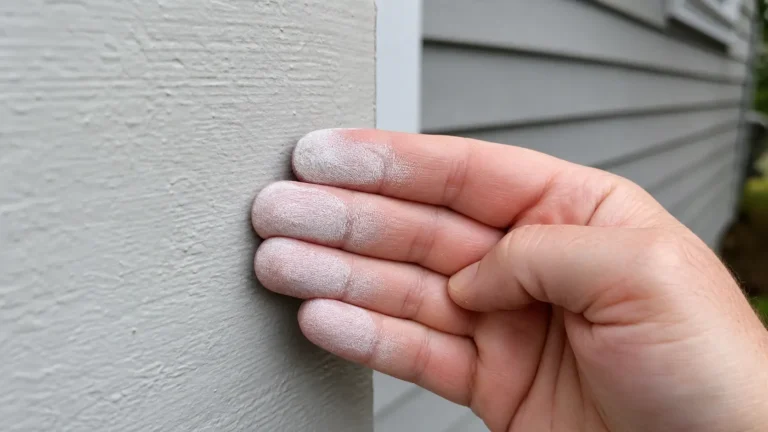
Run your hand over a dry exterior surface. If a fine, powdery residue comes off on your hand, the paint may be chalking.
Chalking happens when the paint binder breaks down and leaves pigment particles at the surface. UV exposure and age can speed up this process. It is common on older exterior coatings and can be noticeable on materials such as aluminum siding.
Chalking matters because a heavily chalked surface can have poor adhesion for a new coat of paint. The surface must be cleaned and checked before repainting.
A little chalking does not always mean the entire house needs new paint. Heavy or widespread chalking is a stronger sign that the exterior coating needs attention.
4. Bubbling or Blistering Paint
Bubbling or blistering looks different from normal peeling. The paint may form raised bubbles or pockets that lift away from the substrate.
Possible causes include:
- Trapped moisture
- Heat
- Poor paint adhesion
- Painting a damp surface
- Moisture moving through the substrate
This sign deserves more attention than simple fading. Do not just scrape the bubbles and apply another coat.
First, find out why the paint is lifting. If moisture is entering from behind the coating, repainting without fixing the source can lead to the same problem again.
The condition of the substrate also matters. A damaged surface may need repair before it can receive a new exterior coating.
5. Exposed Wood or Bare Exterior Surfaces
Paint protects materials such as wood from direct exposure to weather. When paint wears away and leaves bare wood or another substrate exposed, the surface loses that layer of protection.
Look closely at:
- Wood siding
- Exterior trim
- Fascia
- Window trim
- Door trim
- Other painted wood features
Exposed wood can absorb moisture. Over time, repeated moisture exposure can contribute to swelling, deterioration, and wood rot.
This is one of the signs where waiting can create a bigger repair. If the wood is still solid, proper cleaning, preparation, priming, and painting may solve the problem. If the wood feels soft or shows rot, repair should come before painting.
6. Cracked or Failed Caulking Around Trim
Caulk and sealant help close small gaps around windows, doors, trim, and siding joints. When caulking cracks, shrinks, separates, or falls away, those areas can become more exposed to moisture.
Walk around the house and check:
- Window frames
- Door frames
- Exterior trim
- Siding joints
- Gaps between different materials
Failed caulk by itself does not always mean you need a whole-house repaint. A small area may only need the old sealant removed and replaced.
The bigger concern is widespread caulk failure combined with aging or failing paint. In that case, the exterior may need broader maintenance and repainting.
7. Recurring Mildew, Staining, or Moisture Marks
Dark stains, mildew, or repeated moisture marks can make an exterior look like it needs new paint. Sometimes it does. But the stain itself may be telling you about a moisture problem.
Check nearby:
- Gutters
- Downspouts
- Roof drainage
- Exterior walls
- Shaded areas
- Siding joints
Poor drainage or water that repeatedly reaches the wall can keep an exterior surface damp. Painting over the stain without fixing the source can leave the same problem underneath the new coating.
Clean the surface and find the reason for the moisture first. If the existing paint is also failing, repainting may be part of the repair.
8. Cracks or Deterioration in the Exterior Surface
Not every crack is a paint problem.
Hairline cracks in stucco may need a different response from large cracks or areas where the surface is breaking apart. Siding and masonry can also develop damage that should be repaired before a new coating is applied.
Look for:
- Hairline stucco cracks
- Larger or spreading cracks
- Damaged siding
- Crumbling masonry
- Swollen wood
- Areas where the surface feels weak
The important question is whether the problem is only in the paint or has reached the substrate. If the surface itself is damaged, substrate repair should come before exterior painting.
Which Signs Mean Paint Now vs. Which Can Wait
Not every sign carries the same urgency. Use this table to sort what you saw during your walk-around.
What you see | What it usually means | Priority |
Slight fading | Normal aging | Low |
Minor chalking | Coating is aging | Medium |
Small caulk cracks | Sealant maintenance | Medium |
Widespread fading | Coating nearing end of life | Medium |
Peeling or flaking | Paint has failed | High |
Bubbling | Trapped moisture or adhesion issue | High |
Exposed wood | Surface has no protection | High |
Soft or rotted wood | Repair needed before painting | Very high |
Does Your House Need a Full Repaint or Just Touch-Ups?
A few damaged spots do not always justify repainting every exterior wall.
Touch-up painting may make sense when:
- The damage is isolated.
- Most of the existing coating is still sound.
- The paint can be matched well.
- There is no underlying moisture or surface damage.
A full exterior repaint is more likely when:
- Paint is failing across several areas.
- Multiple elevations show peeling or cracking.
- Large areas are chalking.
- Several surfaces have become exposed.
- The existing coating is badly worn.
- Touch-ups would leave obvious differences in color or sheen.
An exterior inspection can help separate normal wear from widespread coating failure.
How Often Should You Paint the Outside of Your House?
There is no single number that fits every home. The right answer depends on your siding material, your climate, and how well the last paint job was applied.
As a general range, wood siding needs paint every 4 to 7 years. Stucco holds up longer, often 6 to 10 years. Fiber cement can go 8 to 12 years between coats. Brick and masonry vary the most and are sometimes painted only as needed. This is the honest answer to how often paint exterior of house questions come up: age and condition together decide the timeline, not the calendar alone.
What Makes Exterior Paint Wear Out Faster?
Several conditions can shorten the life of an exterior coating:
- Strong UV exposure
- Direct sunlight
- Heavy rain
- High humidity
- Large temperature changes
- Wind
- Coastal air
- Repeated moisture
- Poor surface preparation
- Low-quality or unsuitable paint
The direction of a wall also matters. A wall that receives strong sunlight for much of the day may show color fading before a shaded wall.
Moisture is another major concern. Paint can only perform well when the surface underneath is dry, sound, and properly prepared.
Check These Areas Before You Decide
A quick walk around the house can reveal most visible warning signs.
Start with the large exterior walls and siding. Then inspect trim, fascia, soffits, windows, doors, and eaves.
Look closely at corners and joints because these areas often show failed caulking first. Check lower wall sections for moisture marks and areas where water may splash from the ground.
Do not inspect only the front of the house. Compare all sides. One elevation may receive more sun, wind, or moisture than another.
This simple check can tell you whether the problem is isolated or spread across the exterior.
What If the Exterior Needs Repairs Before Painting?
Paint should never be used to hide a moisture or structural problem. If you find wood rot, cracked stucco, or damaged siding, repair that first. Painting over damaged material only traps the problem under a fresh coat and the paint will fail again within a year or two.
One more thing worth knowing: if your home was built before 1978, peeling or cracking paint may contain lead. The EPA’s lead-safe renovation guidelines explain how to handle old paint safely during repair work. This matters for your family’s health, not just your home’s appearance.
Quick Exterior Paint Inspection Checklist
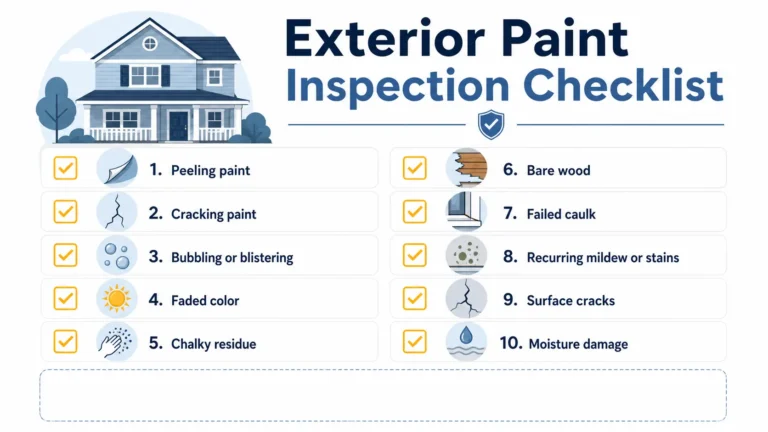
Go through this list room by room, wall by wall.
- Peeling paint
- Cracking paint
- Bubbling or blistering
- Faded color
- Chalky residue
- Bare wood
- Failed caulk
- Recurring mildew or stains
- Surface cracks
- Moisture damage
If several of these show up across different parts of your home, get the exterior assessed before the damage spreads further.
Ready for a Professional Opinion?
If you have gone through this checklist and found more than a couple of warning signs, a quick inspection is worth the time. San Diego Custom Painting offers honest assessments and quality exterior painting services in San Diego, so you know exactly what your home needs before you spend a dollar. We will tell you straight if your home needs a full repaint, a few touch-ups, or repairs before any paint goes on. Reach out today for a free walk-through and a clear plan for your home.
Frequently Asked Questions
Does faded exterior paint mean I need to repaint right away?
Not always. Fading is a cosmetic sign and usually less urgent than peeling or exposed wood, unless it covers the entire house.
Is peeling exterior paint an urgent problem?
Yes. Peeling exposes the bare surface to moisture, which can lead to wood rot within a season if left alone.
How often should you paint the outside of your house?
Most homes need repainting every 5 to 10 years, though wood siding often needs it sooner and stucco or fiber cement can go longer. Climate and paint quality also shift this range, a point echoed by This Old House’s guide to exterior painting.
How long does exterior house paint usually last?
Most quality paint jobs last 5 to 10 years, with wood siding on the shorter end and brick or stucco often lasting longer.
Can you paint over peeling or bubbling exterior paint?
No. Both need to be scraped, and the underlying moisture or adhesion problem needs to be fixed before new paint goes on.
Should damaged wood be repaired before exterior painting?
Yes. Wood rot and other structural damage should always be repaired first. Paint is not a fix for damaged material underneath it.