
Choosing the right trim can make or break your room’s entire design. Many homeowners pick materials that warp in high humidity or profiles that clash with their home’s style.
Using the right types of crown molding is the easiest way to add architectural character and raise your home’s resale value. Let’s look at the best materials, classic shapes, and exactly where to use each profile in your space.
Table of Contents
Toggle
What Crown Molding Actually Does
Crown molding sits where your wall meets your ceiling. It hides the gap, softens a harsh 90-degree corner, and adds a shadow line that makes a room feel finished instead of unfinished.
It’s not just decoration. A good profile draws the eye up, which makes ceilings feel taller. A profile that’s too small or too plain does nothing. One that’s too heavy for the room overwhelms it. Getting the type right matters more than getting the paint color right.
The 5 Types of Crown Molding, Explained
1. Traditional Ogee Crown Molding
This is the profile most people picture when they hear “crown molding.” It has a long S-curve, concave on top and convex below, sometimes called a cyma curve. It’s the classic choice for formal dining rooms, entryways, and homes with detailed door casing.
Ogee crown pairs naturally with colonial, Federal, and traditional interiors. If your baseboards already have curves and beads, ogee crown matches that language instead of fighting it.
Best for: formal living rooms, dining rooms, entryways
Home styles: colonial, traditional, transitional
2. Cove Crown Molding
Cove is the simple one. A single concave curve, no carving, no layered steps. It’s quiet, and that’s the point. Cove molding works in almost any room because it doesn’t compete with anything else in the space.
It also bends more easily than ornate profiles, so it’s a solid pick for rooms with slightly curved walls or ceilings. If you’re not sure which type to choose, cove is the safest starting point.
Best for: bedrooms, home offices, hallways, minimalist spaces
Home styles: modern, transitional, coastal
3. Dentil Crown Molding
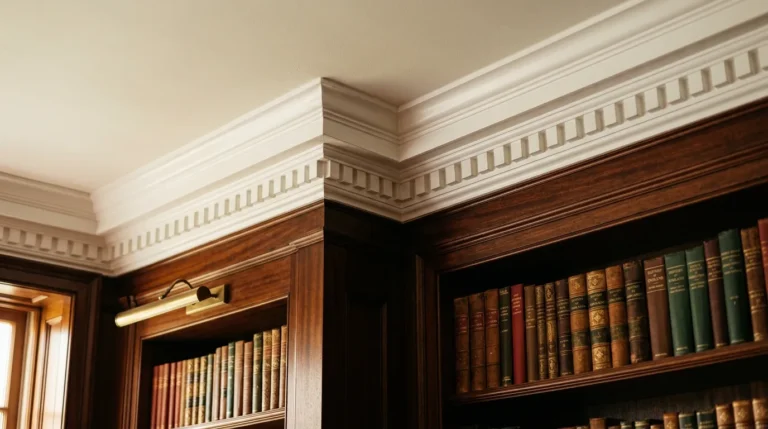
Dentil molding runs a row of small, evenly spaced rectangular blocks along the profile, almost like teeth (the name comes from the Latin word for tooth). It reads as formal and historic, and it carries real weight in a room.
This one needs breathing room. The Dentil crown looks sharp in a dining room with 9-foot-plus ceilings and formal furniture. In a small bedroom, it can feel busy fast.
Best for: formal dining rooms, libraries, historic homes
Home styles: colonial, Federal, historic revival
4. Egg-and-Dart Crown Molding
This is the most ornate of the five. The profile alternates an oval “egg” shape with a pointed “dart” shape, carved in a continuous repeating pattern. It traces back to classical Greek architecture, and it still reads that way today: formal, expensive-looking, intentional.
Egg-and-dart crown belongs in rooms designed to make a statement, not in a hallway or a laundry room. Pair it with matching casing and a tall baseboard, or it looks like it landed there by accident.
Best for: formal dining rooms, grand entryways, primary suites
Home styles: neoclassical, traditional, high-end colonial
5. Modern Stepped Crown Molding
No curves. This profile uses flat, angular steps and clean right-angle transitions instead. Because it’s often built from layered flat stock, it creates a strong shadow line without any carved detail at all.
This is the type for anyone worried crown molding will make a contemporary home look dated. It doesn’t. It reads sleek, architectural, and current, and it’s a favorite in modern kitchens where cabinets run to the ceiling.
Best for: contemporary living rooms, kitchens, mid-century modern remodels
Home styles: modern, minimalist, transitional
What These Types Are Made Of
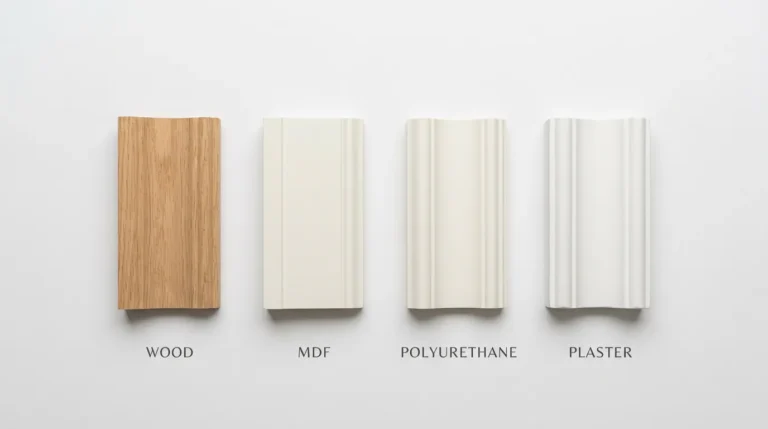
The profile is only half the decision. Material changes cost, weight, and how it holds up in your climate.
- Solid wood — the traditional choice, takes stain or paint well, best for formal rooms with visible grain
- MDF (medium-density fiberboard) — smooth, affordable, paints beautifully, but swells if it gets wet
- Polyurethane — lightweight, pre-primed, resists moisture, a strong pick for bathrooms and humid rooms
- PVC — fully moisture-proof, ideal for bathrooms, kitchens, and exterior-adjacent walls
- Plaster — used for large, custom, or historic-restoration profiles, heavy and typically installer-only
Crown Molding Comparison Table
Type | Complexity | Best Room | Best Home Style | DIY Difficulty |
Traditional Ogee | Moderate | Dining room, entryway | Colonial, traditional | Moderate |
Cove | Low | Bedroom, hallway, office | Modern, transitional | Easy |
Dentil | High | Dining room, library | Colonial, Federal | Hard |
Egg-and-Dart | High | Formal dining, entryway | Neoclassical, traditional | Hard |
Modern Stepped | Low–Moderate | Kitchen, living room | Modern, minimalist | Moderate |
Is Crown Molding Out of Style in 2026?
Myth: Crown molding is a dated feature that makes a home look old-fashioned.
Fact: Interior designers overwhelmingly disagree. Crown molding is trending back into modern kitchens, bedrooms, and living rooms in 2026, just in updated forms. [Source: Homes & Gardens, 2026 trend coverage]
Three shifts are driving that comeback right now:
- Stacked molding — a baseboard profile flipped and mounted at the ceiling, paired with crown on top, for a grand, custom look in high-ceiling rooms
- Color drenching — painting the crown molding, walls, and ceiling in one continuous color to make the room feel intentional instead of chopped into segments
- LED cove lighting — running indirect lighting behind a cove profile for a soft, modern glow, especially popular in bedrooms
The homes where crown molding does look wrong are usually a fit issue, not a style issue: molding crammed into a space too tight for it, or an overly ornate profile on a mid-century ranch with no other detail to support it.
Matching Crown Molding to Your Home's Architecture
Profile choice isn’t really about personal taste first. It’s about what your home is already telling you.
- Colonial or Federal homes call for ogee, dentil, or egg-and-dart. These homes already have detailed casing and tall baseboards, so simple cove molding looks underdressed.
- Craftsman and Arts and Crafts homes traditionally skip curved crown entirely, favoring flat, squared trim instead. If you add a crown here, keep it flat and simple.
- Mid-century modern homes often had no crown molding at all originally. Adding a heavy ornate profile can look out of place; a modern stepped profile respects the era instead.
- Transitional and contemporary builds have the most flexibility. Cove or modern stepped profiles both work, and either blends cleanly with simpler baseboards and casing.
From the Ladder: 26 Years of Common Crown Molding Mistakes
After 26 years of painting and finishing trim across San Diego homes, the same three mistakes show up again and again, regardless of which type of crown molding a homeowner picks.
The first is scale. Homeowners pick a profile they saw in a photo without checking it against their actual ceiling height. A 5-inch dentil profile that looked stunning in a 10-foot dining room can swallow a standard 8-foot bedroom.
The second is sheen. Crown molding almost always needs a different paint sheen than the walls, typically satin or semi-gloss, so the shadow lines the profile creates actually read from across the room. Flat paint on crown molding flattens the whole effect.
The third is caulk. Every seam and every joint needs a flexible, paintable caulk before primer goes on. Skip it, and you’ll see hairline cracks open up at the joints within a year, especially in a coastal climate where humidity swings throughout the year.
Bringing It Together
Five types of crown molding cover almost every home: traditional ogee, cove, dentil, egg-and-dart, and modern stepped. The right one depends on your ceiling height, your home’s existing trim detail, and the era your architecture is drawing from, not just which photo you liked.
Crown molding isn’t going anywhere in 2026. Updated takes on it, stacked profiles, color drenching, and LED cove lighting are making it more relevant than it’s been in years.
If you’ve picked a profile and want it installed and finished right the first time, that’s where the paint and finish work makes or breaks the result. SD Custom Painting has spent 26 years getting crown molding sheen, caulking, and joints right across San Diego homes. If you’re ready for the next step, explore our painting services in San Diego and we’ll help you match the finish to the profile you chose.
FAQs
What is the most popular type of crown molding?
Cove and traditional ogee profiles are the most commonly installed types of crown molding. Cove wins in modern and transitional homes; ogee wins in traditional and colonial-style homes with detailed trim already in place.
What’s the difference between cove molding and crown molding?
Cove is one specific type of crown molding — a single simple curve. “Crown molding” is the broader category that includes cove, ogee, dentil, egg-and-dart, and modern stepped profiles.
Can I install crown molding myself?
Simple profiles like cove work for an experienced DIYer with a miter saw. Dentil, egg-and-dart, and any coped inside corners are much harder to get clean, and most homeowners hire a trim carpenter or painter for those.
How much does crown molding cost to install?
Cost depends on profile complexity, material, and room size, running roughly from a few dollars per linear foot for basic MDF cover to significantly more for solid wood dentil or egg-and-dart with custom miters.
What paint finish is best for crown molding?
Satin or semi-gloss is standard. The slight sheen catches light along the profile’s curves and steps, which is what makes the shadow line and the detail actually visible from floor level.