
You’ve got a half-used can of paint sitting in the garage, and you’re not sure if it’s still good. You’re not alone. Almost everyone who’s ever painted a room has a shelf of old cans and no idea which ones are trash. The good news is you can usually tell in under two minutes, without opening a textbook or calling a store.
So here’s the direct answer to how long does paint last: unopened paint lasts 2 to 15 years depending on the type, and opened paint lasts 2 to 5 years if it’s sealed and stored right. Latex and water-based paints sit on the shorter end. Oil-based paint lasts the longest. Below, we’ll walk through each paint type, how to check what you’ve got, and when it’s time to let a can go.
Table of Contents
ToggleQuick Answer
Here’s the short version if you’re standing in your garage right now:
- Unopened latex or water-based paint: 2 to 10 years
- Opened latex paint: 2 to 5 years
- Unopened oil-based paint: up to 15 years
- Opened oil-based paint: 10 to 15 years, but check for thickening
- Primer: 2 to 3 years
- Chalk paint: 1 to 2 years
If the paint smells sour, has chunks that won’t stir out, or has changed color, it’s done. Toss it.
How Long Does Paint Last?
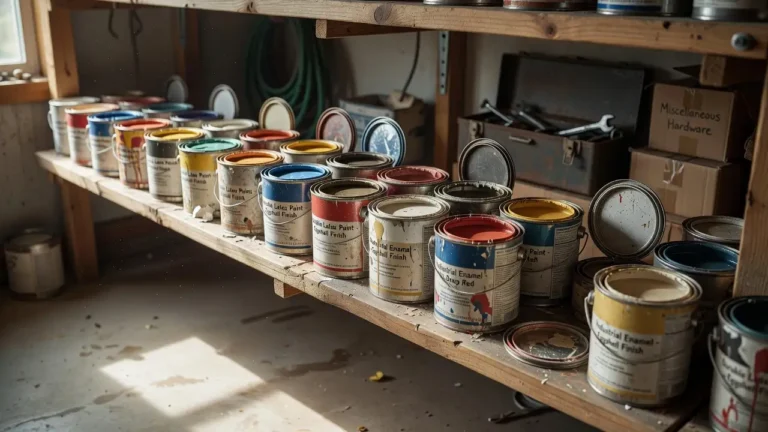
Paint isn’t like milk with a printed date. It doesn’t have a hard cutoff. Instead, it slowly breaks down based on three things: what kind of paint it is, whether the can has been opened, and how it’s been stored.
Unopened paint lasts the longest because nothing has touched it. No air, no bacteria, no tools dipped in and out. Once you crack the seal, the clock starts moving faster. Air gets in every time you open the lid. That air carries moisture and tiny amounts of bacteria, and over time those break down the paint’s binders. That’s what causes the sour smell and the lumps.
Storage location matters just as much as paint type. A can kept in a closet at a steady room temperature will outlast an identical can stored in a hot garage or a damp shed. Temperature swings are the main thing that ages paint early, more than actual time on the shelf.
Average Lifespan of Common Paint Types
Different paint types age differently because they’re made from different materials. Here’s how they compare.
Paint Type | Unopened | Opened |
Latex (water-based) | 2 to 10 years | 2 to 5 years |
Acrylic | 5 to 10 years | 2 to 5 years |
Oil-based | Up to 15 years | 10 to 15 years |
Primer | 2 to 3 years | 1 to 2 years |
Chalk paint | 2 to 5 years | 1 to 2 years |
Spray paint | 2 to 3 years | Use within a year of first use |
These ranges answer a related question people ask a lot: how long is paint good for after opening. The short version is that opening a can cuts its useful life by roughly half, sometimes more, depending on how well you reseal it.
Can Latex Paint Go Bad?
Yes. Latex paint is water-based, and water invites bacteria. That’s the biggest reason latex has a shorter life than oil-based paint. An unopened can, kept somewhere with a stable temperature, can last up to 10 years. Once opened, plan on 2 to 5 years, and less than that if it’s been stored in a garage that gets hot in summer and cold in winter.
Low-VOC and zero-VOC latex paints, which most brands sell now because of stricter air quality rules, tend to spoil faster than older high-VOC formulas. Fewer preservative chemicals means bacteria has an easier time. If you bought a low-VOC paint in the last few years, don’t assume it will last as long as the can your parents used decades ago.
Can Oil-Based Paint Go Bad?
Yes, but it takes much longer. Oil-based paint can last up to 15 years unopened, and still be usable for 10 or more years after opening if it’s sealed well. The oil content acts almost like a natural preservative, and there’s far less water for bacteria to grow in.
The tradeoff is that oil-based paints contain more solvents, which means stronger fumes and stricter rules on how you can dispose of them. Many cities require oil-based paint to go to a hazardous waste site instead of the regular trash, even when it’s fully hardened.
Can Paint Primer Go Bad?
Yes, and it goes bad faster than most people expect. Primer typically lasts 2 to 3 years unopened, and closer to 1 to 2 years once opened. Primer is built to bond aggressively to raw surfaces, and that same chemistry makes it less stable in storage. If your primer has thickened past the point where stirring fixes it, don’t use it. A bad primer coat ruins the topcoat that goes over it, even if that topcoat is brand new.
How to Know When Paint is Bad
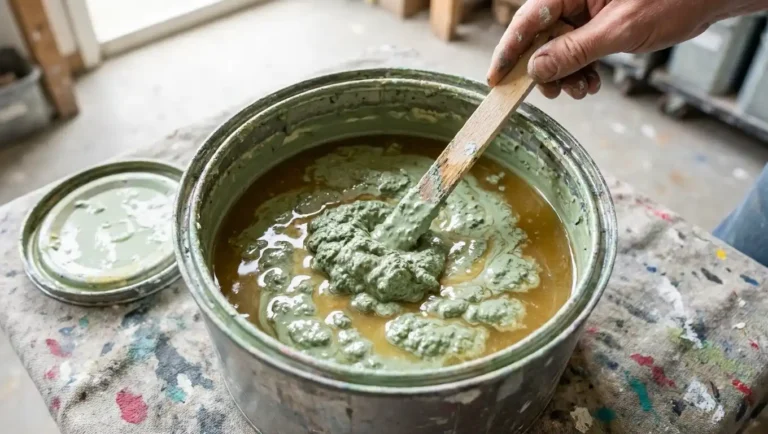
You don’t need lab equipment. Use your eyes and nose.
- Smell it. Fresh paint smells like chemicals. Bad paint smells sour, sometimes like rotten eggs. If you wrinkle your nose, stop there.
- Look at the texture. Stir it for a full minute. Good paint turns smooth. Bad paint stays lumpy, or feels like cottage cheese, or has a rubbery skin on top that won’t break apart.
- Check for separation. Some separation is normal even in good paint. Stir it and wait five minutes. If it separates again right away, the paint has broken down and won’t hold together on a wall.
- Look at the color. If the color looks off, yellowed, or duller than you remember, the paint has started to degrade even if the smell and texture seem fine.
- Do a test patch. Brush a small amount on cardboard or a hidden spot on the wall. Let it dry for a few hours. If it dries patchy, streaky, or doesn’t cover well, don’t use the rest of the can.
If it fails more than one of these checks, throw it out. This is the same process any painting crew runs before touching leftover paint on a job, and it takes less time than driving to the store.
Can You Use Old or Spoiled Paint?
Old paint that passes the checks above is fine to use. Paint doesn’t need to look perfect on day one to still work well on a wall. Mix it well, ideally with a drill mixer if it’s been sitting a long time, and strain it through a mesh paint strainer to catch any small clumps.
Spoiled paint is a different story. Once it smells sour or has mold on the surface, using it isn’t worth the risk. It won’t stick to the wall properly, it may peel within months, and mold spores can spread once you start rolling it on. At that point, buying a new can is cheaper than redoing the whole wall in a year.
If you’re touching up a wall in an older home, check the paint’s age against 1978. Paint made before that year in the U.S. can legally contain lead, based on federal rules from the Consumer Product Safety Commission. If you’re unsure how old a can is or where it came from, don’t guess. That’s a case where it’s worth calling a professional instead of doing it yourself.
How to Make Paint Last Longer
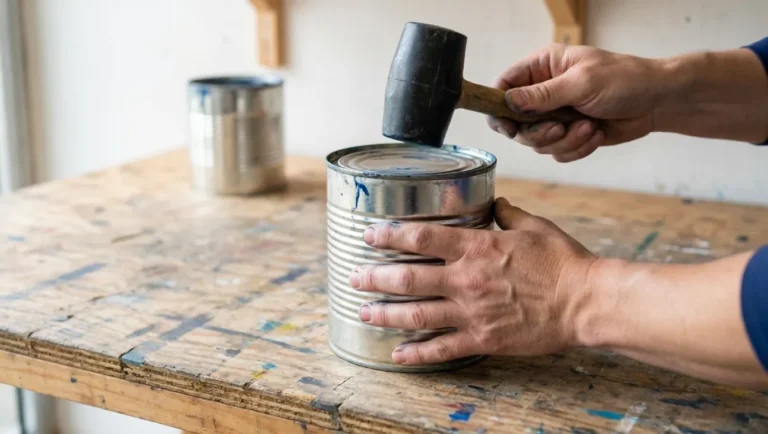
A few habits add real years to a can’s life:
- Reseal tight. Wipe the rim clean before closing the lid. Dried paint on the rim breaks the seal. Tap the lid down evenly with a rubber mallet, not a hammer.
- Store it upside down. Flipping a sealed can lets the paint itself form an airtight layer against the lid. Just make sure the seal is solid first, or you’ll get a leak.
- Keep it at room temperature. Closets and indoor storage rooms work far better than garages, sheds, or attics. Big temperature swings age paint faster than time alone.
- Downsize the container. If a gallon can is down to an inch of paint, pour it into a smaller jar with a tight lid. Less empty air space means slower spoiling.
- Never dip your brush straight into the can. Pour what you need into a tray. Brushes and rollers carry bacteria and dust into the can every time they go back in.
These small habits are the difference between a can lasting two years and a can lasting eight.
If your paint has already failed the checks above and you need the wall repainted, or you’d rather not guess on a project that matters, San Diego Custom Painting handles interior and exterior jobs across the area, including matching old colors and prepping walls that have seen better days. Our crews deal with this exact question on nearly every job, old cans, unclear labels, walls that need a fresh coat done right the first time. If you want it done properly instead of gambling on a questionable can, reach out about painting services in San Diego and we’ll take it from there.
Final Verdict
Most leftover paint is still good longer than people assume, especially if it was stored indoors and sealed well. Oil-based paint holds up the longest. Latex and primer age the fastest. When in doubt, run the smell, stir, and test-patch checks before you commit a whole wall to an old can. It takes five minutes and saves you from repainting twice.
Frequently Asked Questions
Does paint expire if it’s never opened?
Yes, but slowly. Paint expiration on an unopened can usually falls between 2 and 15 years depending on the type. Oil-based lasts longest, latex and primer age faster, even sealed.
How long does paint last in a can once you’ve mixed colors?
Custom-tinted paint doesn’t last as long as paint straight off the shelf. The tinting process introduces more air and mixing, so plan on the shorter end of the range for that paint type, and use it within a year or two if possible.
Can you use paint that’s been frozen?
Latex paint that’s frozen and thawed once may still work if you stir it well and it looks smooth. Frozen and thawed more than once, it’s usually ruined. Oil-based paint holds up better against cold but can still thicken.
Is it safe to paint with paint that smells bad but looks fine?
No. Smell is one of the most reliable signs of spoiled paint, even when the texture still looks normal. If it smells sour or rotten, don’t use it on walls people will be breathing near.
How do you dispose of old paint safely?
Dried latex paint can often go in regular trash once fully hardened, check your city’s rules first. Oil-based paint almost always needs to go to a household hazardous waste site. Never pour any paint down a drain.
Does the color or finish of paint affect how long it lasts?
No. Color and sheen (matte, eggshell, satin, gloss) don’t change shelf life. What matters is the base type, latex versus oil, and how it’s stored.