
Can You Use Interior Paint Outside?
One consideration when tackling a project such as painting a fence, siding, or outdoor furniture with unused interior paint might be something that crosses your mind when considering exterior paint projects around the house. There are a lot of folks asking whether you can use interior paint for any kind of projects around the house so that one could either save money or not purchase a new can of paint.
While it seems like it would be easy to just use up what’s left indoors, the answer goes beyond just whether it will stick to what you want to paint.
Table of Contents
ToggleThe painting contractors here at SD Custom Painting can inform you about what interior and exterior paints are meant for so you don’t have to deal with paint peeling, your paint fading, or the price and time involved for repainting. Here’s what you need to know before deciding.
Understanding the Difference Between Interior and Exterior Paint
While in the can, they may both look identical, interior and exterior paints are made with completely different applications in mind. They use different ingredients, different amounts of flexibility, and offer much different performance values due to the environment they were made for. Interior paint is formulated to adhere tightly to most surfaces, offering a consistent finish, but also allowing for staining, scuffing, and everyday use from household cleaning.
It also works well in climate-controlled areas where the humidity and temperatures don’t change as much during the year.
Exterior paint is designed for the most rigorous of conditions. When making exterior paint, the manufacturers incorporate materials that will enable it to withstand sun, moisture, rain, mildew, and extreme temperature changes. The extra additives allow the film of exterior paint to flex, expand, and contract with the movement of the surface throughout the changing seasons. Using one in place of the other doesn’t usually offer desired results.
Interior Paint Prioritizes Appearance
The interior paints will create an attractive film without odors, that requires less upkeep and is simple to spot clean. Insofar as interior wall surfaces are not subjected to direct sunshine or precipitation, they generally require the smallest amount of supplemental protection from the elements possible, which will assist in making the surface product breathe. Products are optimized for exterior use.
Exterior Paint Is Built for Weather
Exterior paint will have the following properties: flexibility given by resins, UV-resistant pigments, and moisture-blocking capabilities. All of these elements are crucial so that the coat does not fail from being exposed to the elements continually. It’s for this reason that professional painters often tell you to purchase paints specific to the task.
Can You Use Interior Paint Outside?
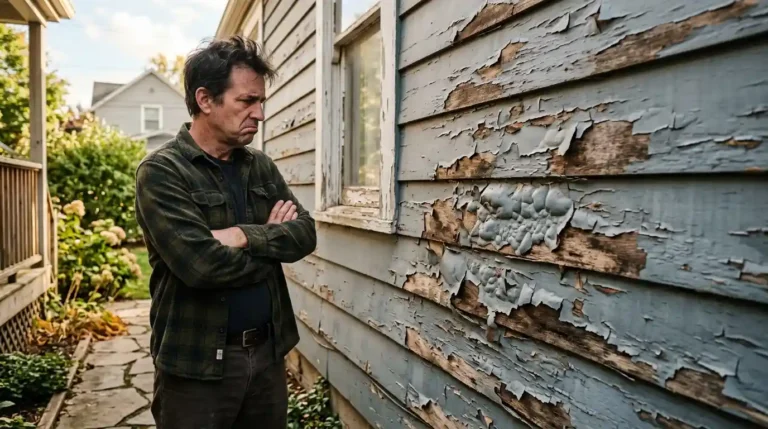
The answer, for almost all circumstances, is: definitely not. As with “Can I paint over wallpaper,” painting interior paint outside is one of the most common painting questions asked. But interior paint wasn’t formulated to withstand what the outdoors has to offer. If it appears to be okay outside initially, it won’t be within too many months-if that-after being exposed to the sun’s ultraviolet rays, rain, damp air, freezing weather, or heat.
Peeling, cracking, bubbling, fading, mold, and mildew can quickly appear depending on your climate; the finish will deteriorate within months or sometimes weeks. Barring a few exceptions of limited durability, interior paint shouldn’t be relied upon for exterior purposes for long.
What Happens After Application?
Even if the paint sticks right after you apply it to a proper surface. In reality, within the span of only a couple of days, paint may get exposed to the climate.
Common problems include:
- Peeling and flaking
- Color fading
- Cracking
- Moisture damage
- Loss of adhesion
- Premature repainting
These mistakes can end up costing you a lot more than just buying the right paint for the exterior to begin with!
Why Using Interior Paint Outside Causes Problems
Most homeowners do not appreciate the harshness to which exterior surfaces are exposed. In fact, exterior surfaces endure stress to which interior finishes just aren’t designed. When interior paint is used on exteriors, it tends to develop problems because interior finishes are not formulated with weatherproof elements. Moisture enters paint film during rainfall and UV rays degrade binder and pigmentation; eventual fatigue takes over as seasonal expansion and contraction take place, causing brittle interior finishes to crack. The result is generally a premature failure of the coating.
UV Rays Damage Interior Paint
Sun exposure, perhaps the greatest foe of interior paints. Unless UV protectants and blocking agents are used in formulation, colors of paint will fade rapidly with the light. Many white interior paints turn yellow, and other paints become drab after long sun exposure. The finish chalks over time, becoming increasingly more porous with time.
Moisture Leads to Peeling
Sun- the greatest enemy of interior paints, likely. Unless UV-blocking agents and protectants were formulated into the paint, the color will fade quickly with the light. Most interior white paints turn yellow under long UV exposures.
Other colors will turn dull.
Can You Use Interior Paint on Exterior Surfaces in Any Situation?
Some are wondering if interior paint can be used for outdoor projects when the surface is protected from direct elements. In a few limited scenarios, it may give you temporary success. If you paint a covered porch, screen a patio, or just apply Indoor Paint to something left in the rain –it doesn’t instantly fail. But they do still take on the humidity, temperature swings, and the light.
Eventually, the paint will chip off faster than outdoor paint. If you want a surface to hold up for several years, most painters will tell you to use exterior paint.
Temporary Projects May Be Different
Interior paint may be acceptable for:
- Stage props
- Temporary decorations
- Short-term displays
- Indoor furniture moved outside briefly
These applications are designed for where there is minimal weather exposure and as non-permanent finishes.
Can Behr Interior Paint Be Used Outside?
Another frequently asked question is, can you paint exterior siding with Behr interior paint since most people likely have a surplus of their premium indoor quality paint readily on hand? Just because premium means higher quality doesn’t mean anything, but this doesn’t affect the fact that Behr interior paint formulations are strictly designated for indoor painting unless, of course, otherwise specifically mentioned on the label.
Pouring your most exclusive interior paint on your exterior siding doesn’t transform it; however, it still doesn’t have the rigidity, flexibility, outdoor-grade moisture repellent properties, or the UV protection that would prolong its effectiveness and integrity on anything external.
Remember this when using paint on exterior projects.
Check the manufacturer’s designation.
Manufacturer Recommendations Matter
It is no secret that paint companies are spending a great deal of money on R&D to create coatings suited for the environment.
Ignoring product recommendations may:
- Shorten paint life
- Void warranties
- Increase maintenance costs
- Produce inconsistent finishes
Can You Mix Interior Paint With Exterior Paint?
The Mix And Match Of Paint: Some homeowners who do DIY projects question if interior and exterior paint can be combined for enhanced coverage. They can be put together in a can; nonetheless, this should not be pursued. Combining dissimilar compositions disrupts their individual equilibrium of polymers, pigments, adhesives, and protective substances.
This substance likely will not exhibit similar behaviors as either product used individually, and it could yield unpredictability when it concerns curing, staying, and enduring.
Expert painters advise that distinct categories of paints ought not to be blended unless suggested by the paint maker.
Why Mixing Paints Isn’t a Good Idea
Mixing interior and exterior paint may lead to:
- Uneven curing
- Reduced durability
- Poor adhesion
- Inconsistent color
- Unknown weather resistance
Purchasing the correct exterior paint is a far more reliable investment.
Better Alternatives for Outdoor Painting Projects
As said, paint formulated for the inside simply is not as weather-tolerant as those created for use outside, so opt for exterior, and you will generally not go back to interior paints, and your job will last longer. Exterior paint has become a well-thought-out product in which there is increased strength, better resistance to chipping, mildew, and peeling; most exterior paints are quite long in warranty; spending for quality material can, with many years, pay for itself when you do not have to do an exterior painting job any time soon.
Choose High-Quality Exterior Acrylic Paint
Good acrylic exterior paints provide good weather resistance and flexibility.
Benefits include:
- UV protection
- Moisture resistance
- Long-lasting color
- Easy maintenance
- Excellent adhesion
Prepare the Surface Properly
Even the best paint performs poorly without preparation.
Proper preparation includes:
- Cleaning dirt and mildew.
- Scraping loose paint.
- Sanding rough areas.
- Repairing damaged surfaces.
- Applying an appropriate primer if needed.
You may also want to read these posts:
Why Professional Painters Recommend Exterior Products
Anyone who is a serious painting contractor knows that getting the house right can add so much more than just colour. Every exterior home project using SD Custom Painting Products starts with choosing the highest-quality product for your home’s material, locale, and sunlight exposure. Getting coatings that work for homes can save folks from the headache of it cracking earlier and ensure their homes last. Proper technique also means utilizing the most effective, premier, and consistent coating finish.
Long-Term Value Matters More Than Short-Term Savings
Buying exterior paint may cost slightly more initially.
However, it often saves money through:
- Longer paint life
- Reduced maintenance
- Better curb appeal
- Improved weather protection
- Fewer repainting projects
Quality materials almost always provide better long-term value.
Final Thoughts
So if you have been considering painting an outdoor surface with interior paint, for the majority of exterior projects, the answer is a definite no! Interior paint does not have the necessary resistance to weathering and the flexibility that you’ll need it to have on an exterior surface, which leads to premature cracking, peeling, and fading. You’ll need to repaint much too soon!
So, opt for an exterior paint made specifically for outdoor use instead of playing it risky.
SD Custom Painting would love to lend a hand in choosing the correct coatings and the correct preparation technique, so your beautiful surfaces will continue looking pristine for many years.
Frequently Asked Questions
Can I use leftover interior paint on my fence?
It isn’t recommended. Indirect exposure is updated daily for the fences with rain, temperature contrast, and sun, which no interior paint can resist.
Can covered porches use interior paint?
They are still affected by less weathering, but in the long term you will have exterior paint for a comparatively thinner.
Is exterior paint more expensive than interior paint?
Cost: The cost of the product is related to its make and quality. Based on price, exterior paint is also a little costlier as it has special additives in it to make it weather-resistant, but its life is more than the makeup, and the cost of the exterior paint is paid off.