
You finally set aside the weekend, bought the paint, and got the surface ready. After that, you check the weather and start to doubt everything. Does that sound familiar? Cold weather and painting outside don’t always get along, and painting in the wrong conditions may turn a weekend endeavor into a pricey redo. In short: Most paints won’t dry properly if the temperature dips below 50°F, so it’s best to wait.
Knowing exactly when is it too cold to paint outside saves you time, money, and a lot of frustration. In this guide, we’ll walk through exact temperature thresholds, how weather conditions affect your results, and what to do if you absolutely must paint in cooler months.
Table of Contents
ToggleKey Takeaways
- Most latex paints require a minimum of 50°F; oil-based paints need at least 40°F
- Surface temperature matters just as much as air temperature
- Humidity, wind, and overnight lows all affect drying time and cure time
- Specially formulated low-temp paints can work down to 35°F
- The best painting window is late morning to early afternoon
What Is the Best Outdoor Painting Temperature in Cold Weather?
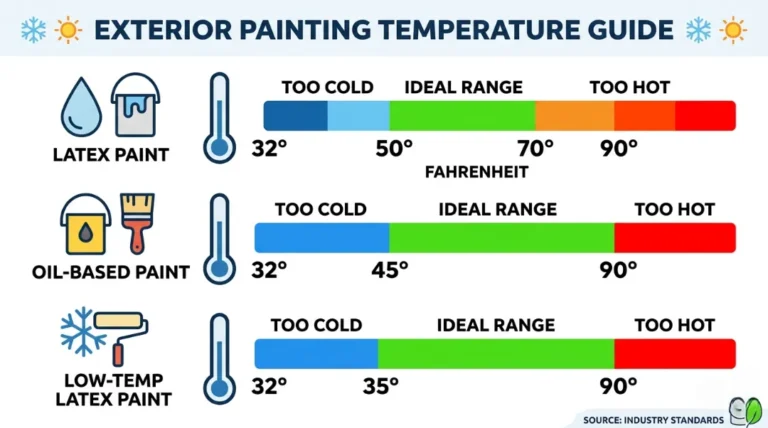
The best outdoor painting temperature sits between 50°F and 85°F for most latex paints, and between 40°F and 90°F for oil-based paints. Within this temperature range, paint flows evenly, adheres properly, and cures at the right pace. Going outside this window risks poor adhesion, slow drying, and a finish that won’t last.
That being said, most professional painters want the temperature to be between 60°F and 75°F. The paint film develops appropriately, moisture evaporates at a regular pace, and you receive the same amount of coverage per gallon at this range.
Here’s a quick reference:
Paint Type | Minimum Temp | Maximum Temp | Ideal Range |
Latex / Acrylic | 50°F (some low-temp: 35°F) | 90°F | 60°F – 75°F |
Oil-Based | 40°F | 90°F | 60°F – 75°F |
Low-Temp Latex | 35°F | 85°F | 50°F – 70°F |
Always check your specific paint can label. Manufacturers like Sherwin-Williams, Benjamin Moore, and Behr publish their own recommended application temperature ranges.
What Is the Lowest Temperature You Can Paint Outside?
The lowest temperature you can paint outside is 35°F for specially formulated low-temperature latex paints. Standard latex paints require at least 50°F, and oil-based paints need a minimum of 40°F. Below these thresholds, the curing process breaks down and the paint won’t bond to the surface properly.
Standard water-based paint actually freezes at 32°F. Even a few degrees above freezing isn’t safe territory for a regular painting project.
Low-temp latex paints have coalescing agents that help the paint cure in temperatures close to freezing if you need to get your job done right away. These items are designed to work well in cold weather and will still work well below 35°F.
It’s easy to forget this rule: the temperature of the surface is usually cooler than the temperature of the air. If you put shade on a north-facing wall all day, it might be 10 to 15 degrees cooler than what your weather app says. Before you start, use an infrared thermometer to check the surface itself.
The Best Seasons for Exterior House Painting in Every U.S. Region
The right season depends heavily on where you live. Here’s a practical breakdown:
- Northeast & Midwest: Late spring (May to June) and early fall (August to September) offer the most reliable weather conditions. Summers can get too humid, and winters are clearly off the table.
- Southeast & Gulf Coast: Spring and fall are ideal. Summer humidity levels often exceed 70%, which slows drying time dramatically and raises the risk of leaching and mildew.
- Southwest (Arizona, Nevada, California): Spring and fall work well. Summer temperatures regularly push past 90°F, which causes paint to dry too fast and leads to blistering and poor adhesion.
- Pacific Northwest: Summer is the clear winner here. Rain and cool air temperatures dominate most of the year. Aim for July through early September when dry weather is most consistent.
- Mountain Regions (Colorado, Utah): A short window in late spring and early summer is best. Afternoon thunderstorms and rapid temperature swings make timing tricky.
NOAA regional climate data provides monthly average temperature and humidity ranges useful for planning your painting project.
How Does Temperature Affect the Quality of a Paint Finish?
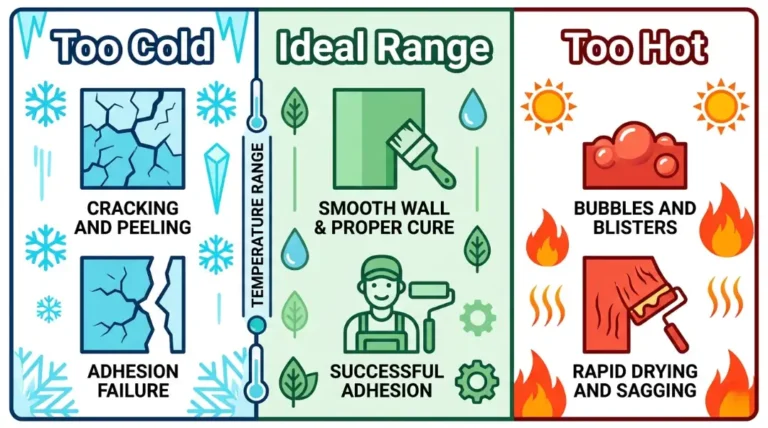
Temperature directly controls how paint dries and bonds to a surface. Too cold, and the paint takes too long to cure, leaving it vulnerable to dirt, insects, and moisture. Too hot, and it dries too fast, causing bubbles, cracks, and poor adhesion. Getting the temperature right is the single biggest factor in how long your paint job lasts.
When it’s too cold:
- Oil-based paints thicken, making brushing stiffer and coverage per gallon lower
- Paint stays wet longer, attracting insects, dirt, and grime that get trapped in the finish
- The paint film doesn’t form correctly, leading to cracking and peeling within months
- Dew can settle on a wet surface, causing stains and mildew growth
When it’s too hot:
- Paint dries before it can properly bond to the surface
- Blisters and bubbles form, especially on sun-exposed surfaces above 90°F
- Brush strokes become visible and hard to correct
- The paint can start peeling even within the first season
When you cure paint, think of it like bread rising. If you rush it at the wrong temperature, it will all fall apart. If you give it the correct conditions, it will set up strong.
Does Wind Affect Outdoor Painting?
Yes, wind speed directly affects drying time and surface temperature. A strong breeze can cause the outer layer of paint to dry too quickly while the layer beneath stays wet. This traps moisture inside the paint film and causes bubbling or poor adhesion.
Wind also lowers the effective surface temperature below the actual air temperature, similar to a wind chill effect. On a 55°F day with 20 mph winds, the surface of your siding could effectively behave like a 45°F surface for drying purposes.
A general rule: avoid painting when wind speeds exceed 15 mph. If you’re in an exposed area, set up a temporary windbreak using plastic sheeting or tarp barriers.
Primer in Cold Weather
Most people focus on the topcoat temperature requirements, but primer has its own rules. Applying primer in cold temperatures causes the same adhesion problems as paint, sometimes worse.
Most primers that are water-based need the surface temperature to be at least 50°F. Oil-based primers are a little more forgiving, but they still need to be at least 40°F to stick well.
The topcoat won’t work, no matter how good the weather is when you put it on, if you omit this stage or rush the primer in cold weather. Before you put on your first coat, be sure the primer is completely dry.
More Temperature Considerations for Exterior Painting Projects
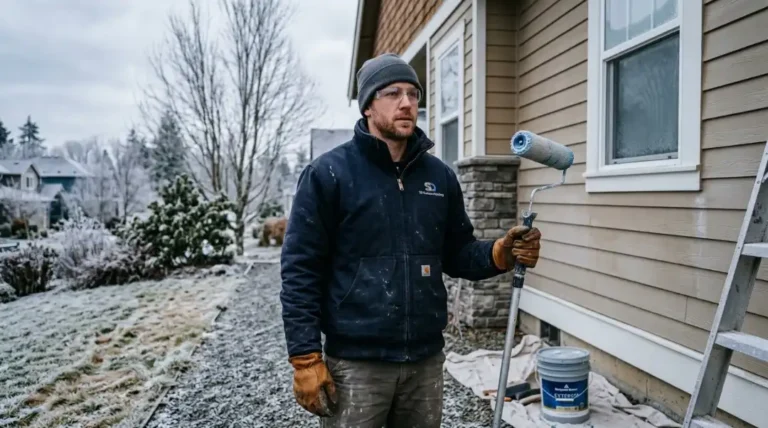
Check the 24-hour forecast, not just today’s temperature. Paint needs stable conditions for at least 24 to 48 hours after application to cure properly. A warm afternoon followed by a 38°F night is a recipe for paint failure.
Follow the sun’s shadow around the house. Paint the south-facing walls in the morning when they’re still in shade. Move to west-facing walls in the afternoon. This helps you avoid painting in direct sunlight, which causes uneven drying.
Surface type changes the equation. Masonry and brick hold cold longer than vinyl or wood siding. Stone walls can stay below 40°F for hours even after the air warms up. Metal surfaces conduct cold and heat rapidly, making temperature swings more unpredictable.
Humidity matters too. The ideal humidity level for exterior painting projects sits between 40% and 70%. Above 70%, moisture forms on freshly painted surfaces, slowing cure time and compromising the finish. Below 40%, paint dries too fast.
According to paint industry data from the Paint Quality Institute, improper application temperature is the leading cause of early paint failure in exterior painting projects.
Call SD Custom Painting for Professional Exterior House Painting Services
If the weather in your area makes timing a painting project feel like solving a puzzle, that’s where professionals make all the difference. SD Custom Painting specializes in exterior painting services in San Diego, and our team monitors temperature, humidity, and surface conditions before every single job.
We don’t just show up and paint. We check air temperature, surface temperature, the overnight forecast, and humidity levels so your paint job lasts for years, not months. Whether it’s a full exterior repaint or a touch-up, we bring the same level of care to every project.
Get in touch with SD Custom Painting today for a free estimate and let’s get your home looking sharp with a finish that holds up in any season.
FAQs About Painting in Cold Weather
What happens if you paint outside when it’s too cold?
The paint won’t cure correctly. It stays wet longer, attracts debris, and forms a weak paint film that cracks or peels within months. You may also see staining or mildew if dew forms on the uncured surface.
Will exterior paint dry in cold weather?
It will dry eventually, but the cure time stretches significantly. At 75°F, a second coat can go on after about 4 hours. At 50°F, that same process can take 6 hours or longer. Below 40°F, drying essentially stalls.
Can I paint my house exterior in winter?
In mild climates like San Diego, yes, with planning. Aim to paint between 10 AM and 2 PM when temperatures peak. Use low-temperature formulated paint and always check that overnight lows won’t drop below the minimum cure temperature.
How long does paint last in cold storage?
Paint stored in cold conditions generally lasts 1 to 2 years if kept in a dry, temperature-stable environment. Paint that has gone through multiple freeze-thaw cycles may be unusable. If it contains lumps and doesn’t mix smoothly, discard it.
Can previously frozen paint still be used?
Water-based paint freezes at 32°F. If it’s been frozen once and still mixes to a smooth consistency, it may still work. If it’s lumpy or separated beyond mixing, don’t use it. Oil-based paints tolerate lower temperatures and are more freeze-resistant.
What brushes work best in cold weather?
Use brushes with nylon, polyester, or Chinex bristles. These materials stay flexible in cold temperatures, unlike natural-bristle brushes that stiffen and leave uneven strokes when paint thickens in cold weather.